

What type of tool is used for turning the outer diameter on a standard lathe?
What type of tool should be used for external turning on a conventional lathe? When referring to CNC tools, the term generally denotes indexable insert tools. This is because they are widely used in CNC machines and do not require grinding. The tools used on each lathe are similar in height, identical in quality, and some are interchangeable.
What are the different types of turning tools?
Turning tools are classified according to the type of machining required on the workpiece surface and can be divided into external turning tools, internal turning tools and face turning tools.
Turners’ tools can be classified by structure into solid-body tools, brazed tools and machine-mounted tools; there are also indexable tools, as well as form tools.
What type of tool is used for turning the outer diameter on a standard lathe?
The types of turning tools can be classified as follows:
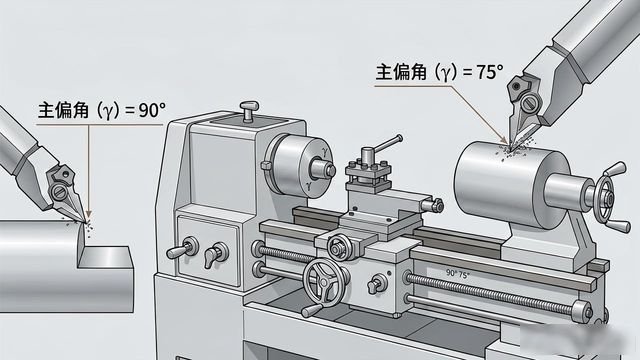
1. There is a type of cutting tool known as an external turning tool; its main rake angle is typically 75° or 90°, and it can be used to turn external cylindrical surfaces as well as steps.
2. A turning tool positioned at the end typically has a main rake angle of 45°; it is used for face turning and chamfering operations, and can also be used for general turning work.
3. Cutting and grooving cutters. Used for cutting workpieces or grooves.
4. Boring bar. Used for turning the internal surfaces of workpieces, such as cylindrical and tapered bores.
5. Forming cutters: concave and convex types. Used for turning fillets and grooves or various special surfaces;
6. Tools designed for turning external threads and tools designed for turning internal threads are referred to as external and internal threading tools. Of these, the tool shown in Figure 3-1g is an external threading tool.
What type of tool is used for turning the outer diameter on a standard lathe?
The cutting edge of a turning tool is subjected to significant cutting forces, high cutting temperatures, as well as friction, impact and vibration during operation. Therefore, the material used for turning tools should possess the following properties:
1. Hardness is one of the essential properties required of cutting tool materials; the hardness of the cutting tool material must exceed that of the workpiece. Typically, the hardness at room temperature should be 60 HRC or higher.
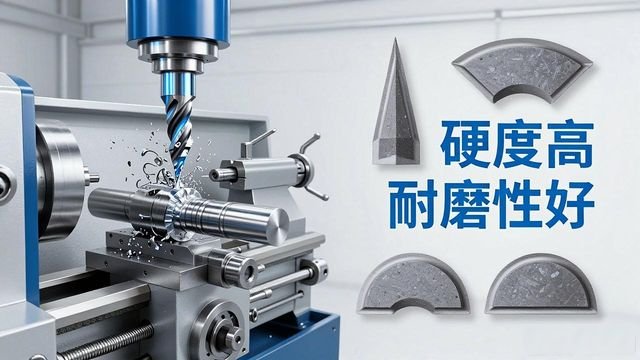
2. What is referred to as wear resistance is the ability of a material to withstand wear and tear; it is a combination of the mechanical properties, microstructure and chemical properties of the tool material. Generally speaking, the higher the hardness, the better the wear resistance.
3. Under high-temperature conditions, it ensures that the material’s hardness, wear resistance, strength and toughness remain unchanged, and does not causeCutting performanceThere is a trade-off, namely in terms of heat resistance.
On both the top and bottom, as well as the left and right sides, what is the angle formed after grinding compared to before? During cutting, the blade performs a forward cutting operation without generating friction. The transverse cutting edge in front of the groove must be kept straight. The surface roughness at the bottom of the groove must be 1.6 or higher. Please ensure that the clearance is smooth. If wear occurs, the feed can be easily adjusted. When cutting with a manual cutter, select a safe point. If a chip becomes jammed or the cutter seizes up, withdraw the cutter immediately. Once the chip jam has been cleared, resume cutting.
What type of tool is used for turning the outer diameter on a standard lathe?
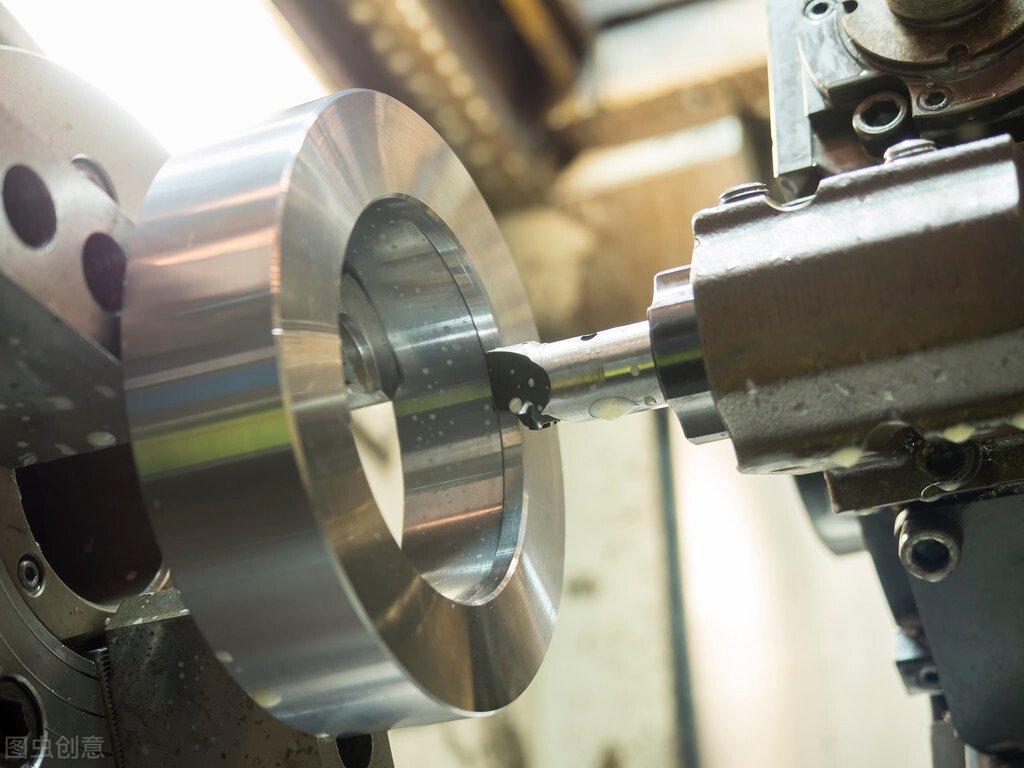
1. When selecting from the external turning toolbar, factors such as the machining method, tool strength and cost-effectiveness must be taken into account when choosing a tool holder.
(1) When selecting a tool holder, it is essential to choose one based on the type of machining operation. There are differences in the types of turning operations, such as external cylindrical turning, face turning and profiling, and the direction of tool movement also varies, with forward or reverse feed. Given that these factors differ significantly, the types of tool holders that can be used will also vary considerably.
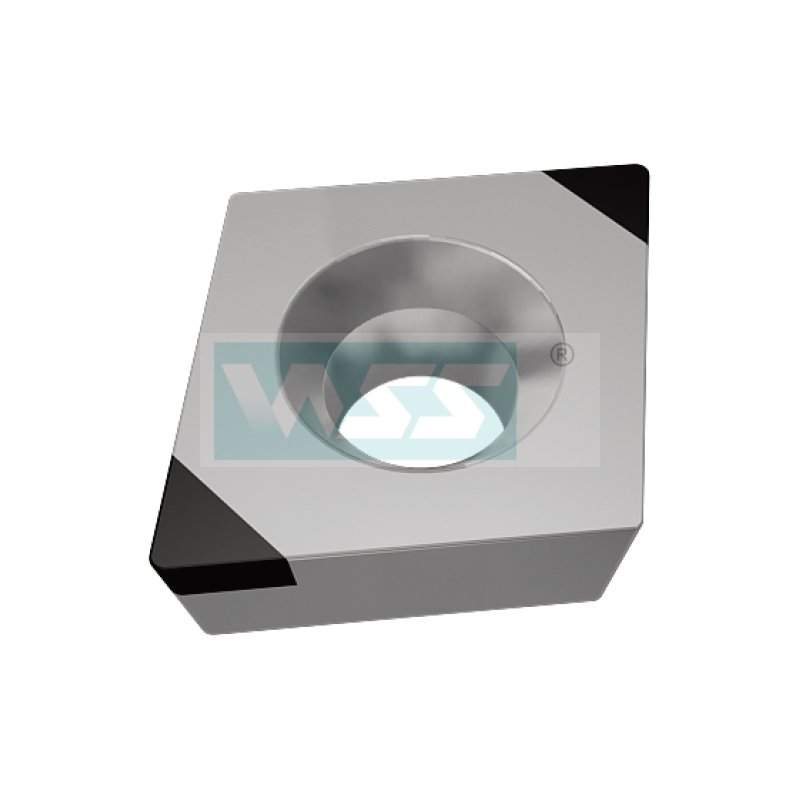
(2) When fitting the insert, the main rake angle determines the machining configuration of the tool holder; generally, 90° vertical cutting—i.e. right-angle machining—is not required. if a 90° main rake angle is selected for the tool holder, square inserts can be used, which are more economical; when machining end faces using a reverse feed, due to chip clearance requirements, tool holders and inserts with a main rake angle greater than 105° should be selected; Angles below 95° make chip evacuation difficult and are not recommended. When the main rake angle is less than 90°, reverse machining is not possible. During chamfering, the main rake angle should be set to 45°–60°, whilst a negative secondary rake angle is specifically used for face milling.
There is one key difference: whilst a 45° turning tool is generally used for face machining, a 90° turning tool is typically employed for machining the outer circumference. A 45° turning tool can be used to machine the outer circumference; however, this process produces a 45-degree bevel, which is not particularly conducive to finishing operations. As for the 90° turning tool, it has a clear shortcoming: it lacks a cutting edge in the X direction, making it suitable only for cutting in the Z direction.
 Chinese
  Japanese
  English
  German
  Finnish
Leave a Reply
You must be logged in to post a comment.