
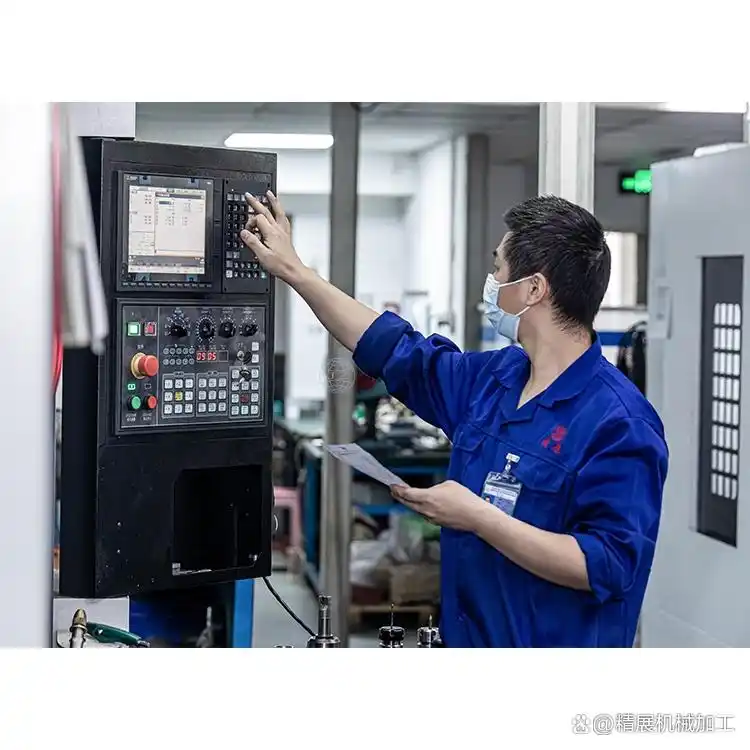
Computer Numerical ControlProcessing is, in other words,CNC machining, is a method of machining that utilises computer-controlled numerical control (CNC) machine tools; it is widely used in the manufacture of components across various industries. It relies on a comprehensive, pre-programmed machining programme to control the machine tool as it performs cutting operations along a specified path, thereby achieving the machining of the workpiece. The following section will discuss CNC machining’sprocessLet me introduce it.

Firstly, carry out the design and draw up the manufacturing process
Before carrying out CNC machining, it is first necessary to design the product and establish the machining process. Designers use CAD (Computer-Aided Design) software to design the product in accordance with its requirements and functions. Subsequently, process engineers develop the machining process based on the product’s shape, materials and machining requirements; this involves selecting the appropriate cutting tools, cutting parameters and cutting paths, amongst other factors.
Secondly, write the machining programme
Machining programmes form a core part of CNC machining; they encompass the movement instructions for the machine tool, as well as cutting parameters and related information such as cutting paths. Machining programmes are created using CAM (Computer-Aided Manufacturing) software to convert product design files into machining programmes. During the programme creation process, full consideration must be given to factors such as the material’s machinability and the rationality of the machining process, in order to ensure both efficiency and quality throughout the machining process.
Next, proceed with machine tool set-up and tool clamping
Before carrying out CNC machining, the workpiece must be clamped onto the machine tool, and suitable cutting tools must be selected for the machining operation. Machine tool clamping is the process of securing the workpiece to the machine tool, which requires consideration of the workpiece’s shape, dimensions and machining requirements. Tool clamping refers to the process of mounting the cutting tool onto the machine tool; this process requires the selection of the appropriate tool type and specifications, as well as the correct mounting method. The accuracy and stability of both workpiece clamping and tool clamping have a significant impact on machining precision and efficiency; therefore, careful adjustment and inspection are essential.
Next, carry out the machining operations
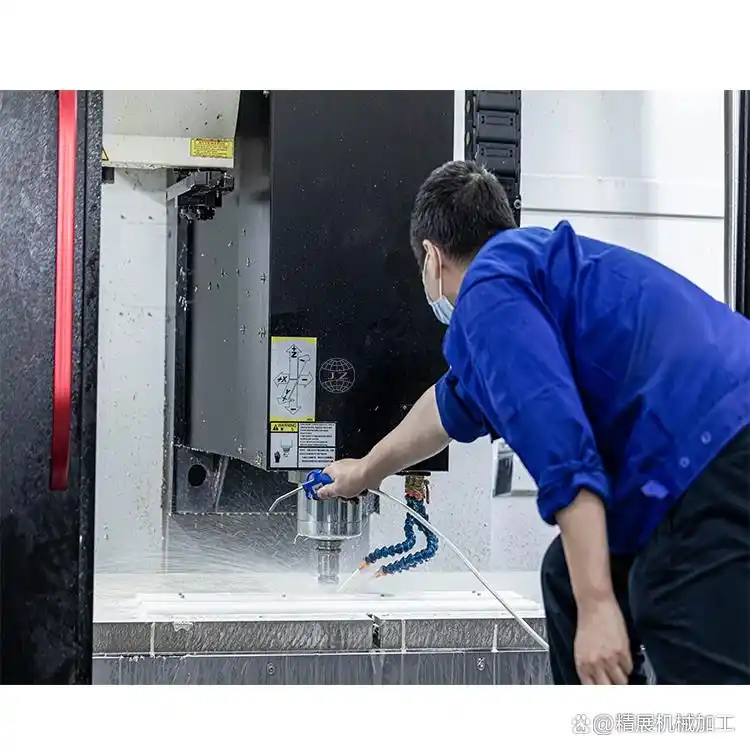
Only once the workpiece has been securely clamped in the machine tool and the cutting tool has been correctly mounted may the CNC machining process commence. The operator inputs the prepared machining programme into the CNC machine tool controller; the machine then carries out the cutting operation in accordance with the instructions issued by the controller, following the path and at the speed specified in the programme. During the machining process, the operator must monitor the machining status closely and make timely adjustments to the cutting parameters and cutting tools to ensure both the quality and efficiency of the machining.
Finally, carry out machining inspections and finishing operations
Once CNC machining is complete, the workpiece must be inspected and finished. Inspection can be carried out using measuring tools and equipment to check dimensions, shape and surface roughness, thereby verifying whether the CNC-machined part meets the requirements. Trimming is carried out by subjecting the CNC-machined workpiece to processes such as trimming, grinding or polishing, thereby eliminating any potential machining defects and improving the precision and surface quality of the CNC-machined workpiece.
In summary, the CNC machining process comprises a series of steps, ranging from the design and formulation of the machining process, through the writing of the machining programme, to the clamping of the workpiece and tooling on the machine tool, followed by the machining operation itself, and finally including machining inspection and tool dressing. Each step requires precise execution and strict control to ensure the efficiency of the machining process and the quality of the workpiece.
The advancements made possible by CNC machining have provided various industries with solutions for manufacturing parts characterised by high precision and high efficiency. When compared with traditional manual methods and conventional machining, CNC machining offers the following advantages:
1. High precision
In CNC machining, the precise control provided by CNC machine tools, combined with the high-speed rotation of the cutting tools, enables the production of parts with a high degree of precision. Specifically, machining accuracy can reach the sub-millimetre level, or even higher, thereby perfectly meeting the specific requirements of a wide variety of complex parts.
2. High efficiency
CNC machining, which utilises computer programming and automated control, enables automatic, continuous machining, thereby significantly enhancing production efficiency, reducing the time and workload required for manual operations, and consequently improving production efficiency and output.
3. Flexibility
CNC machining offers flexible processing capabilities to meet different product needs and design requirements; simply by modifying the machining programme and adjusting the cutting tools, it is possible to machine different parts, thereby avoiding the hassle of having to change equipment that is associated with traditional machining.
4. Repeatability
By writing machining programmes and implementing automated control, CNC machining can achieve precise cutting paths and machining parameters, thereby ensuring consistency and repeatability in the machining process. As this process is not subject to the operator’s skill level or experience, it minimises the impact of human factors on machining quality.
5. Versatility
CNC machining is capable of performing a wide range of machining operations, such as milling, turning, drilling and tapping; a single CNC machine tool can carry out multiple machining tasks, thereby reducing capital expenditure and minimising the floor space required.
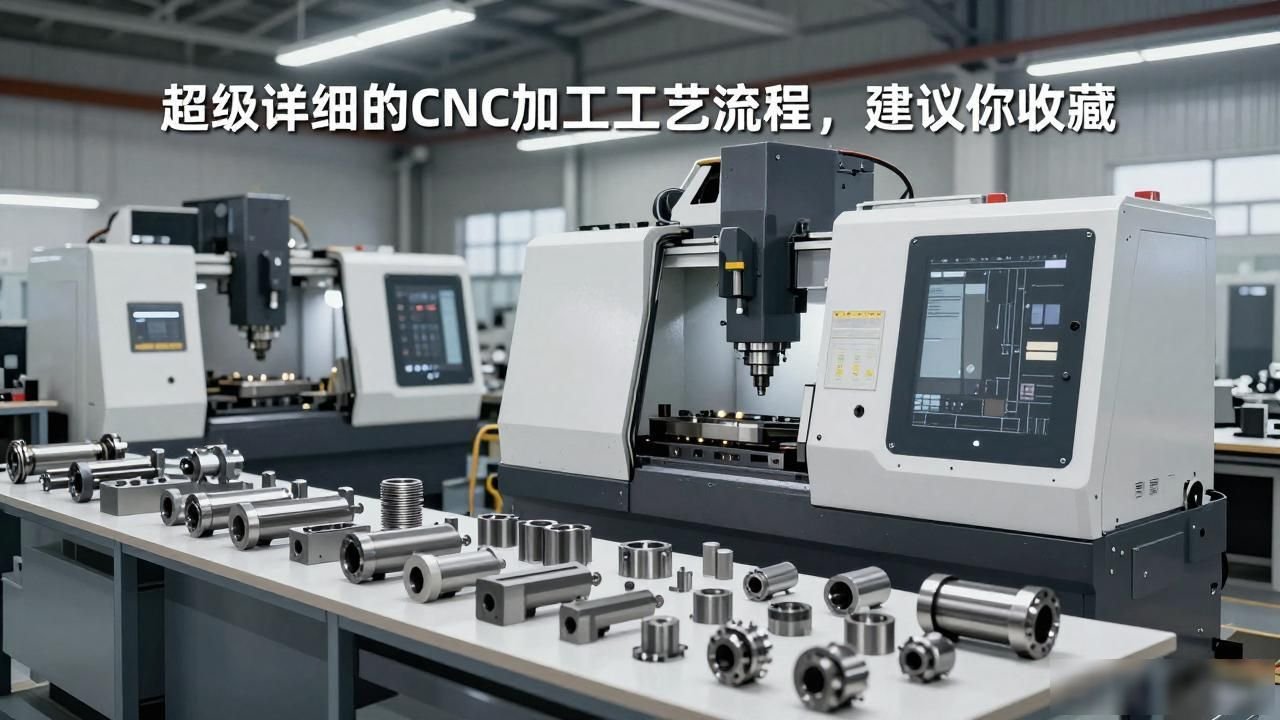
In summary, CNC machining provides a solution for parts manufacturing that offers high efficiency, high precision, flexibility, repeatability and versatility; it is widely used across various industries, including aerospace, automotive, electronics, medical devices and mould manufacturing.
Within the aerospace sector, CNC machining can be used to produce aerospace components with complex shapes, such as turbine blades, engine parts and aerospace structural components. Given the high precision and repeatability of CNC machining, it is able to meet the quality and performance requirements of these components.
In the automotive industry, CNC machining is used to manufacture components such as engine parts, chassis parts and body parts. CNC machining enables the production of parts with high precision and consistency, thereby enhancing vehicle performance and safety.
In the electronics sector, CNC machining can be used to manufacture electronic components, printed circuit boards and enclosures, amongst other items. Given its high efficiency and flexibility, CNC machining is able to meet the rapid development requirements of electronic products, as well as their production needs.
In the field of medical equipment, CNC machining is used to manufacture medical device components, artificial joints, dental equipment and more. The high precision and repeatability of CNC machining ensure the quality and safety of medical equipment.
In the field of mould manufacturing, CNC machining can be used to produce a wide variety of moulds, such as injection moulds, die-casting moulds and stamping dies. Thanks to the versatility of CNC machining, it is possible to produce complex mouldsHigh precision machining.
In summary, advances in CNC machining have provided various industries with solutions for the manufacture of parts that offer high efficiency, high precision and flexibility; by utilising computer programmes to control machine tools for automated machining, it has significantly improved production efficiency and product quality.
One of the advantages of CNC machining is its high precision; as it utilises computer programmes for control, it is capable of achieving extremely precise machining, meeting accuracy requirements down to the micrometre level. This is particularly important for components such as gears and threads, which require a precise fit.
Furthermore, CNC machining offers a high degree of flexibility; as it allows for the use of different cutting tools and the adjustment of machining paths, it is capable of producing parts of all manner of complex shapes. At the same time, the production of different products can be achieved simply by modifying the programme, without the need to redesign or manufacture entirely new tooling.
CNC machining offers repeatability; once the precise machining programme and parameters have been set, the machine tool can operate continuously whilst maintaining consistent machining quality without the need for manual intervention. This is crucial for high-volume production, as it ensures that every component meets the specified dimensional and quality requirements.
In addition, CNC machining tools are highly versatile; by selecting different cutting tools and machining methods, they can perform a wide range of machining operations, such as drilling, milling, cutting and turning, thereby meeting the machining requirements of various components. This makes CNC machining a highly versatile manufacturing process.
Overall, CNC machining is a highly efficient, precise, flexible and reliable solution for the manufacture of components. As technology continues to advance, CNC machining will play an increasingly important role across various industries, driving progress and development in the manufacturing sector.
 Chinese
  Japanese
  English
  German
  Finnish
Leave a Reply
You must be logged in to post a comment.