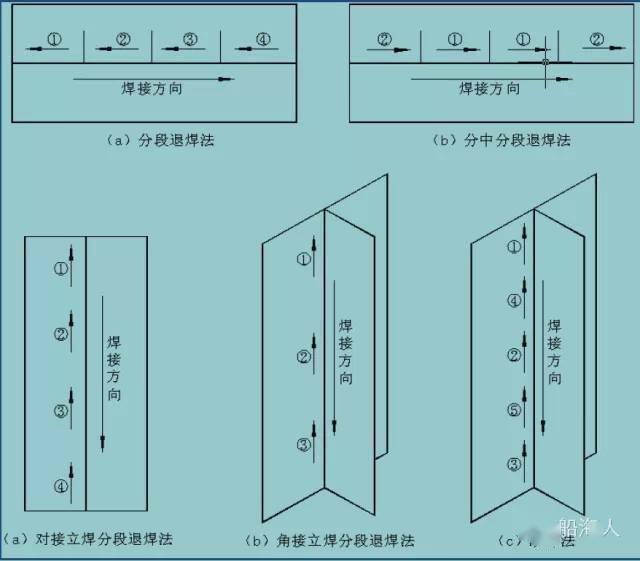
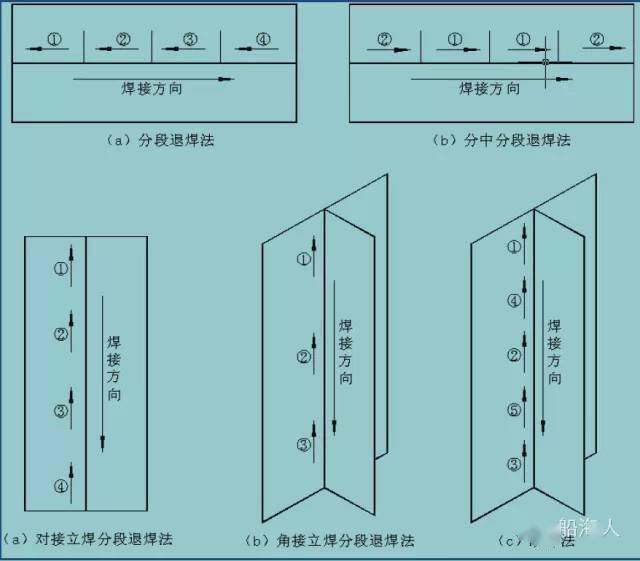
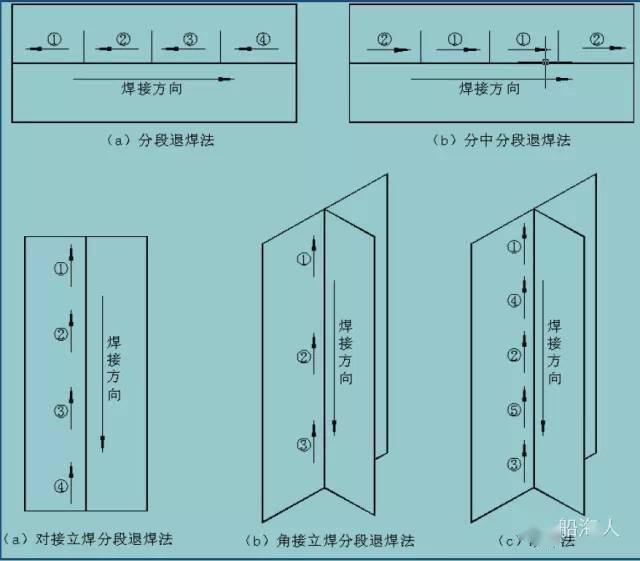
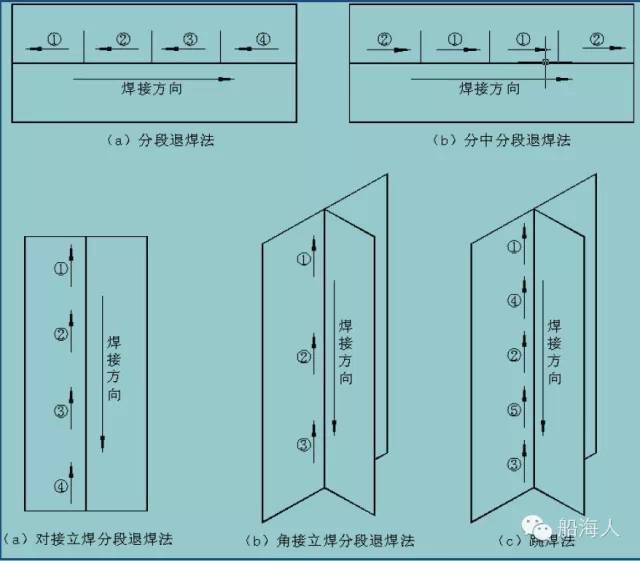
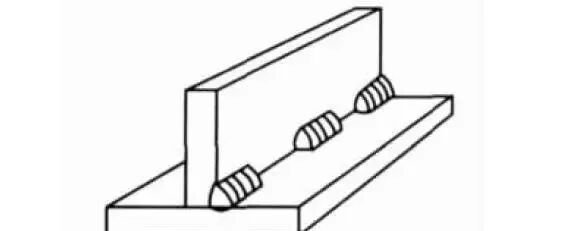
arrange in order
[Practical Tips] Welding Sequence for Ship Hull Structures
3.3 If the end of a fillet weld is located on the closure edge of a section, a length of approximately 200 mm should be left unwelded at that section for the time being; this section should be welded only upon closure, as shown in Figure 4(c). b) After tack welding the longitudinal girders, web plates and inner bottom plate flat assemblies
[Practical Tips] Welding Sequence for Ship Hull Structures
3.3 If the end of a fillet weld is located on the closure edge of a section, a length of approximately 200 mm should be left unwelded at that section for the time being; this section should be welded only upon closure, as shown in Figure 4(c). b) After tack welding the longitudinal girders, web plates and inner bottom plate flat assemblies
[Practical Tips] Welding Sequence for Ship Hull Structures
3.3 If the end of a fillet weld is located on the closure edge of a section, a length of approximately 200 mm should be left unwelded at that section for the time being; this section should be welded only upon closure, as shown in Figure 4(c). b) After tack welding the longitudinal girders, web plates and inner bottom plate flat assemblies
Practical Guide: Welding Sequence for Hull Structures
General Principles of Welding 1. The welding terminology used in this document is as set out in GB/T 3375-1994. 2. Hull structural components or sections shall be kept to the correct dimensions and with uniform assembly gaps during assembly. Components or sections that do not comply with the drawings, standards and process requirements
This is a great way to minimise welding shrinkage deformation!
Methods for preventing and minimising welding distortion must take into account the design of the welding process and how to counteract thermal cycling during welding. Contraction cannot be eliminated, but it can be controlled.