
Craftspeople are always looking for more efficient and precise machining processes, with the aim of improving the quality of complex shaped products.processing efficiencytoomachining accuracyThe presence of mill-turn machining equipment gives an effective solution to improve the machining accuracy and efficiency of aerospace parts.
The constant goal in the field of metal processing is efficiency as well as precision. Due to thenumerical control technologyAs computer technology, machine tool technology, and machining technology continue to evolve, traditional machining concepts can no longer meet people's needs for machining speed, efficiency, and accuracy. In this context, composite machining technology has been created. Generally speaking, composite processing refers to, in a processing equipment, can complete different processes, or different methods of processing technology. Today's composite processing technology is mainly presented as two different types, one is based on the energy or movement, different processing methods compound each other; the second is based on the principle of process concentration, to the machining process as the dominant composite, milling and turning composite machine tool processing is the rapid development of this field in recent years among the processing methods.
Nowadays, the aviation product parts significantly present, presenting a multi-species small batch condition, its process is complicated, but also widely used as a whole thin-walled structure and difficult to process materials, so in the manufacturing process, there are generally a long manufacturing cycle, the amount of material removal, machining efficiency and processing deformation of extremely serious bottlenecks, in order to improve the processing efficiency and machining accuracy of complex aviation products, technology In order to improve the machining efficiency and machining accuracy of aviation complex products, technology personnel are always looking for more efficient and precise machining process methods, mill-turn composite machine tool machining equipment after the introduction of the aviation parts for the improvement of machining accuracy and efficiency, gives an effective solution.
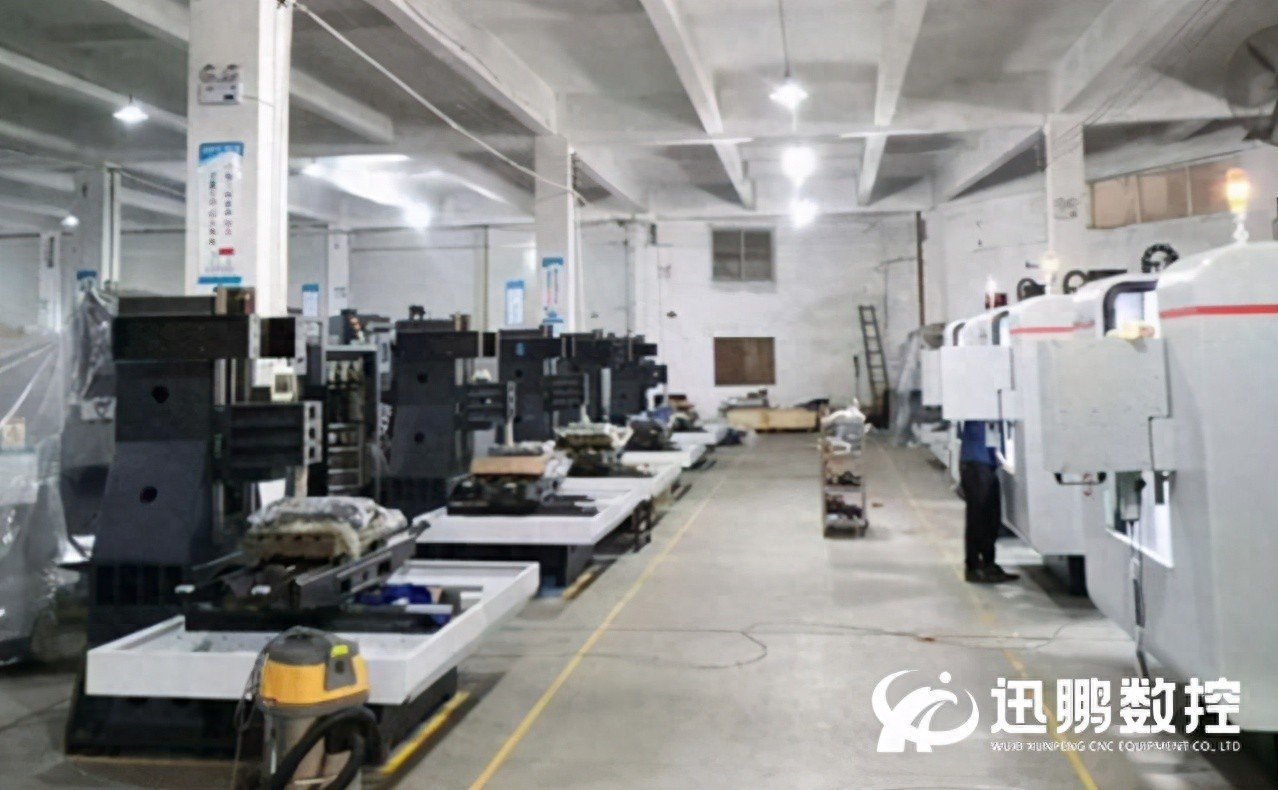
Compared with conventional CNC machining processes, composite machining has outstanding advantages in these different aspects of the following performance, mainly in the following areas.
(1) Shorten the product manufacturing process chain and improve production efficiency.
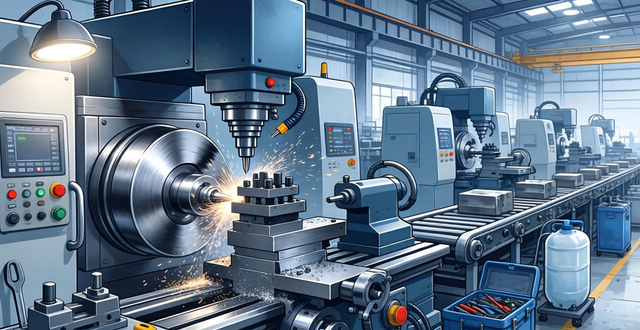
The process of mill-turn machining can achieve all or most of the machining process by one-time loading, which greatly shortens the product manufacturing process chain. In this way, on the one hand, it reduces the production support time due to the change of loading, and at the same time, it also reduces the manufacturing cycle and waiting time of tooling and fixtures, and it can significantly improve the production efficiency.
(2) Reduce the number of clamping times and improve machining accuracy.
The number of times that need to frequently install the clamping card has been minimised, thus avoiding the accumulation of errors due to the change of positioning reference, while at the same time, many of today's milling and turning machine tool processing equipment basically includes the function of on-line inspection, which can achieve the manufacturing process of the key data in the position of the inspection and accuracy control, by this way to enhance the accuracy of the product's machining.
(3) Reduced floor space and lower production costs.
Turn-mill complex machine tool processing equipment single unit price is high, however, its manufacturing process chain shortened, the product requires less equipment, the number of fixtures and fixtures to reduce the number of reduced workshop floor space, equipment maintenance costs, the equipment can bring the overall investment in fixed assets to reduce the cost of production and operation, but also reduce the cost of management.
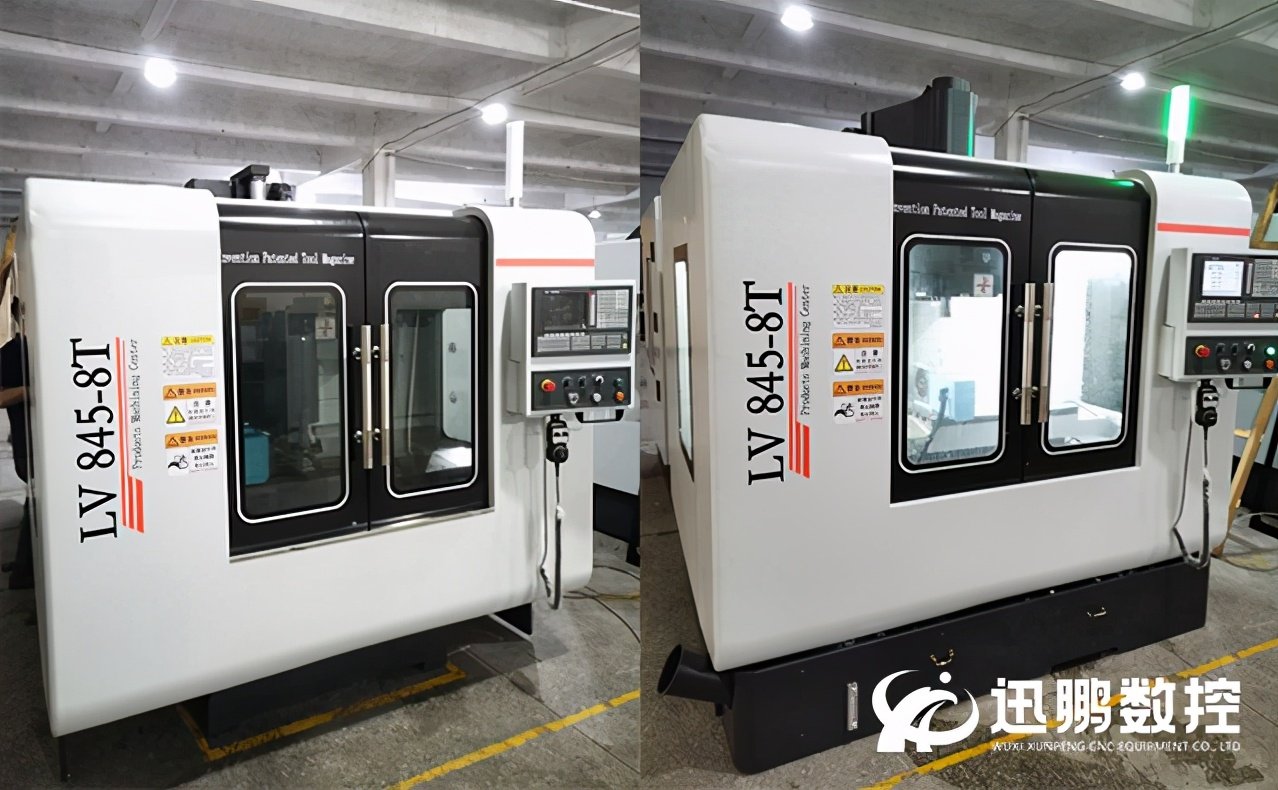
Key technologies for composite processing
Although composite processing has the advantages of conventional single processing can not be compared, but in fact, in the field of aerospace manufacturing, mill-turn composite machine tool processing has not been fully utilised. The key reason is that the mill-turn composite machine tool processing in the field of aviation manufacturing application time is relatively short, applicable to the aviation parts structure process characteristics of the mill-turn composite machine tool processing technology, CNC programming technology, post-processing and simulation technology, and is still in the stage of figuring out. In order to give full play to the effectiveness of mill-turn machining equipment, improve product processing efficiency and accuracy, it is necessary to comprehensively overcome and solve the above key fundamentals, and to achieve integrated application.
And conventional processing equipment is not the same, milling machine tool processing with technology, a milling machine tool machining centre is actually equivalent to a production line, the key is how to rely on the characteristics of the parts process and milling machine tool machining process to develop a reasonable process route, mounting methods, but also the use of reasonable cutting tools, in order to achieve high efficiency and precision machining.
The most distinctive process characteristics, is the composite machining process is concentrated. Therefore, the key factor to improve the machining efficiency and accuracy of mill-turn compound machine tool is the scientific and reasonable process route. In the aviation impeller processing, the machining centre has outstanding advantages. When using bar stock as impeller blanks, the conventional impeller machining process route is to use CNC lathes to turn the external profile of the impeller, followed by precision turning machining standards. Based on this, grooving, roughing, semi-finishing and finishing of the profile and hub are carried out with the aid of a 5-axis CNC machining centre. Finally, the holes are machined on a 5-axis machining centre or drilling machine. The S192F milling and turning machining centre is not only able to achieve the whole processing of the above process by one-time loading, but also able to achieve the batch processing of impellers by sawing, automatic feeding and other functions when using bar material for processing, and the whole process can be achieved automatically without human intervention. The process route can be set up in the following way: spindle loading bar, rough turning the outer contour of the impeller, finish turning the outer contour, five-axis milling slotting, runner roughing, runner semi-finishing, runner finishing, drilling, back spindle loading, turning the bottom plane of the impeller, drilling. It can be seen that all the impeller machining processes are achieved in one setup, and the machining efficiency and accuracy can be greatly improved.
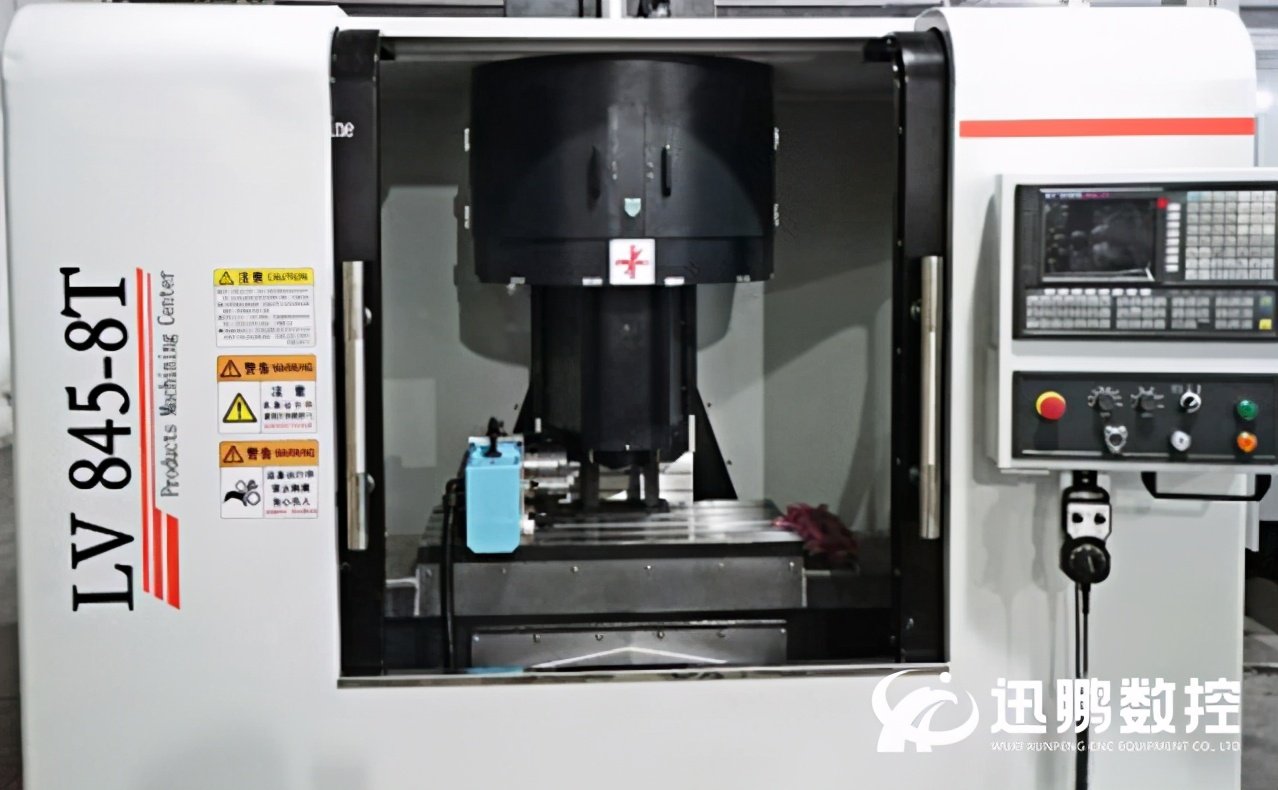
In milling and turning centres with dual tool holders, dual turret machines have a dual channel control system, where the upper and lower tool holders can be controlled individually, and simultaneous machining is achieved with the help of synchronised statements in the code. In order to fully extend the machining capacity of the machine, the simultaneous operation of the two turrets enables simultaneous machining of multiple processes of the part as long as the machining conditions permit. By synchronising the upper and lower tool holders, the rough boring of the bore can be completed at the time of roughing the profile, thus further improving the machining efficiency. Through the synchronised movement of the upper and lower tool holders to achieve a series of holes, which not only improves the machining efficiency, but also through the drilling of axial forces to offset each other, in order to reduce the impact of deformation of the workpiece.
 Chinese
  Japanese
  English
  German
  Finnish
Leave a Reply
You must be logged in to post a comment.