
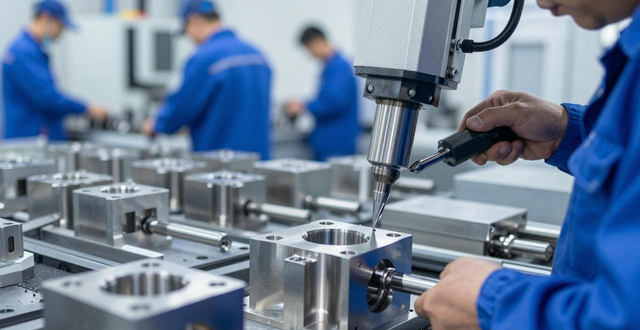
The demand for precision small parts is growing in modern industry, especially in watchmaking, electronics and medical devices. These small parts are tiny in size and require a high degree of precision, surface quality and machining efficiency. How to process these ultra-small parts has become an important challenge for the manufacturing industry. In this article, we will discuss in depth the machining characteristics of precision small parts andTool SelectionTechnical points in areas such as.
I. Typical workpieces of precision small parts and their processing characteristics
1、Precision shaft parts
Precision shaft parts, such as motor shafts and gear shafts, are widely used in mechanical drive systems. Its machining characteristics mainly cover high precision requirements and strict surface quality. Shaft components generally require high levels of concentricity, straightness and roundness in order to ensure the accuracy and stability of the transmission. Moreover, the surface finish is usually high in order to reduce friction and wear, thus increasing the service life of the parts.
For example, in the field of watch manufacturing, the precision of the gear shafts has a direct impact on the accuracy of the watch's timekeeping. These gear shafts may be only a few millimetres in diameter, or even smaller, and require extremely high precision control during the machining process. The use of advanced machining equipment and technology, such as specialised machine tools like centring machines, can achieve high precision machining of shaft parts.
2、Electronic products accessories
Electronic parts such as lens rings and flange rings are characterised by high surface quality and are made of difficult-to-machine materials. In order to ensure the appearance of the quality of electronic products, the processing surface requires bright, no defects. Usually use stainless steel type material, this kind of material is sticky, resulting in rapid tool wear.
In the production of electronic products, the requirements for the precision of accessories are extremely strict, as well as the requirements for the surface quality of accessories are also extremely strict. For example, the dimensional accuracy of the mobile phone lens ring will have a direct impact on the photographic effect, while the surface quality will have an impact on the appearance of the product. Processing of these accessories must choose the appropriate tool material and cutting parameters, in order to reduce tool loss, in order to improve processing efficiency.
3、Medical equipment parts
The parts of medical instruments have extremely high requirements for precision and reliability, covering such categories as micro pumps, needles, and connectors. Its processing has the characteristics of high precision and high cleanliness requirements, the existence of difficult to process materials, and strict quality control. The parts of medical devices are in direct contact with the human body, so the standard of processing accuracy is very high, and the cleanliness of the surface is also very high, in order to ensure safety and reliability.
Difficult materials such as stainless steel and titanium alloys are often used, which require special tools and machining processes. Each part must undergo rigorous testing and quality control to ensure compliance with medical standards. For example, the precision of minimally invasive surgical instruments has a direct impact on the effectiveness and safety of the procedure and requires strict control of dimensional errors and surface quality during the machining process.
Second, the importance of tool selection for precision small parts processing
For the machining process of precision small parts, the selection of tools is extremely critical, the right tool can improve processing efficiency, guarantee the quality of machining, extend tool life and reduce production costs.
1、High precision and high efficiency
The machining of small parts generally requires high dimensional accuracy and surface quality, as well as efficient machining conditions to increase productivity. Therefore, the cutting edge of the tool must be very sharp to ensure that high precision cutting can be achieved when machining small parts. The size and shape of the tool should be stable during the machining process to prevent dimensional errors.
For example, when machining ultra-small parts in watches, it is necessary to use high-precision tools to ensure that the dimensional accuracy of the parts is at the micron level. At the same time, efficient machining increases productivity to meet market demand.
2、High-performance tool materials
Small parts machining, the performance requirements of the tool material is extremely high, to use a high hardness, high strength materials, such as particulate tungsten carbide, CBN, PCD, etc., to ensure that the tool wear resistance. Also use PVD, CVD and other coating technologies to increase the wear resistance of the tool surface, thereby extending the service life of the tool, so that it can be as long as possible under the cutting hours, to maintain good cutting performance.

Like stainless steel, titanium alloys such as difficult-to-machine materials, high-performance cutting tool materials can effectively improve processing efficiency, but also reduce tool loss. For example, in the processing of medical equipment parts, the use of PCD tools can improve processing efficiency, and can ensure the surface quality of parts.
3、High cutting performance
Cutting geometry can be optimised, the cutting angle and edge shape is designed to be reasonable and standardised, so as to reduce the force generated by the cutting, and thus improve the cutting efficiency. With good chip removal performance, the design of the tool groove should be able to effectively discharge the chips, to avoid the accumulation of chips to affect the quality of processing.
In the small parts to be processed, the size of the cutting force will play a direct role in the machining accuracy and surface quality, with the help of optimising the cutting geometry, can reduce the cutting force, and thus improve the stability of processing, and at the same time, have a good chip removal performance can prevent the accumulation of chips, so as to ensure that the processing of the continuity.
4、Efficient chip removal and cooling technology
In the process of small parts machining, chip discharge and cooling status are the key elements that have an impact on the quality and efficiency of machining. Technologies with efficient chip removal and cooling efficiency can effectively prevent chip accumulation and overheating of the tool, thereby improving machining stability and surface quality. For example, the use of high-pressure coolant and micro lubrication (MQL) technology.
When machining electronic components, efficient chip removal and cooling technology ensures that the quality of the machined surfaces is maintained and that tool wear is reduced. At the same time, the technology can also improve the processing efficiency to meet the needs of production.
Third, the application of different types of tools in precision small parts machining
In precision small parts processing, different types of knives have different application effects, next, to Sinovel precision tools as an example to explain, but also to Sandvik Coromant tools as an example to explain.
1、Huarui precision small parts machining tools
Sinovel has developed inserts for small parts machining, and its products cover most of the working conditions for small parts machining.
(1) Forward sweeping tool
Front swept tools are mainly used for the machining of small parts of the outer circle, also used for small parts of the end face and other parts of the machining, commonly used groove type XS, commonly used groove type XF, commonly used groove type PU, commonly used groove type PY, commonly used groove type PJ, etc., these groove types have different characteristics, the existence of the characteristics of the design of oblique grooves, with sharp edges, has a small groove width design features, contains a large angle design features, etc., can meet the different machining requirements. These groove types have different characteristics, such as slant groove design, sharp edge, small groove width, large front angle, etc., which can meet different processing requirements.
For example, the XS groove is used for machining external rounds and faces, and its angled groove design provides stable control of the direction of chip evacuation to ensure smooth cutting, while the XF groove has a sharp cutting edge, which reduces the chip force and thus achieves excellent cutting results.
(2) Rear sweep tool
This is used for the machining of the step surface at the back of the workpiece, and its groove type is characterised by the stable control of the direction of chip removal, which can reduce the cutting resistance, and also meet the requirements of back-turning machining in the machining process of small parts.
(3) Shallow fluted tools
Classification of shallow groove tool grooves including THR, THF, TGF, etc. These grooves feature improved mounting and positioning methods, grinding chipbreaker grooves, universal machining grooves, and support for customisation.
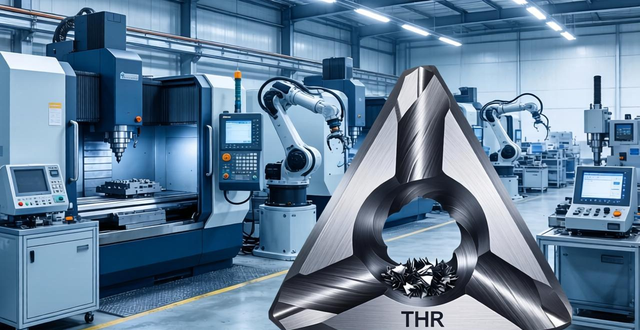
For example, THR triangular shallow groove inserts have an improved type of mounting and positioning, are ground with a chipbreaker and are universally machinable, and THF triangular shallow groove inserts have a large cutting rake angle, place a premium on sharpness, and are customised.
(4) Cutting tool
The PTA series can be used to cut off small-diameter workpieces, and has two insert sizes corresponding to the maximum cutting diameters, which are 12mm and 16mm, with side screw fastening, and with or without a guide angle type of insert. In addition, the grooves are characterised by ground chipbreaker grooves, which emphasise sharpness and are used for low-resistance cutting.
(5) Threaded tools
A wide variety of threads are available for thread processing of outer diameters. The groove type is characterised by a ground chipbreaker groove, which is used for low-resistance cut-off machining with emphasis on sharpness.
(6) Bore tools
There is a range of solid carbide products for the machining of internal diameters and end faces of small parts, including internal boring tools, shallow grooving tools, threading tools, face grooving tools, etc. The specific series include MTR/L, MPR/L, MNR/L, MQR/L, MUR/L, MGR/L, MKR/L, MFR/L, MZR/L, MIR/L, MIR (TR), etc. The smallest internal diameters that can be machined are 1mm or smaller than 1mm, MIR (TR), etc. The smallest inside diameter that can be machined in these products is 1mm or less, and they can meet the needs of machining small parts of different sizes.
2、Santvik Colorman micro-hole drilling tools
Sandvik Coromant has launched two new micro drills, the ® 462 - XM and ® 862 - GM, which have been specially designed for small parts.precision machiningThe new design, with its new geometry, is able to cope with a wide range of cutting diameters and lengths.
(1) Suitability for difficult-to-process materials
The newly designed tool can be used to machine difficult materials such as ISO P, M, K, N, S, O and H, achieving excellent performance. For difficult materials faced by electronic component manufacturers, such as Inconel, stainless steel and titanium, the tool offers excellent wear resistance, helping to cope with the pressures of rising production costs.
For example, when machining parts such as electronic connectors, the use of these tools can improve machining efficiency and ensure the quality of parts.
(2) Advantages of PCD tools
Customers who choose to purchase micro drills with polycrystalline diamond (PCD) sintered cutting edges have successfully tested PCD drills on platinum miniature parts and found that PCD is 100 times more wear resistant than solid carbide and is more accurate than solid carbide tools, enabling tighter tolerances to be realised, so for customers wanting to drill micro holes in ultra-highly machinable materials, PCD should be considered for extended tool life in these demanding applications. For customers wanting to micro-hole drill ultra-highly machined difficult materials, PCD should be considered to extend tool life in these demanding applications.
(3) Importance of coolant
When drilling deep holes with microtools, high quality coolant delivery is critical for effective chip evacuation. The externally cooled ®462 is capable of drilling holes up to six times the diameter, while the ®862 can easily drill holes up to nine times the diameter with external coolant. An internally cooled version is also available for drilling holes up to 16xD in diameters greater than or equal to 1.00 mm. Efficient use of coolant extends tool life and reduces the risk of swarf clogging.
IV. Epilogue
The machining of small precision parts is one of the major challenges in modern manufacturing. By understanding the machining characteristics of typical workpieces and selecting the right tools, machining efficiency can be improved, quality can be guaranteed and production costs can be reduced. The tooling solutions provided by companies such as Sinovel Precision and Sandvik Coromant support the machining of small precision parts. In the future, along with the continuous progress of technology, I believe there will be more advanced tools and machining technology appear, to the processing of precision small parts to bring more innovation and development.
 Chinese
  Japanese
  English
  German
  Finnish
Leave a Reply
You must be logged in to post a comment.