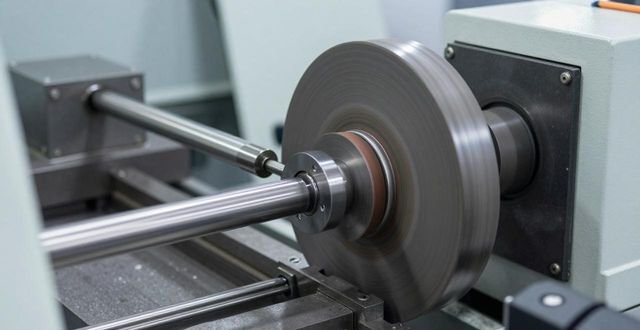


diamond abrasives
machiningRi.GrindingBelongs to the category of finishing, machining roughing, finishing, heat treatment and other processing methods, grinding processing less and high precision, widely used in the machinery manufacturing industry, the heat treatment of quenched carbon tool steel and carburised quenched steel parts, grinding, and the grinding direction of the surface is basically perpendicular to the surface of the often appear in a large number of more regular arrangement of cracks, that is, grinding cracks, which not only affects the appearance of the parts, and more importantly, will also directly affect the This not only affects the appearance of the parts, but more importantly, also directly affects the quality of the parts.
Cutting is an operation in which the surface of a workpiece is treated with the aid of an abrasive such as a grinding wheel that rotates at high speed. Grinding can be used for internal and external cylindrical, conical and flat surfaces of all types of workpieces, as well as for special and complex shaped surfaces such as threads, gears and splines. Due to the high hardness of the abrasive grains and the self-sharpening properties of the abrasive tools, grinding can be used to process a wide range of materials, including hardened steels, high-strength alloy steels, cemented carbides, glass, ceramics, and marble, as well as high hardness metallic and non-metallic materials. Grinding speed refers to the linear speed of the grinding wheel, which is usually 30 to 35 metres per second, and when it exceeds 45 metres per second it is often referred to as high-speed grinding. Grinding is often used in semi-finishing and finishing, its accuracy can reach IT8 to 5, or even higher, surface roughness in general, grinding is Ra1.25 to 0.16 microns, precision grinding is Ra0.16 to 0.04 microns, ultra-precision grinding is Ra0.04 to 0.01 microns, mirror grinding can be achieved Ra0.01 microns below. Need to know, grinding in the specific power, that is, the so-called specific energy consumption, that is, for the removal of a unit volume of workpiece materials consumed on the occasion of the energy, it is larger than the general cutting, while its metal removal rate is smaller than the general cutting, so it is, before grinding, the workpiece will usually be the first experience of other cutting methods, as a means of removing the majority of machining allowances, only to leave a grinding allowance of 0.1 to 1 mm or smaller. This leaves a grinding allowance of 0.1 to 1 mm or less. With the continuous development of slow-feed grinding, high-speed grinding and other such high-efficiency grinding, it is now possible to grind parts directly from the blank. In addition, there are cases where grinding is used as a waste process, such as grinding the sprue of a casting, the flanges of a forging, the outer skin of an ingot, and so on.
Cylindrical grinding
Grinding Machines
This is mainly carried out on cylindrical grinding machines for grinding the external cylindrical, external conical and shoulder faces of shaft-type workpieces. If the workpiece is rotated at a low speed while grinding, and if the workpiece is simultaneously reciprocated longitudinally and the grinding wheel is fed transversely to the workpiece after each single or double stroke of the longitudinal movement, this is called the longitudinal grinding method (Fig. 1). If the width of the grinding wheel is greater than the length of the surface to be ground, the workpiece does not move longitudinally during the grinding process, but the wheel is continuously fed transversely to the workpiece, which is called plunge-cut grinding. Generally speaking, the efficiency of plunge-cut grinding is higher than that of longitudinal grinding. If the grinding wheel is dressed to a profile, the plunge-cut grinding method is able to process the external surface of the profile.
Internal cylindrical grinding
It is mainly used for grinding cylindrical holes (Fig. 2), including conical holes and hole faces, on internal cylindrical grinding machines, universal cylindrical grinding machines and co-ordinate grinding machines. The longitudinal grinding method is usually used. The plunge-cut grinding method can be used when grinding formed internal surfaces. When grinding internal holes on a co-ordinate grinding machine, the workpiece is fixed to the table. The grinding wheel rotates at high speed and moves in a planetary motion around the centre line of the hole to be ground. In internal grinding, the grinding speed is often less than 30 m/s because of the small diameter of the grinding wheel.
Surface grinding
The main purpose is to carry out grinding operations on a surface grinder, such as grinding flat surfaces and grooves. There are two types of surface grinding: one is grinding with the help of the outer surface of the grinding wheel, which is called peripheral grinding, and in this case, as shown in Fig. 3, a horizontal axis surface grinder is usually used, and if a profile grinding wheel is used, various types of profiled surfaces can be processed as well; and the other is grinding with the end face of the wheel, which is called end face grinding, and a vertical axis surface grinder is usually used.
Mindless grinding
Sharpening and grinding tools

This operation is usually carried out on centreless grinding machines for the purpose of grinding the outer circle of the workpiece. During this operation, the workpiece is not centred and supported by means of a centre, but is placed between the grinding wheel and the guide wheel, supported by a pallet underneath, and rotated by the guide wheel. When the axes of the guide wheel and the grinding wheel are adjusted to intersect at an oblique angle of 1° to 6°, the workpiece can be rotated and automatically fed longitudinally in the axial direction at the same time, which is known as throughfeed grinding (Fig. 4). Penetration grinding can only be used to grind external cylindrical surfaces. In the case of plunge-cut centreless grinding, the axis of the guide wheel and the axis of the grinding wheel must be set parallel to each other so that the workpiece is supported on the pallet without axial movement and the grinding wheel is continuously fed in the transverse direction relative to the guide wheel. Firstly, we can look at plunge-cut centreless grinding, which has the ability to process shaped surfaces. Next, centreless grinding, which can also be used for internal grinding. The workpiece is centred on a roller or support block, and the workpiece is rotated by an eccentric electromagnetic suction ring. Then the grinding wheel will be extended into the hole for grinding, this time the outer circle as a positioning reference, and then have to ensure that the inner circle and the role of concentricity of the outer circle. Centreless internal grinding is also often used to grind the internal groove of bearing rings on special grinding machines for bearing rings.
Processing characteristics
Grinding has the following characteristics in comparison with other cutting processes such as turning, milling and planing.



 Chinese
  Japanese
  English
  German
  Finnish
No comments