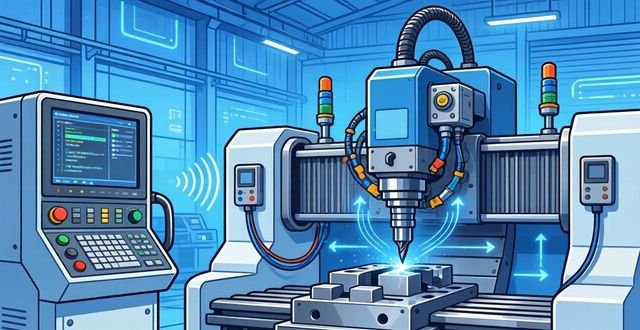


The range of types has basically covered the full range of specifications, the number of specifications, according to incomplete statistics, there are more than 400 varieties of specifications, according to the principle of multi-level multiple to be comprehensively categorised, but by the overall summary, it is usually common to the following four ways to systematically categorise such a situation.
1、Classified by process use
(1) General CNC machine tools, computer gong processing, Dongguan high-speed computer gong processing, Dongguan mould processing, Dongguan mechanical parts processing.CNC machiningThis type of machine tool is the same as the traditional general-purpose machine tool types, the existence of CNC turning, milling, boring, drilling, grinding and so on, and each of them has many varieties, such as CNC milling machine in the vertical milling, horizontal milling, tool milling, gantry milling, etc., the possibility of this type of machine tool technology is similar to the general-purpose machine tools, the difference is that it is able to process the complex shapes of the parts.
(2) dedicated to CNC machine centres for CNC machine tools, this type of machine tool is developed on the basis of general CNC machine tools, it is in general CNC machine tools on the additional assembly of a tool magazine, the magazine can accommodate 10 to 100 more tools, and is also equipped with an automatic tool changer, which constitutes a CNC machine tool with an automatic tool changer, this type of machine tool is also known as multi-processing CNC machine tools or boring and milling machinesmachining centre This configuration allows CNC machine tools to take a step forward in the direction of automation and efficiency, in what are commonly referred to simply as machining centres.
CNC machining centre machine tools and ordinary CNC machine tools, the difference between the two is that this type of machine tool once the installation of the workpiece clamped, the CNC device will be able to control the machine tool to change their own cutting tools, continue to the workpiece machining surface, automatically complete the milling (turning), boring, drilling, reaming and tapping, and many other processes processing. This type of machine tool mostly focuses on the boring and milling function, mainly used for processing box parts. It has the following advantages over general CNC machines:
Firstly, the number of machine tools is reduced, which facilitates easy management, and the number of semi-finished products in stock can be reduced as only one machine is required for all processing operations through the completion of multiple parts at different stages of operation.
②Workpieces are clamped only once, so positioning errors due to multiple mounting are reduced, and machining quality is ensured by machine accuracy.
③ Work processes are centralised, reducing auxiliary time and increasing productivity;
④ The parts are clamped once on a single machine, which enables multi-process machining, greatly reducing the number of special jigs and fixtures, which further shortens the production lead time.
CNC machining centres have a number of advantages that make them very popular with users and thus occupy an important position in the production of CNC machine tools.
The existence of another class of machining centres, which is based on the development of lathes, its main processing object is shaft parts, computer gong processing | Dongguan high-speed computer gong processing | Dongguan mold processing | Dongguan mechanical parts processing | CNC machining in addition to being able to carry out turning, boring in addition to the end of the face and the circumferential surface of any part of the development of drilling, milling and tapping process. This type of machining centre is also equipped with a tool magazine, able to install 4 to 12 tools, it is customary to call this type of machine tool turning centre (TC: ).
Fig. 1 CNC machining with 5-axis linkage
(3) Some complex shapes of parts, such as propellers, aircraft surface parts processing, etc., the choice of three-coordinate CNC machine tools is no way to process, such parts require more than three coordinates of the synthetic movement can be processed out of the required shape, multi-coordinate CNC machine tools is because of this and the emergence of multi-coordinate CNC machine tools are characterised by the number of axes controlled by CNC devices is relatively more, the machine tool structure is also relatively complex, its The number of coordinate axes is generally determined by the process requirements of the processed parts, now often used is 4, 5, 6 coordinates of the CNC machine tool, Figure 1 shows the five-axis linkage of the CNC machining schematic. At this time, the x-coordinate, y-coordinate, z-coordinate, with the rotary table rotation, as well as the tool swing, can be linked at the same time, and then go to the processing of such parts as wings.
2、Classified according to the movement track of CNC numerical control machine tools
According to this can control and tool and workpiece relative movement between the trajectory, CNC machine tools can be divided into point control CNC machine tools category, point linear control CNC machine tools category, contour control CNC machine tools category, etc., are described below:
(1) The CNC machine tool that controls the point position, the CNC device can only control the moving parts of the machine tool to move from one position, that is, the point, to another position, that is, the point, accurately, and the device only controls the coordinate value of the end point of the journey, and does not carry out any cutting operation in the process of moving, and the moving speed and the route between the two associated points depend on the productivity. In order to be as productive as possible in terms of accurate positioning, the movement between the two points of contact is made by means of a rapid movement towards the new position, followed by a reduction in speed of one to three steps to a slower speed towards the positioning point, thus ensuring its positioning accuracy.
These machines include CNC coordinate boring machines, which are a type of machine tool, CNC drilling machines, which are also a type of machine tool, CNC punching machines, and CNC measuring machines, which correspond to CNC devices called point controls.
(2) The point linear control type of CNC machine tools, during operation, not only to control the position of the two relevant points between each other, that is, the distance, and also to control the speed of movement between the two as well as the route, that is, the trajectory, which is generally a combination of straight line segments parallel to the axes. It is different from the point control CNC machine tools exist, in the machine's moving parts to move the occasion, and can be along the direction of a coordinate axis to carry out cutting, in general, can also be along the 45 ° diagonal, but can not be along any slope of the straight line and then go to cut, and its auxiliary functions than the point control of the CNC machine tools more, for example, to add the spindle speed control ah as well as cyclic feed ah To processing ah and tool selection of these functions.
These machines include simpleCNC latheThe corresponding CNC device is called a point linear control device.
(3) Contour-controlled CNC machine tools, this machine tool control device can be synchronised to two or more axes for continuous control, during processing, not only to control the starting point and the end point, but also to control the speed and position of each point in the entire processing process, in order to allow the machine tool to process the complex shape of the parts that match the drawings, its auxiliary functions are also more complete.
Machines such as CNC lathes, CNC milling machines, CNC grinding machines, and electrical processing machines belong to this category. The corresponding numerical controls are called contouring controls, i.e. continuous controls.
3, according to the servo system control mode classification
CNC machines can be classified as open-loop or closed-loop, depending on whether the controlled quantity has a detection and feedback device. In closed-loop systems, depending on where the measuring device is placed, it can be divided into fully closed-loop and semi-closed-loop. On the basis of the open-loop system, an open-loop compensated CNC system has been developed.
(1) Define the machine as a type of open-loop control CNC machine, that is, an open-loop control environment in which the machine does not have a detection and feedback device, as shown in Fig. 2 for reference.
Fig. 2 Block diagram of open-loop control system
CNC device sends a signal light process is unidirectional, so there is no system stability problems, it is in view of the unidirectional flow of signals, so it is for the actual position of the machine tool moving parts will not be made to check, which leads to machine tool machining accuracy can not be, its accuracy is mainly determined by the performance of the servo system, the work process, the input data through the numerical control device after the calculation of the allocation of command pulses, with the help of the Servo mechanism, that is, the servo element is often a stepping motor, so that the controlled table to move.
This kind of machine tool is relatively stable, extremely rapid response, convenient debugging process, maintenance operation is simple, however, there are certain limitations in its control accuracy, it is suitable for general requirements of medium and small CNC machine tools.

(2) There exists a machine tool that is a closed-loop controlled CNC machine tool. Since the accuracy of open-loop control does not meet the requirements of precision machines and large-scale machines, it is necessary to detect the position of the actual working table. For this reason, a detection and feedback device is added to the open-loop control CNC machine tool, and the position of the moving parts of the machine tool is always detected during the machining process, so that the position matches the position required by the CNC control, and high machining accuracy is expected to be achieved.
There is a block diagram of a closed-loop control system which is presented as shown in Figure 3. In this block diagram, A is the element responsible for velocity measurement and C is the element used for position measurement. When the command value is sent to the position comparison circuit, there is no feedback if the table is not moving at that moment. At this time, the command value will cause the servo motor to start rotating, send the speed feedback signal to the speed control circuit through A, and feed back the actual displacement of the table with the help of C. Compare the position comparison circuit with the command value, and use the difference obtained from the comparison to carry out the control, and stop until the difference is eliminated, and ultimately achieve the precise positioning of the table. This type of machine tool has the advantages of high precision and speed, but its commissioning and maintenance is relatively complex. When the system is designed, the key point is the stability of the system, so the stability of this point must be given sufficient attention.
Fig. 3 Block diagram of closed-loop control system
(3) can be universal, and then the flexibility of the strong kind, adaptability is also strong kind, and also easy to carry out mass production, belong to the modular software and hardware, improve the quality and reliability of the system, so the modern CNC machine tools are all used in the CNC device, the existence of semi-closed-loop control of CNC machine tools, the semi-closed-loop control system is composed of the appearance shown in Figure 4.
Fig. 4 Block diagram of semi-closed loop control system
In this type of control, the actual position of the table is not checked and measured, but the angle of the servomotor is indirectly detected with the help of measuring elements related to the servomotor, such as the speed generator A and the photoelectric encoder disc B (or the resolver), etc. The actual displacement of the table is deduced. Figure 4 Semi-closed loop control system block diagram will compare this value with the command value and use the difference to achieve control. As can be seen in Figure 5, the table is not fully covered by the control loop, so it is called semi-closed loop control. This type of control is somewhere between open and closed loop and is not as accurate as closed loop, although it is easier to set up than closed loop.
(4) open-loop compensation type of CNC machine tools, the characteristics of the above three control modes, targeted and selective concentration of a piece, can be combined into a hybrid control scheme, computer gong processing, Dongguan high-speed computer gong processing, Dongguan mould processing, Dongguan machining, Dongguan mechanical parts processing, CNC machining, which in the category of large-scale CNC machine tools is the topic of research for many years, and now has become a reality, the large-scale CNC machine tools, requiring higher feed speeds and returns, the feed speed is also higher. Because of the large CNC machine tools, requiring much higher feed rate and return. If a fully closed-loop control is used alone, the machine's drive chain and table are all placed in the control chain, which is a complicated factor, and although installation and commissioning have gone through many twists and turns, it is still difficult. In order to avoid these contradictions, it is possible to adopt a hybrid control method. In the specific programme, it can be divided into two forms: one is the open-loop compensation type; the other is the semi-closed-loop compensation type. Here only on the open-loop compensation type control CNC machine tools to carry out the introduction.
There is a block diagram of an open-loop compensating control method, called Fig. 5, which is characterised by the use of an open-loop servo mechanism with stepper motors for the basic control and the addition of a corrective servo circuit. Feedback signals generated by linear displacement measuring elements mounted on the table are used to correct errors in the mechanical system.
Fig. 5 Open-loop compensated control block diagram
4、Classified by CNC device
CNC machine tools, if the CNC device to be distinguished according to its reach CNC logic function control, there are hard-wired (pieces) CNC and soft-wired (pieces) CNC this two cases.
(1) A type of hardwired numerical control called common numerical control, or NC, whose input function is reached by integrated circuits or discrete components, etc., interpolation function is reached by integrated circuits or discrete components, etc., and control function is also reached by integrated circuits or discrete components, etc., and usually different numerical control machines have different control circuits, so this system is less versatile, and because it is composed entirely of hardware, its functionality and flexibility are also poor. Because it is composed entirely of hardware, its function and flexibility are also relatively poor, this kind of system has been widely used before the 1970s.
(2) computer numerical control or microcomputer numerical control, that is, CNC or MNC soft line numerical control, this type of system with the help of medium-sized, large-scale and ultra-large-scale integrated circuits constitute the CNC device, or by the microcomputer and the composition of the special integrated chip, the main numerical control function is almost entirely dependent on the software to achieve, for different CNC machine tools, as long as the preparation of the software is not the same as the achievement of the hardware is basically able to universal, so the flexibility and adaptability is strong, but also to facilitate mass production. Therefore, the flexibility and adaptability, but also to facilitate mass production, modular hardware and software, to enhance the quality and reliability of the system, so modern CNC machine tools are used CNC devices.




 Chinese
  Japanese
  English
  German
  Finnish
暂无评论内容