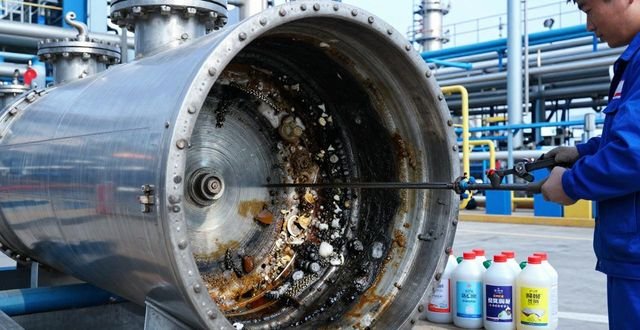


1.1 Cleaning, Acid Pickling and Passivation Following Machining
After machining, the surface of stainless steel workpieces generally retains contaminants such as iron swarf, steel filings and cooling emulsion. These contaminants can cause staining and rusting on the stainless steel surface; therefore, degreasing and oil removal should be carried out, followed by cleaning with nitric acid, This process not only removes iron shavings and steel dust but also facilitates passivation.
1.2 Cleaning, Acid Washing and Passivation Before and After Welding
As grease is a source of hydrogen, gas pockets may form in welds where grease has not been removed; furthermore, contamination from low-melting-point metals—such as zinc-rich paint—can lead to cracking after welding. Therefore, prior to welding stainless steel, the groove and the surfaces within a 20 mm radius on either side must be thoroughly cleaned. Grease can be wiped off with acetone, whilst paint and rust should first be removed using emery paper or a stainless steel wire brush, followed by wiping with acetone until the surface is spotless.
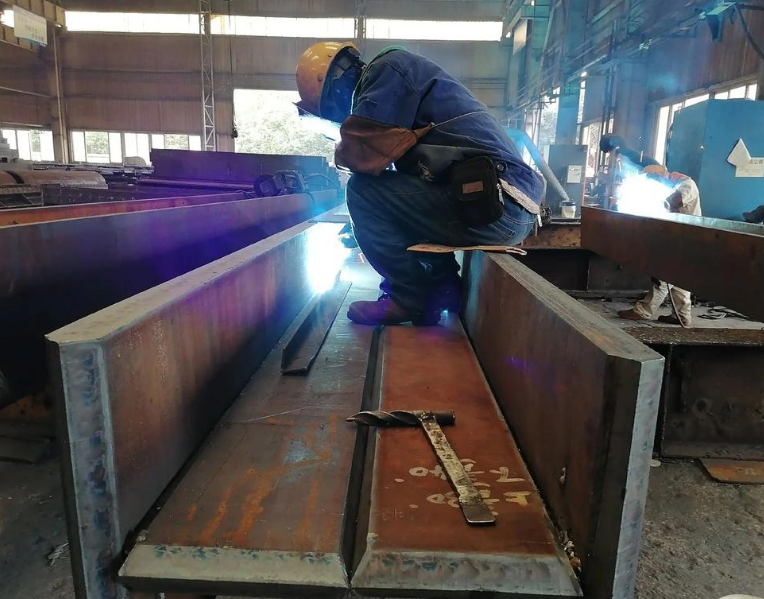
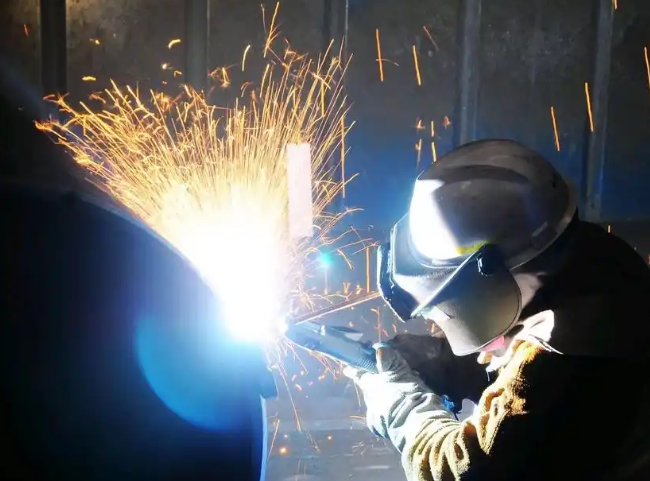
Regardless of the method used in the manufacture of stainless steel equipment,Welding technologyAfter welding, the surface must be cleaned to remove all weld slag, spatter, stains and oxidation, using methods that include both mechanical and chemical cleaning. Mechanical cleaning involves grinding, polishing, sandblasting and shot blasting; the use of carbon steel brushes should be avoided to prevent surface rust. To achieve the best corrosion resistance, the surface can be immersed in a mixture of nitric acid and hydrofluoric acid, or an acid pickling and passivation paste can be applied. In practice, mechanical and chemical cleaning are often used in combination.
1.3 Cleaning of Forged and Cast Components Stainless Steel Passivation Solution
Stainless steel workpieces that have undergone hot working processes such as forging and casting often have a layer of scale on their surface, or may be contaminated by lubricants or oxides; these contaminants include graphite, molybdenum disulphide and carbon dioxide, amongst others. These should be removed by means of shot blasting, salt bath treatment and multiple acid pickling processes. For example, the treatment process for stainless steel turbine blades in the United States is as follows:
Soak in a salt bath for 10 minutes, followed by water quenching for 2.5 minutes, then a sulphuric acid wash for 2 minutes, followed by a cold water rinse for 2 minutes, then place in an alkaline potassium permanganate bath for 10 minutes, followed by another cold water rinse for 2 minutes, and a further sulphuric acid wash for 1 minute, followed by a 1-minute cold-water rinse, a 1.5-minute nitric acid wash, a 1-minute cold-water rinse, and finally a 1-minute hot-water rinse, after which the samples are air-dried.
2. Acid washing and passivation treatment prior to the commissioning of new equipment
Stainless steel equipment and pipework, which are found in many large-scale chemical, synthetic fibre and fertiliser plants, are required to undergo acid washing and passivation prior to commissioning. Although the equipment has undergone acid washing at the manufacturing plant to remove weld slag and scale, contamination by grease, mud, sand and rust is difficult to avoid during storage, transport and installation. To ensure that the quality of products from plant and equipment commissioning trials—particularly chemical intermediates and refined products—meets the required standards, and to guarantee a successful first-time commissioning, acid washing and passivation must be carried out. For example, stainless steel equipment and pipework in H₂O₂ production units must be cleaned prior to commissioning; otherwise, in the presence of contaminants, heavy metal ions may cause catalyst poisoning. Furthermore, the presence of grease or free iron ions on metal surfaces can cause H₂O₂ to decompose, leading to the violent release of large amounts of heat, which may result in fire or even an explosion. Similarly, in the case of oxygen pipelines, the presence of even trace amounts of oil or metal particles could very likely generate sparks, leading to serious consequences.
3. Acid washing and passivation during on-site maintenance
Austenitic stainless steels 316L and 317 are widely used in the equipment and materials for purified terephthalic acid (PTA) production units; austenitic stainless steels 316L and 304L are widely used in the equipment and materials for polyvinyl alcohol (PVA) production units; Austenitic stainless steels 316L, 317 and 304L are widely used in the equipment for acrylonitrile production; austenitic stainless steels 316L, 317 and 304L are widely used in the equipment for acetic acid production. As the feedstocks for these production units contain harmful ions such as Cl⁻, Br⁻, SCN⁻ and formic acid, or due to the presence of fouling and material agglomeration, the equipment is susceptible to pitting corrosion, crevice corrosion and weld corrosion. During shutdowns for maintenance, comprehensive or localised acid washing and passivation treatments can be carried out on equipment or components to restore their passivation films, thereby preventing the spread of localised corrosion. In cases such as the dryers in the Shanghai Petrochemical PTA unit, where stainless steel pipes were replaced and overhauled, and the stainless steel heat exchangers in the acrylic fibre unit, which were also overhauled, acid washing and passivation treatments were carried out.
4. Descaling and cleaning of equipment in service

Stainless steel equipment used in petrochemical plants—particularly heat exchangers—tends to accumulate various types of deposits on its inner walls after a certain period of operation, such as carbonate scale, sulphate scale, silicate scale, iron oxide scale, organic deposits and catalyst deposits. This impairs heat transfer efficiency and can also lead to under-deposit corrosion. A suitable cleaning agent must be selected for descaling; options include nitric acid, a mixture of nitric acid and hydrofluoric acid, sulphuric acid, citric acid, EDTA and water-based cleaning agents, to which an appropriate amount of corrosion inhibitor should be added. Following descaling and cleaning, passivation treatment may be carried out if necessary. Stainless steel heat exchangers in facilities such as those for PTA, acetic acid and acrylic fibre at Shanghai Petrochemical have all undergone descaling and cleaning.
5. Points to note regarding the pickling and passivation of stainless steel
5.1 Pre-treatment for Acid Washing and Passivation
Stainless steel workpieces with surface contaminants should first be mechanically cleaned, followed by degreasing, prior to acid pickling and passivation. If the pickling and passivation solutions are unable to remove grease, and the presence of grease on the surface may affect the quality of the pickling and passivation process, the degreasing and defatting steps must not be omitted. These may be carried out using alkaline solutions, emulsifiers, organic solvents or steam.
5.2 Control of Cl⁻ in Pickling Solutions and Rinse Water
Certain stainless steel pickling solutions or pickling pastes utilise corrosive media containing chloride ions—such as hydrochloric acid, perchloric acid, ferric trichloride and sodium chloride—as primary agents or additives to remove surface oxide layers; whilst chlorinated organic solvents such as trichloroethylene are used to remove grease; from the perspective of preventing stress corrosion cracking, this is not particularly suitable. Furthermore, whilst industrial water may be used for the initial rinse, the halide content of the water used for the final rinse must be strictly controlled, and deionised water is typically employed. If, for example, water is to be used for hydrostatic testing of pressure vessels made of austenitic stainless steel in the petrochemical sector, the Cl⁻ content must be controlled to ensure it does not exceed 25 mg/L. If this requirement cannot be met, sodium nitrate may be added to the water to treat it. This will ensure compliance with the requirements; if the Cl⁻ content exceeds the specified limit, it will damage the passivation film on the stainless steel, which is the root cause of pitting corrosion, crevice corrosion and stress corrosion cracking.
5.3 Process Control in Pickling and Passivation Operations
Pure nitric acid solution is effective for removing free iron and other metallic contaminants; however, it is ineffective at removing iron oxide scale, and is also unable to remove thickened corrosion products and tempered films. Generally, a solution of HNO₃ + HF should be used; for the sake of operational convenience and safety, fluoride can be used as a substitute for HF. A solution of HNO₃ alone does not require the addition of a corrosion inhibitor, but when HNO₃ + HF is used for acid pickling, Lan-826 must be added. When carrying out acid pickling with HNO₃ + HF, the concentration should be maintained at a ratio of 5:1 to prevent corrosion. The temperature should be kept below 49 °C; if it exceeds this, the HF will volatilise.
With regard to passivation solutions, the concentration of HNO₃ should be maintained within the range of 20% to 50%. Based on the results of electrochemical testing, if treatment is carried out with an HNO₃ concentration below 20%, the quality of the passivation film formed becomes unstable, making it particularly susceptible to pitting corrosion; however, an HNO₃ concentration exceeding 50% is also unsuitable, as over-passivation must be prevented.
Although the one-step method for degreasing, acid pickling and passivation is simple to operate and saves labour time, the acid pickling and passivation solution (paste) contains corrosive HF; consequently, the quality of the resulting protective film is inferior to that achieved by the multi-step method.
During the pickling process, it is permissible to adjust the acid concentration, temperature and contact time within certain limits. As the pickling solution is used over time, attention must be paid to changes in acid concentration and metal ion concentration, and care should be taken to prevent over-pickling. The titanium ion concentration should be less than 2%; otherwise, severe pitting corrosion may occur. Generally speaking, raising the pickling temperature accelerates and improves the cleaning effect; however, it may also increase the risk of surface contamination or damage.
5.4 Control of Acid Pickling under Conditions Favourable for Stainless Steel Sensitisation
Some stainless steels become sensitised due to poor heat treatment or welding; pickling with HNO&HF may lead to intergranular corrosion. Cracks caused by intergranular corrosion may concentrate halides during operation, cleaning or subsequent processing, thereby triggering stress corrosion.
Generally speaking, these types of stainless steel, which are susceptible to sensitisation, are not usually suitable for descaling or pickling using a solution of HNO₃ + HF. If such pickling is essential following welding, ultra-low-carbon or stabilised stainless steels should be used.
5.5 Pickling of Stainless Steel and Carbon Steel Assemblies
For components made from a combination of stainless steel and carbon steel, such as the stainless steel tubes and tube sheets inside heat exchangers, and carbon steel shells, if acid washing and passivation are carried out using HNO₃, or HNO₃ combined with HF, this will cause severe corrosion to the carbon steel. In such cases, a suitable corrosion inhibitor, such as Lan-826, should be added. When stainless steel and carbon steel assemblies are in a sensitised state, HNO₃ + HF must not be used for pickling. A viable alternative in this case is to use hydroxyacetic acid (2%) + formic acid (2%) together with a corrosion inhibitor, with the temperature set at 93 °C, for a duration of 6 hours; or an ammonium EDTA neutral solution combined with a corrosion inhibitor may be used, with the temperature set at 121°C and the duration set at 6 hours. Following this, the components should be rinsed with hot water and then immersed in a solution of 10 mg/L ammonium hydroxide and 100 mg/L hydrazine.
5.6 Post-treatment following acid washing and passivation
For stainless steel workpieces, following acid pickling and rinsing with water, an alkaline potassium permanganate solution containing NaOH at a mass fraction of 10% and KMnO₄ at a mass fraction of 4% may be used; Soaking the workpieces in this solution at a temperature of 71 to 82 °C for 5 to 60 minutes will remove any residues left after pickling; the workpieces should then be rinsed with water and dried. If the surface of stainless steel exhibits mottling or stains following acid pickling and passivation, these can be removed by wiping with fresh passivation solution or high-concentration nitric acid. Finally, for stainless steel equipment or components that have undergone acid pickling and passivation, care must be taken to protect them; this can be achieved by covering or wrapping them in polyethylene film to prevent contact between dissimilar metals and non-metals.
When treating acidic waste liquids and passivation waste liquids, the treatment measures must indeed comply with ****** environmental discharge regulations. For example, in the case of fluoride-containing waste water, lime slurry or calcium chloride may be added for treatment. Where possible, ********* ; where chromium-containing wastewater is present, ferrous sulphate may be added for reduction treatment.
Acid pickling of martensitic stainless steel may lead to hydrogen embrittlement; if this is required, heat treatment can be used to remove oxygen. The specific procedure involves heating the material to 200 °C and holding it at that temperature for a period of time.
6. Quality Inspection of Stainless Steel Pickling and Passivation
Tests are usually carried out on samples; as chemical testing may damage the product’s passivation layer, examples of such methods are as follows:
(1) Titration test using copper sulphate
Apply a few drops of the ++2 solution to the surface of the test specimen and ensure it remains wet; if no copper precipitates within 6 minutes, the specimen is deemed to have passed the test.
(2) Potassium cyanide titration test for high-speed rail
Apply a few drops of the Na++(CN)₆⁺ solution to the surface of the test specimen; the quality of the passivation film can then be assessed based on the number of blue spots formed and the time taken for them to appear.

 Chinese
  Japanese
  English
  German
  Finnish
No comments