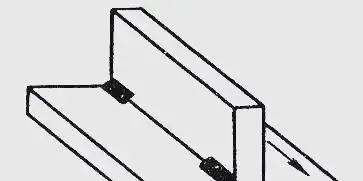


steelworksolderedCorner welds are extremely common; their diversity and complexity presenting numerous challenges for welders. Behind the different types of fillet welds, there are often specific standards and requirements. How, then, can fillet welds be completed effectively and precisely to meet engineering requirements?
011. Key Points for Fillet Welding
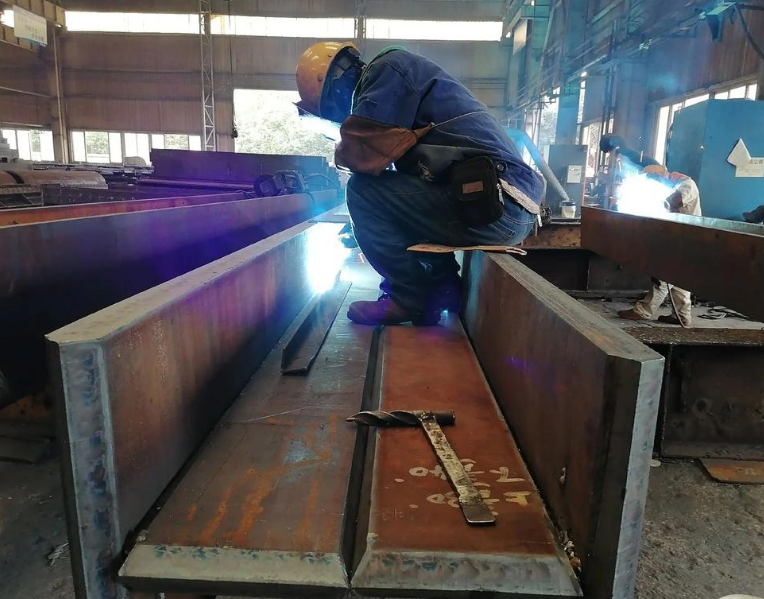
The first step in achieving high-quality fillet welds is to select suitable base metal and welding consumables. We recommend using test plates made of Q345 steel. The specific dimensions are as follows. With regard to the selection of welding consumables, we recommend using E5015 (J507) welding rods. The drying temperature for these electrodes must be maintained between 350 and 400 °C. They must also be held at this temperature for 2 hours to ensure quality. Furthermore, the welding wire should comply with the Chinese national standard ER50-6 (or the American standard ER70S-6).
Before commencing welding, the areas on either side of the weld, within a range of 15 to 20 mm, must be thoroughly cleaned. Cleaning should be carried out using a grinding wheel or chemical treatment to remove impurities such as oxide scale, rust, oil and water from the surface of the plates. These preparatory steps are crucial for ensuring the quality of the weld. During assembly, the gap must be controlled and tack welding carried out on the reverse side; typically, two to three tack welds are sufficient.

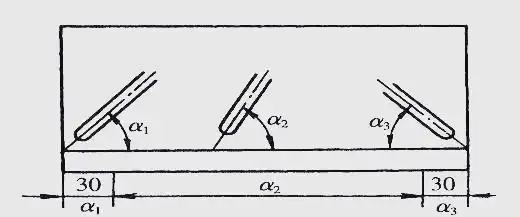
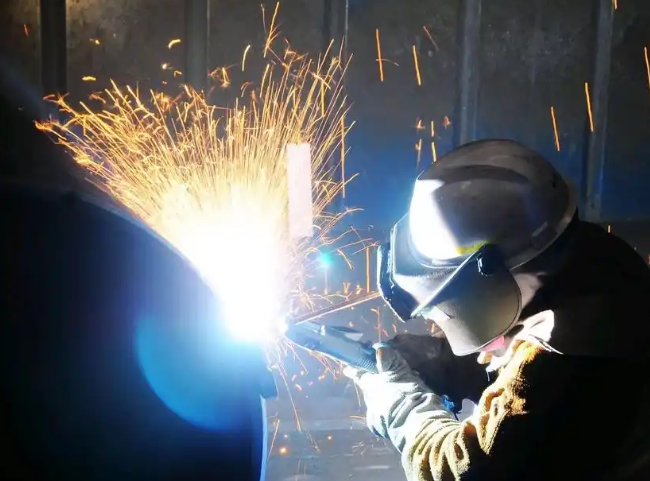
Before welding begins in earnest, it is essential to carefully adjust the welding parameters to ensure a stable welding process and guarantee the quality of the weld. These parameters include welding current, voltage, welding speed and electrode diameter, amongst others. Once these parameters have been properly adjusted, the actual welding operation can commence. The root pass is a crucial step in the entire welding process; attention must be paid to arc control and magnetic deflection, which can be effectively managed by appropriately adjusting the angle of the electrode.
When performing a flat-corner weld at the root, the right-hand welding method should be used, which involves striking the arc on the left-hand side of the test plate and employing the short-arc welding technique. During the welding process, ensure that the arc is aligned with the root fillet; by lowering the arc, ensure good fusion between the fillet and the plates on either side. Furthermore, the electrode should be moved in a straight line to the right whilst maintaining a steady welding speed, thereby ensuring the required penetration depth is achieved.
At the start and end points of a weld, magnetic blow is a common occurrence, which can adversely affect the quality of the weld. To effectively address this issue, we must adjust the angle of the welding rod appropriately; generally speaking, directing the arc towards the molten pool is an effective way to control magnetic blow.
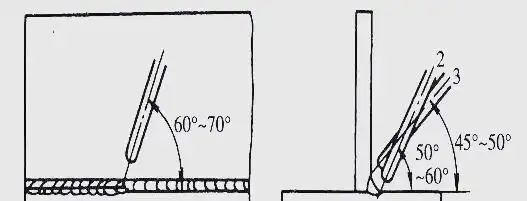
Before carrying out the cover pass, it is essential to remove slag and spatter from the root pass to prevent the occurrence of slag inclusions. The cover pass consists of two passes: first, the lower pass is welded, followed by the upper pass. When welding the lower pass, the arc must be directed at the lower edge of the root pass; the electrode must be moved in a straight line, and the electrode angle must be greater than 45°; whereas when welding the upper pass, the arc should be aligned with the upper edge of the root pass; the electrode may be moved in a straight line or with a lateral oscillation, whilst the electrode angle should be less than 45°.
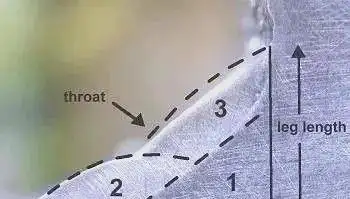
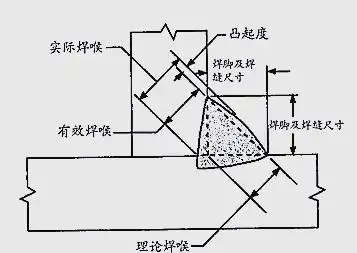
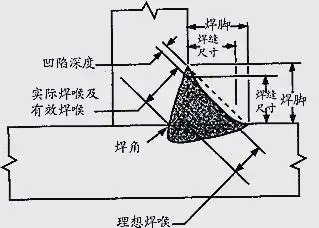
When determining the dimensions of a fillet weld, we must first clarify the type of fillet weld—that is, whether it is convex or concave. The theoretical weld throat is defined as the vertical distance from the surface of the fillet weld to the root of the joint, measured within the cross-section of the fillet weld, where the hypotenuse of the largest inscribed right-angled triangle is directed towards the joint root. The effective weld throat refers to the minimum distance measured from the surface of the fillet weld to the root of the weld, after removing the protruding portion. The actual weld throat is the shortest distance between the surface of the fillet weld and the root of the weld.
Understanding the dimensions and types of fillet welds enables us to better control our welding techniques and ensure welding quality. In the case of convex fillet welds, the weld leg length is equivalent to the weld dimension; however, for concave fillet welds, the weld dimension is slightly smaller than the weld leg length.






 Chinese
  Japanese
  English
  German
  Finnish
暂无评论内容