


In modern manufacturing, stamping is a widely used process. However, ensuring product quality whilst maintaining production efficiency is a challenge faced by every manufacturing company. In this regard, Cooling methodThe choice of cooling method has a crucial impact on the results of stamping operations. The following section explains how to select a cooling method for stamping operations, thereby helping companies optimise their production processes and improve product quality.

I. An Overview of Cooling Methods in Stamping
1.1 What is stamping?
A process known as stamping involves the use of dies and presses to shape sheet metal. This process is widely used in numerous industries, including the automotive, electronics and household appliance sectors. Given that a significant amount of heat is generated during the manufacturing process, selecting an appropriate cooling method is of particular importance.
1.2 Why is cooling necessary?
In the stamping process, heat is generated both by friction between the material and the die and by the deformation of the material itself. If this heat is not dissipated promptly, it may cause the die to overheat, thereby affecting its service life and even leading to dimensional instability in the product, ultimately resulting in a decline in product quality. Therefore, selecting an appropriate cooling method is crucial for maintaining the continuity and stability of production.
II. Common Cooling Methods in Stamping
2.1 Water-cooling system
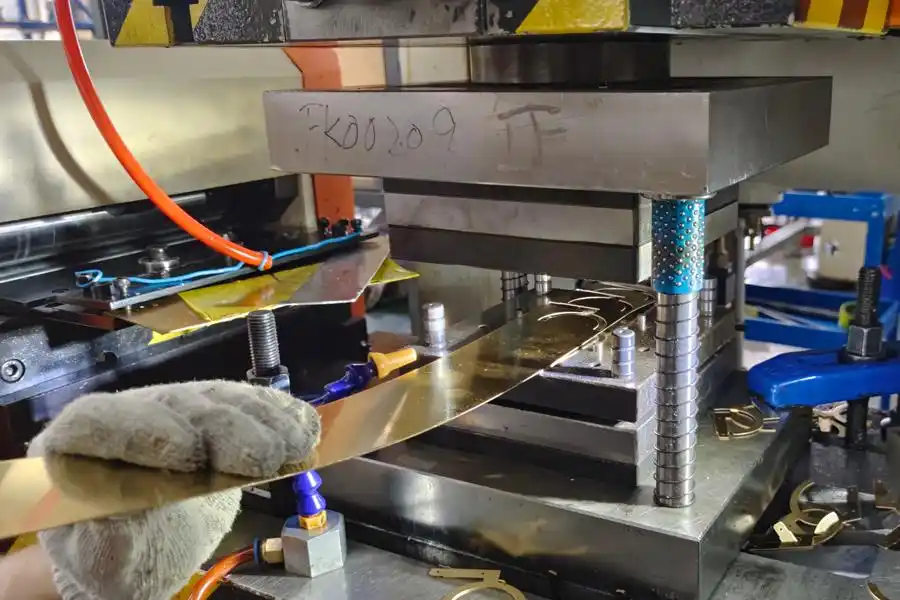
One of the most common cooling methods currently in use is the water-cooling system. This system utilises a circulating water flow to dissipate heat from the mould surface; it offers the advantages of rapid cooling and high efficiency, making it suitable for large-scale production scenarios as well as applications involving frequent use.
Pros:
Highly efficient and fast: capable of rapidly reducing mould temperature, thereby shortening production cycles.
Highly adaptable: the water temperature and flow rate can be adjusted to suit different process requirements.
Drawbacks:
Higher costs: The initial investment is substantial, and regular maintenance is required.
Strict water quality requirements: purified water must be used to prevent blockages in the pipework.
2.2 Oil-cooling system
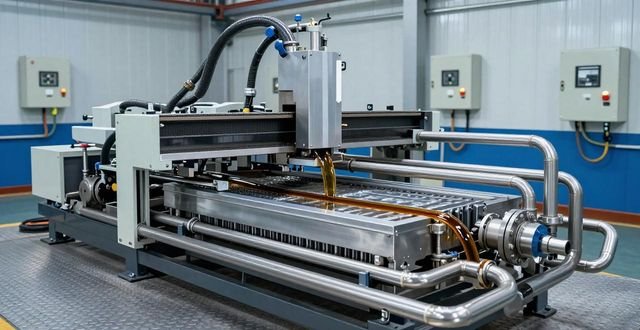
Oil-cooling systems, which use lubricating oil as the medium, remove heat through circulation; this method is frequently employed in the machining of specialised materials such as aluminium alloys.
Pros:
Effective lubrication: Not only does it cool the system, but it also provides effective lubrication, reducing friction.
Wide range of applications: Suitable for parts made from a variety of materials and with complex shapes.
Drawbacks:
Slower heat dissipation: Compared to water cooling, oil cooling is less efficient at dissipating heat.
Potential to pollute the environment: Improper handling of oil spills can have an impact on the environment.
2.3 Air cooling
Fans or compressed air are used to enhance air flow, thereby dissipating heat; this is the principle behind air cooling. This method is simple and economical, although its cooling efficiency is relatively modest.
Pros:
Low cost: The equipment is simple and running costs are low.
Easy to operate: no complex pipework is required, and maintenance is straightforward.
Drawbacks:
Slow cooling rate: Not suitable for prolonged use in high-temperature environments.
Highly susceptible to environmental factors: cooling performance is significantly reduced in high temperatures.
III. How to Choose the Right Cooling Method
3.1 Selection based on production scale
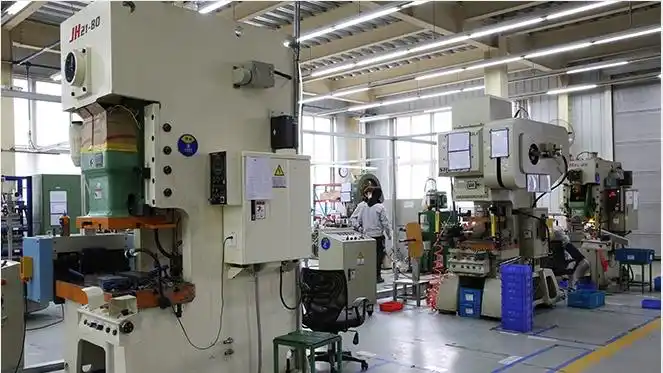
Mass production: It is recommended that a water-cooling system be used to improve production efficiency and product quality.
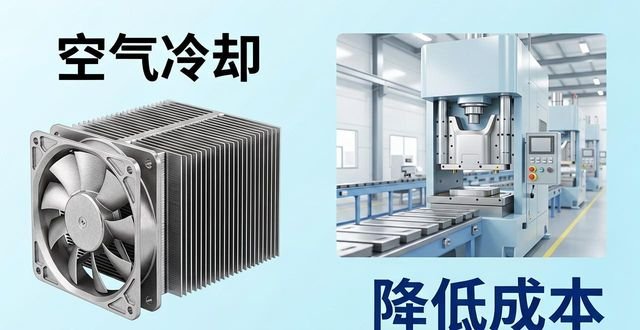
Small batches, wide variety: air cooling can be selected to reduce costs.
Medium-scale production: It may be worth considering a combination of water-cooling and oil-cooling to capitalise on the strengths of each.
3.2 Selection based on material properties
Steel: Water-cooling systems are generally used, as steel has good thermal conductivity and can transfer heat rapidly.
Aluminium alloy: better suited to oil cooling, as it both effectively reduces temperature and provides the necessary lubrication.
Other alloy materials: Select the appropriate cooling method based on their specific properties.
3.3 Selection based on process complexity
Simple components: Air cooling is sufficient to meet the requirements.
Complex components: We recommend using water-cooling or oil-cooling to ensure uniform cooling across all parts.
High-precision components: Water cooling is the preferred option to ensure dimensional stability.
IV. Analysis of Practical Application Cases
4.1 Stamping of Automotive Components
A leading automotive components manufacturer has adopted an advanced water-cooling system on its production line. This system has not only significantly improved production efficiency but has also markedly enhanced product precision and consistency. Following comparative trials of different cooling methods, the company ultimately selected the solution best suited to its requirements.
4.2 Stamping of Electronic Product Housings
A company specialising in the manufacture of electronic products has adopted an oil-cooling system for the stamping of small, precision parts. Although the initial investment was relatively high, the reduction in the scrap rate has, in the long term, resulted in considerable cost savings. Furthermore, the lubricating effect provided by the oil-cooling system has also extended the service life of the dies.
V. Summary and Outlook
In light of the above considerations, selecting the correct cooling method is of paramount importance for improving the overall standard of stamping processes. When making decisions, companies should comprehensively take into account a range of factors, including their own production characteristics, material properties and budget. In the future, with the continuous advancement of technology, it is believed that more innovative cooling solutions will emerge, thereby further propelling the manufacturing sector towards intelligent production. We hope this article provides you with valuable reference information to help you better understand and apply the principles of “how to select cooling methods in stamping processes”.




 Chinese
  Japanese
  English
  German
  Finnish
暂无评论内容