

1 Accounting methods
Methods of calculating working hours
The total time obtained by adding up all the individual time periods is the result derived from the labour hour calculation method. To improve the accuracy and efficiency of the calculation process, spreadsheets or specialist software can be used for data entry and computation. At the same time, when making reasonable adjustments to labour hours, factors such as production efficiency and equipment utilisation must also be taken into account.
Compiled bymachiningBefore completing the timesheet, you must first gather the necessary data and then fill in the basic information to ensure the accuracy and traceability of the calculations. The basic information includes, but is not limited to, the workpiece name and number, which serve to identify the specific item being processed and provide its unique identifier.
The following descriptions are provided to explain the category of materials used in the workpiece, their specific grades, and other key details such as dimensions; these relate to material types and specifications.
First, describe in detail the machining operations to be carried out, such as turning, milling, grinding and drilling. Next, specify the machining tolerances and requirements, that is, the dimensional accuracy, surface roughness and other quality criteria to be achieved following machining. Then specify the model of the machine tool to be used, as well as the specifications of the various tools required, such as cutting tools and fixtures.
2 Calculation of working hours
I. Flexible hours
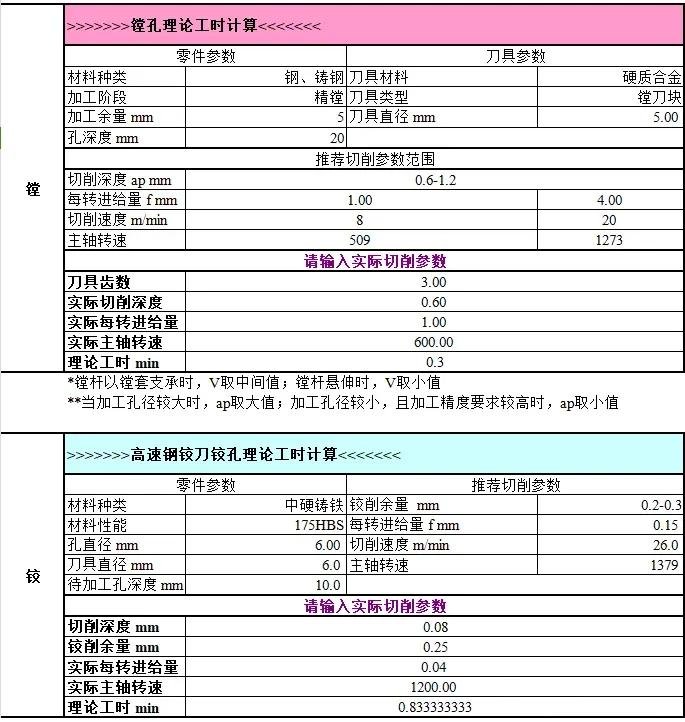
Machine time refers to the time during which the machine tool is directly engaged in machining the workpiece; this is a core component of labour time calculation. The active time for each machining operation is calculated based on the specific requirements of the process, taking into account machine parameters such as cutting speed, feed rate and depth of cut. This can be facilitated by consulting the machine’s operating manual, cutting parameter tables or using specialist calculation software.
II. Support Hours

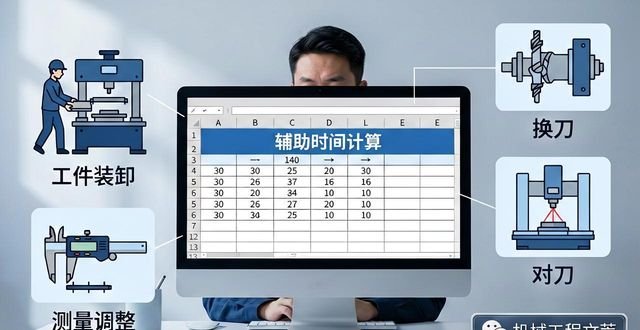
Auxiliary time refers to non-cutting time directly associated with machining operations, such as workpiece loading and unloading, tool changing, tool setting, and measurement and adjustment. This time must be estimated based on practical experience, or alternatively, by referring to historical data for similar workpieces. The WeChat official account ‘Mechanical Engineering Anthology’ is a vital resource for engineers!
3. Other times
In addition to other time periods, this may include time not directly spent on processing, such as equipment warm-up, downtime due to faults, and waiting for inspections. The calculation of such time should be handled flexibly in accordance with actual circumstances; where necessary, a certain proportional factor may be applied for estimation purposes.
V. Preparation and completion times
Set-up time refers to the time required to carry out various preparatory operations prior to commencing machining, such as adjusting the machine tool, installing fixtures and tooling, and preparing cutting tools; The completion time refers to the duration required for a series of related tasks following the completion of machining, such as cleaning up, returning components to their designated locations, and recording data. When calculating these durations, estimates are typically based on the operator’s practical experience, or derived from previously recorded data.
VI. Calculation of Costs
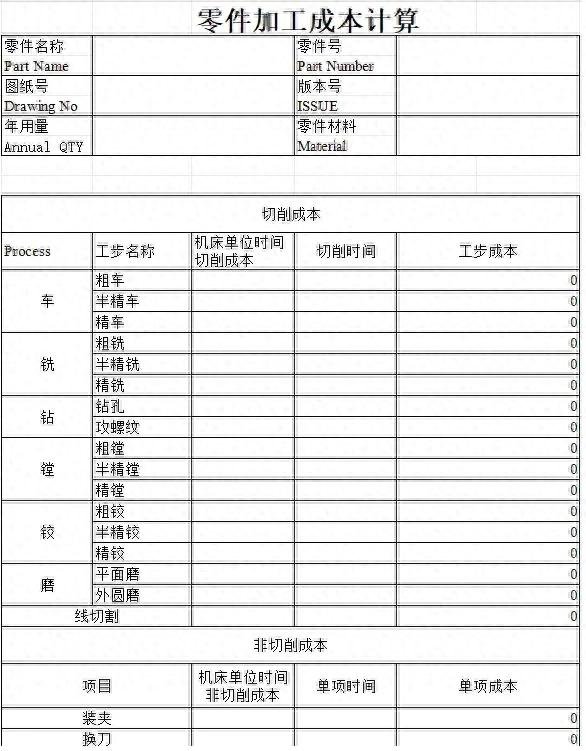
First, calculate the labour hours and aggregate the unit labour cost (which covers labour costs, daily equipment depreciation, energy costs, maintenance and other items); based on this, calculate the total cost required to process the workpiece. Cost calculation plays a supporting role for enterprises; it assists them in setting reasonable prices, helps them control costs, and contributes to improving their economic efficiency.
VII. Important Notes
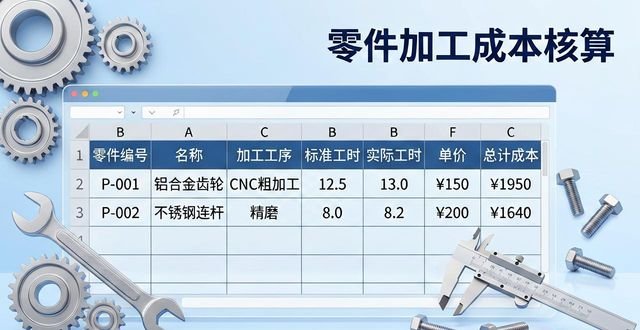
With regard to data accuracy, it is essential to ensure that all input data is accurate and complete, thereby preventing calculation errors caused by data inaccuracies. In terms of timeliness, adjustments must be made promptly to the parameters and data in the labour hour calculation tables in response to developments such as process improvements and equipment upgrades. With regard to flexibility, given the uncertainties and variability inherent in the machining process, labour time calculations should allow for a degree of flexibility. In terms of cost control, labour time calculations and analysis should be utilised to identify key areas for cost control and implement effective measures to reduce production costs. With regard to continuous improvement, labour hour calculation tables should be reviewed and updated regularly to continuously optimise machining processes and enhance production efficiency.
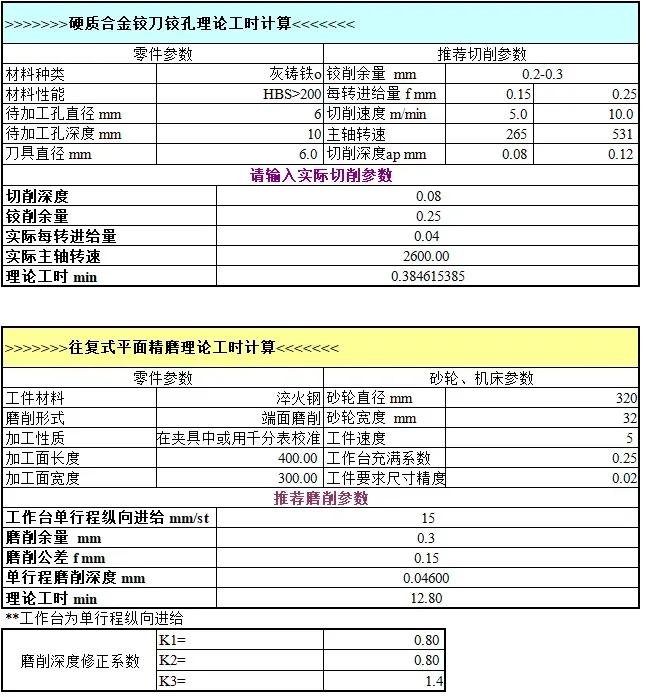
3 Excel screenshots
01
02
03






 Chinese
  Japanese
  English
  German
  Finnish
暂无评论内容