

service industryTo all you business owners out there, let’s do the maths. You spend 100,000 yuan on a trade fair, plus travel and staff costs, only to come away with perhaps as few as twenty business cards – and who knows how many of those will actually result in successful orders. Looking at this investment in isolation, it might seem to add up, but if you factor in the time your team has spent running around for this, as well as the many other opportunities you’ve missed as a result, is this really good value for money? The marketing process is like riding a rollercoaster: you’re busy enough to drive yourself mad when there’s a trade fair, yet whenever there are no relevant events, you can’t help but feel anxious, constantly waiting for the next so-called “breakthrough” to materialise. There’s simply no sense of steady security when it comes to the company’s growth.

The following comparison should help to clarify the issue. Traditional, fragmented marketing and systematic service represent two entirely different scenarios in terms of costs, lead stability and conversion cycles. For the manufacturing sector, genuine growth does not rely on a few so-called “spikes”, but is more like running a marathon: it requires a system capable of delivering sustained, stable momentum. So, what exactly does a “customer acquisition production line” look like that allows you to bid farewell to those “rollercoaster”-like fluctuations and achieve stable growth? Below, we will break down several core modules of the “2026 Robot Marathon” systems engineering project.
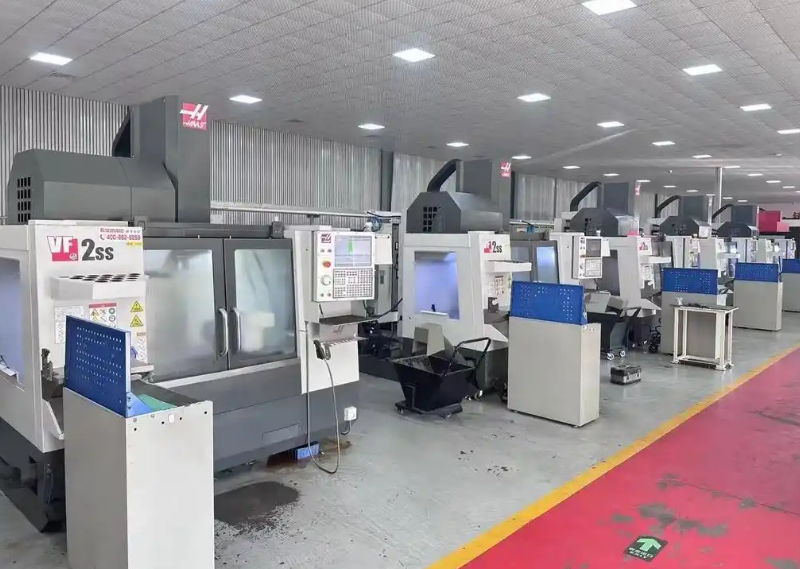
Key module: Strategic machine tools, featuring precise “programming” based on industry-specific expertise.
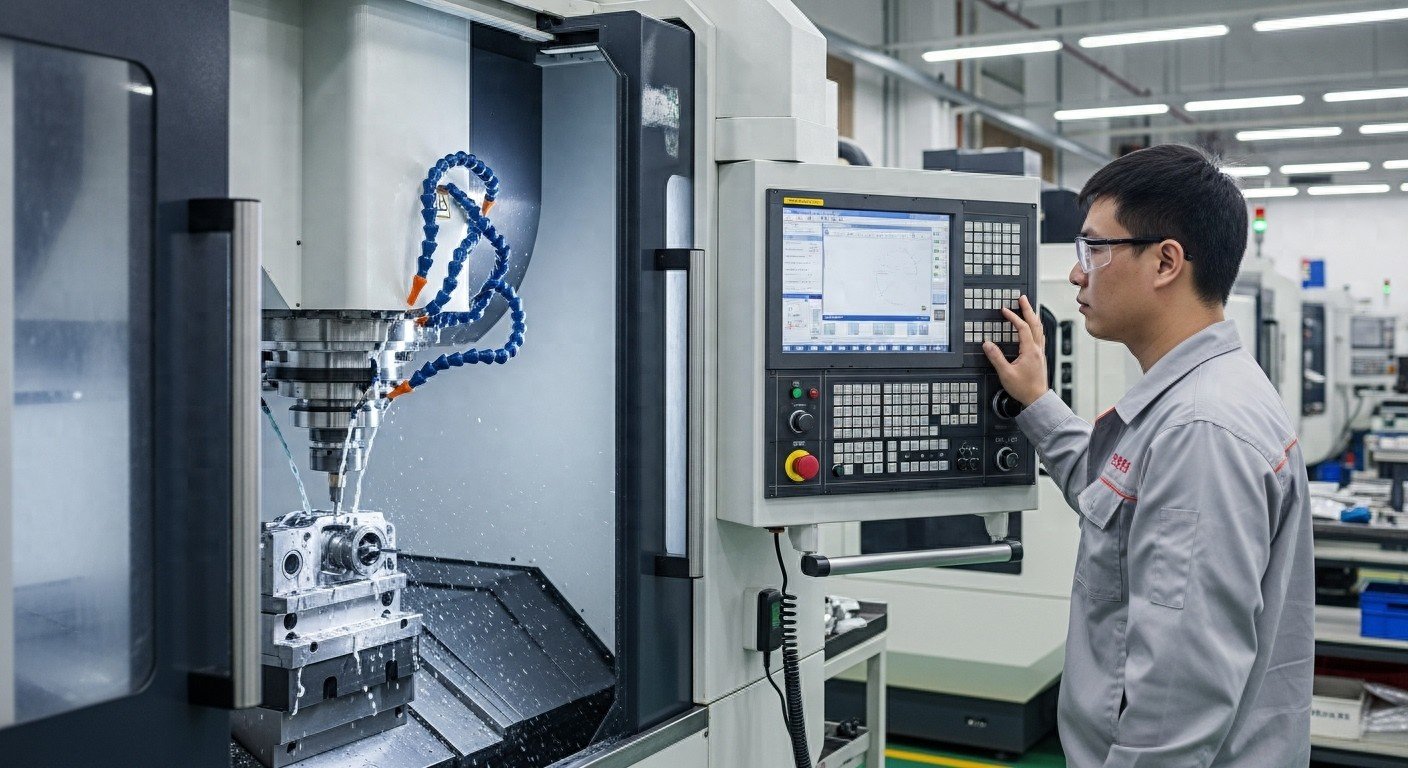
The starting point of this system is not to run adverts straight away, but rather to “programme” you first—much like inputting a machining programme into a CNC machine: you must first understand what type of material you are machining and what level of precision is required. We must first gain a thorough understanding of your industry: are you involved in the production of valves, precision components, or bespoke equipment? How long is your customers’ procurement decision-making process? And what are the respective priorities of the Technical Director and the Procurement Manager?
To establish accurate customer profiles, content direction and channel strategies, one must draw upon this in-depth understanding. For example, when writing content for a valve manufacturer, one should not merely list technical specifications, but rather discuss suitability for specific operating conditions and long-term maintenance costs. The aim of taking such an approach is to ensure precision right from the outset, so that every penny of the budget is spent on communicating directly with potential decision-makers, rather than searching for a needle in a haystack amongst generic traffic and then having to expend further effort on filtering later. Put simply, precision is not a matter of casting a wide net and then filtering the results; rather, it involves exercising control at the source based on industry expertise.
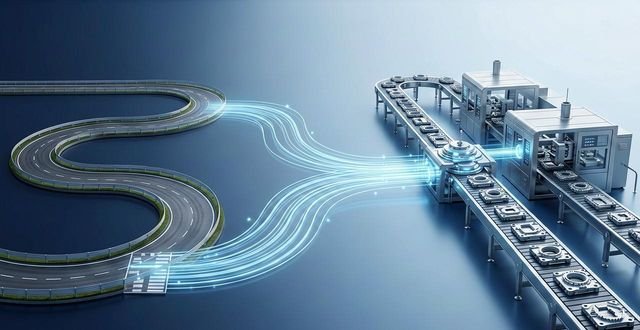
Module 2: Resource Pipeline – Integration and Optimisation: Say Goodbye to Fragmented Efforts
The strategy has been finalised, but will its implementation prove even more of a headache? The content team is busy drafting copy, the advertising team is fine-tuning accounts, and the sales team is following up on leads; yet everyone is using different tools, and communication relies solely on group chats, resulting in a chaotic flow of information. This fragmented process is causing far too much internal friction.
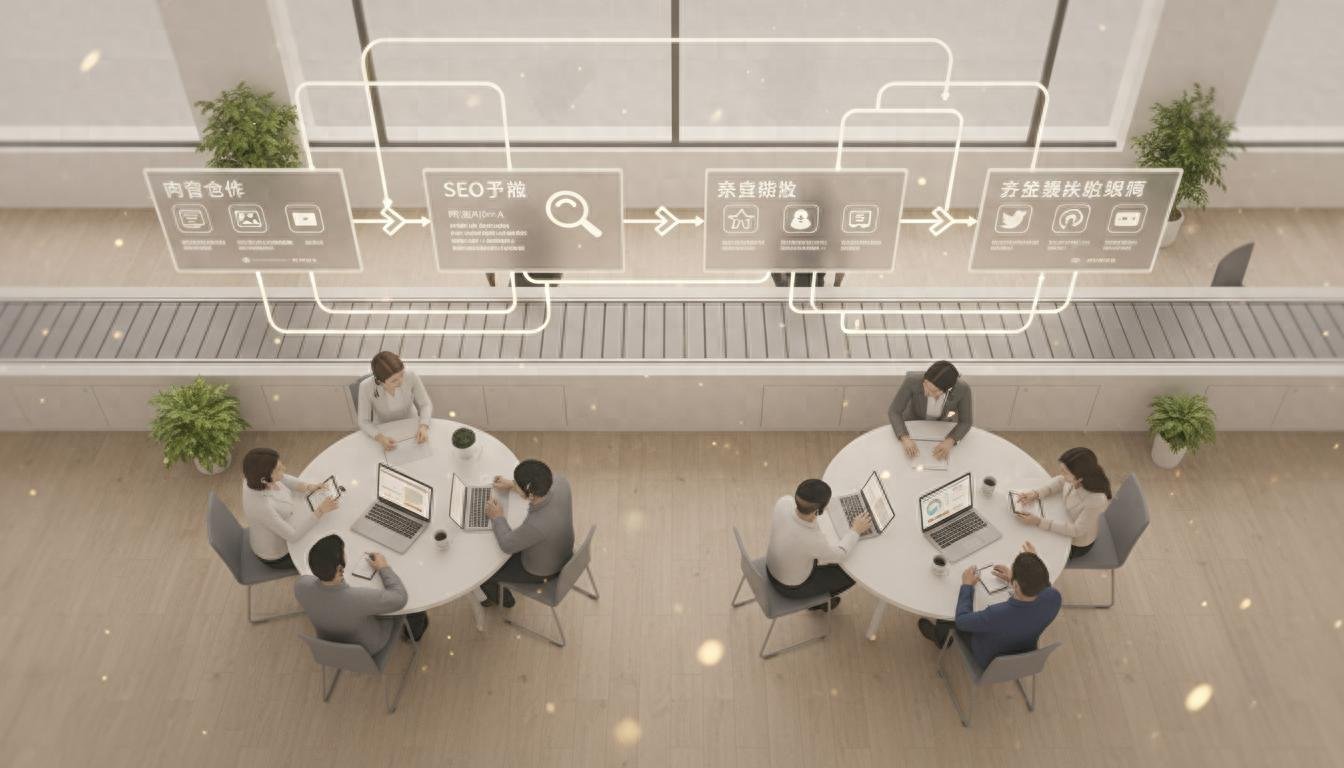
“The approach adopted by ”Robot Marathon“ involves integrating these disparate stages into a highly efficient ”resource pipeline“. This ”resource pipeline’ encompasses numerous stages, ranging from in-house content creation and SEO/SEM campaigns to social media operations, followed by the initial screening and allocation of leads. Throughout this process, all stages operate within a framework of mutual coordination. The flow of information is seamless throughout the entire process. For example, if a technical article successfully generates a search-based lead, the source of that lead and the associated reading behaviour are automatically recorded by the system, after which the lead is passed on to the sales team in sequence.
Through the use of standardised processes and integrated tools, a significant amount of repetitive work and human error is reduced. Your team no longer needs to switch back and forth between different software programmes, allowing them to focus more on strategy optimisation and client communication. The direct benefits of this integration include improved operational efficiency and savings on hidden costs, providing a solid procedural guarantee for a steady flow of leads.
The third module, the Conversion Funnel Optimizer, utilises monitoring and iterative optimisation to maximise the value of each lead.
Now that the production line is up and running, how can we ensure that the yield rate of the “products” remains high? This can only be achieved through end-to-end monitoring and continuous optimisation. The system will track the dynamic trajectory of each lead, much like checking a dashboard: Which article did the lead read that brought them here? How long did they actually stay on the landing page? Why did they not provide the relevant qualification details? After the sales team followed up, at which specific stage did the process stall?
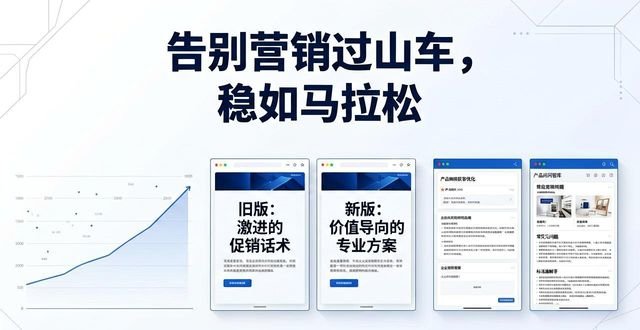
The data that can be pinpointed immediately is clear to see: is the problem a lack of compelling content, an unsuitable channel, or flawed sales pitches? Based on this feedback, adjustments can be made swiftly: A/B testing different landing page headlines, optimising the content of lead-nurturing emails, and refining the product Q&A database available to the sales team.
Throughout this process, the element of guesswork in marketing decisions is significantly reduced. Rather than relying on gut instinct and trial and error, you carry out precise iterations guided by data. This not only improves conversion efficiency on a per-campaign basis but, more importantly, establishes a growth flywheel of “data feedback, strategy optimisation and performance improvement”. The system will run ever more smoothly, much like a precision machine tool: the longer it is used, the better it understands how to produce high-quality components.
System Integration: Providing your clients with “long-term stability insurance”
With all these modules interlocking, what exactly is the end result? It is not a sudden surge in leads in any given month, but rather something known as “certainty”. It is as if you have added a layer of protection—a “long-term stability insurance”—to your customer growth engine. Regardless of whether external market conditions are favourable or unfavourable, this channel—known as the “customer acquisition production line”—is able to maintain a baseline level of output, thereby giving you the confidence deep down to dare to formulate long-term plans.
Its value lies in its ability to provide 24/7 stable operation, much like a conveyor belt that never “runs out of power”. Our role is therefore different: we are not “blaster” types who rush in to “blow things up” wherever there is a need, but rather “systems engineers” dedicated to maintaining the healthy and stable operation of the entire system. The core and most critical task is to ensure that your growth system remains in a state of continuous, stable and reliable operation. If customer acquisition is treated as a project, it will inevitably reach a conclusion and come to an end; but only by operating it like a production line can we achieve continuous, uninterrupted results. This is precisely the grand, long-term vision that the ‘2026 Robot Marathon’ is striving to build.
So, let’s return to the financial scenario we considered at the start. Is it a question of paying for a one-off “flash in the pan”, or investing in sustained “stability and security”? The answer as to which offers better value for money is crystal clear. Among your peers in the manufacturing sector, do you encounter situations where marketing activities rely entirely on the owner’s personal network or on trade fair opportunities, whilst the business remains largely inactive the rest of the time? Please share any examples you have witnessed in the comments section.



 Chinese
  Japanese
  English
  German
  Finnish
暂无评论内容