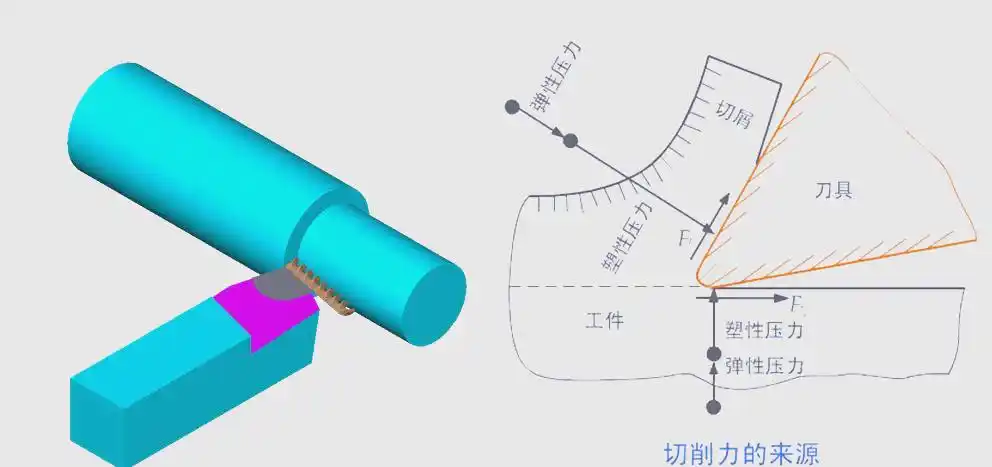


于machiningDuring the machining process, the angle of the cutting tool plays a crucial role; not only does it influence the geometry of the cutting edge, but it is also a key factor in determining the quality and efficiency of the machining process.
011. The Importance of Turning Tool Geometric Angles
1.1 > Analysis of the cutting edge of a turning tool
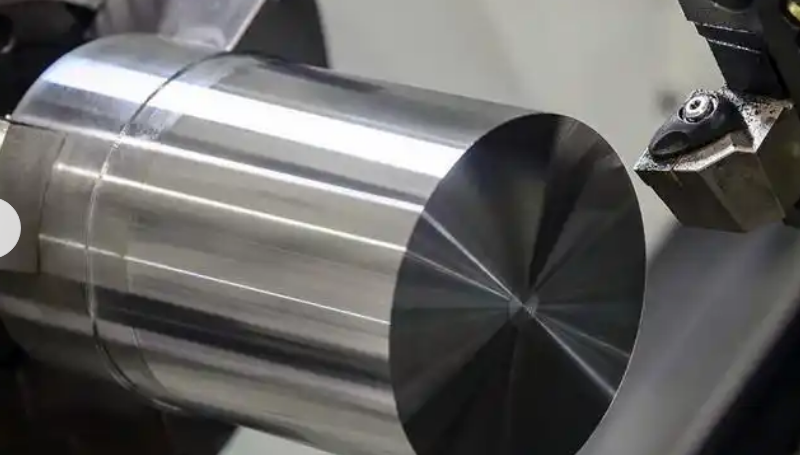
A turning tool has a cutting section comprising the rake face, the main rear face, the secondary rear face, the main cutting edge, the secondary cutting edge and the tool tip, amongst other key components. When these elements are correctly configured, they collectively determine the performance and effectiveness of the turning tool during the cutting process.

The face of the cutting tool over which the chips flow is the rake face; its shape is of paramount importance to the smoothness of the cutting process. The main flank faces the machined surface of the workpiece, and the interaction between the two during this process is a key factor in determining the cutting results. The secondary rake face faces the machined surface of the workpiece and interacts with it during the process, exerting a significant influence on the stability of the cutting operation. The primary cutting edge is the line formed by the intersection of the tool’s rake face and the primary rake face; its shape and position directly affect cutting efficiency and precision. The secondary cutting edge, which assists the primary cutting edge in chip removal, is situated at the intersection of the tool’s rake face and secondary rear face; it enhances the uniformity of the cut. The tool tip, formed by the intersection of the primary and secondary cutting edges, plays a crucial role in the initial stages of the cutting process due to its shape and position.
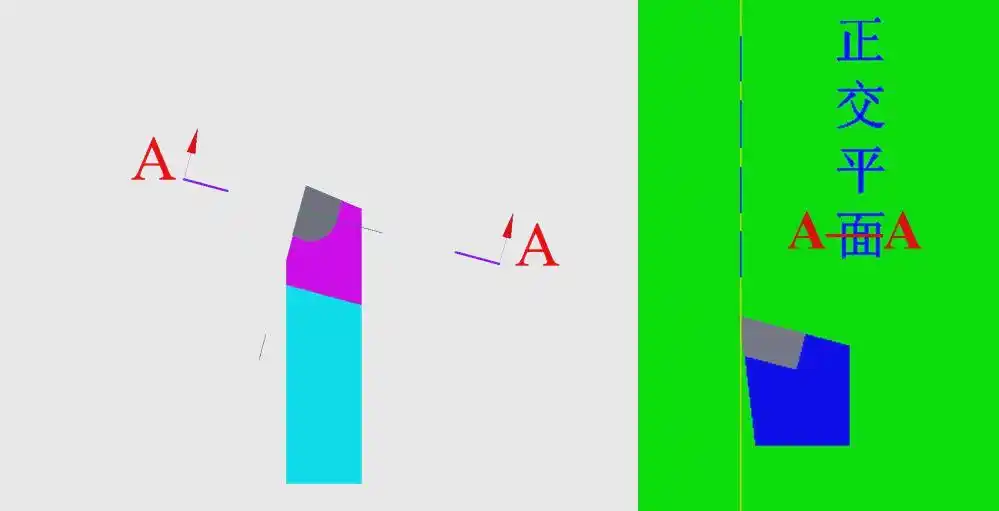
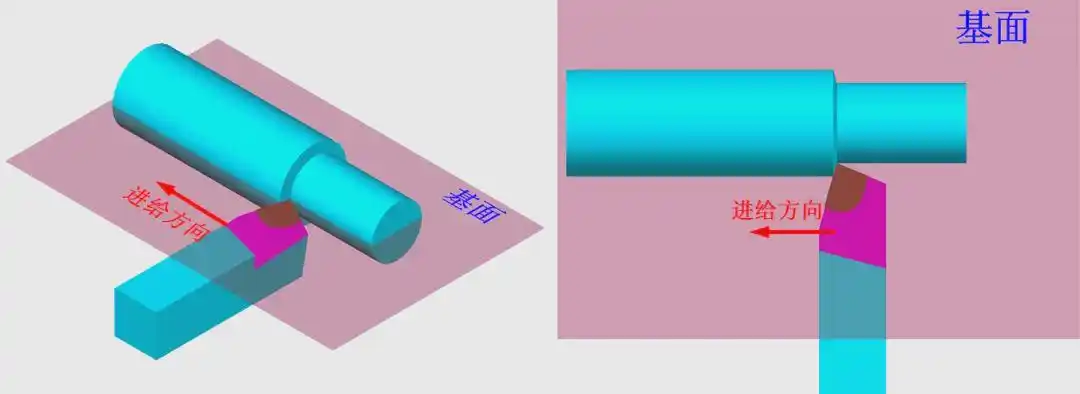
When analysing the cutting edge of a turning tool, it is also necessary to understand the concept of the three auxiliary planes. Whether these auxiliary planes are the cutting plane, the reference plane or the orthogonal plane, they provide important reference points for determining and measuring the geometric angles of the turning tool.
The cutting plane is a plane that is tangent to the main cutting edge at a selected point and remains perpendicular to the base face of the tool shank.
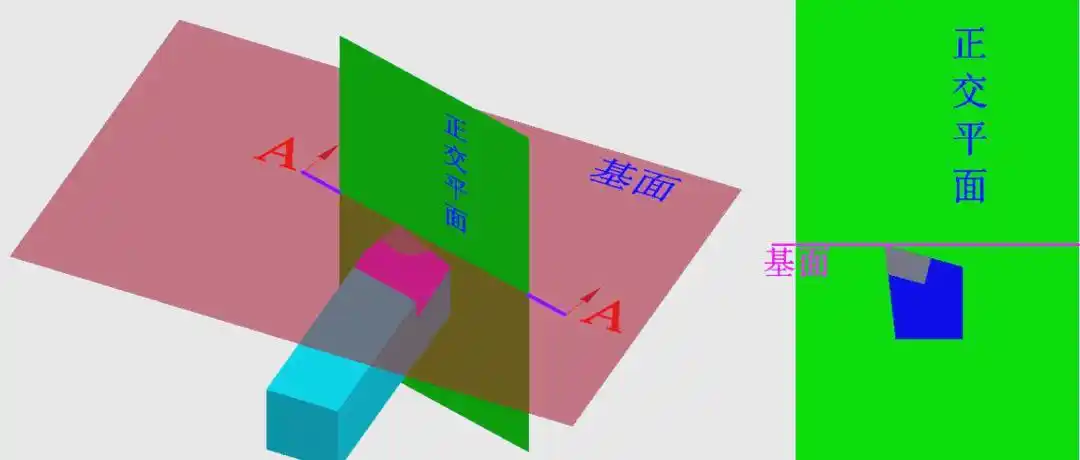
The reference plane passes through a specific point on the main cutting edge and remains parallel to the bottom surface of the tool shank.

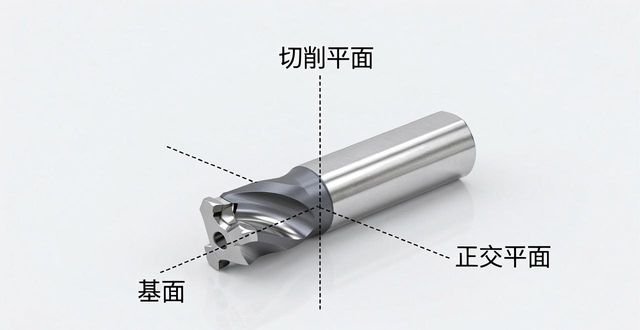
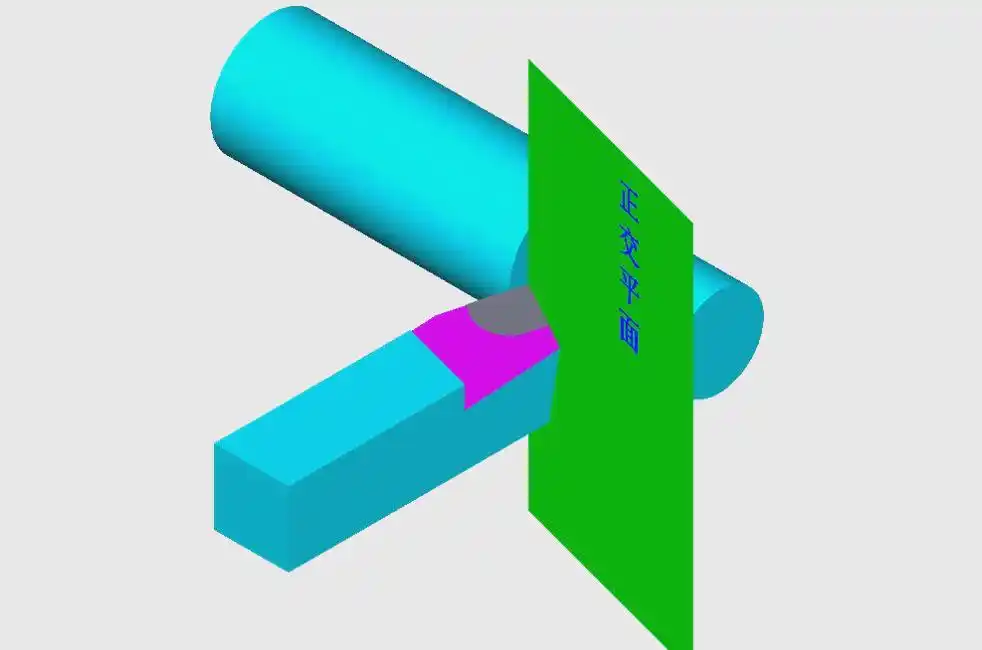
The orthogonal plane is perpendicular to both the cutting plane and the base plane, forming right angles with both.
It can be seen that there is a cutting plane, a base plane and an orthogonal plane; these three coordinate planes are mutually perpendicular in space and together form a complete, standard spatial rectangular coordinate system.
022. Selection and Consideration of Key Geometric Angles
2.1 > Principles for selecting the lead angle
The design of the rake angle is intended to balance the rigidity and sharpness of the cutting edge. When selecting a rake angle, the primary consideration is the hardness of the material being machined. For materials with a high degree of hardness, a smaller rake angle should be chosen, whereas for materials with a lower degree of hardness, a larger rake angle may be selected. In addition, the nature of the machining operation is a key factor in determining the size of the rake angle. During rough machining, to ensure the rigidity of the cutting edge, a smaller front angle is appropriate; whereas during the finishing stage, to achieve higher cutting efficiency, a larger front angle should be selected. Typically, the front angle ranges from -5° to 25°.
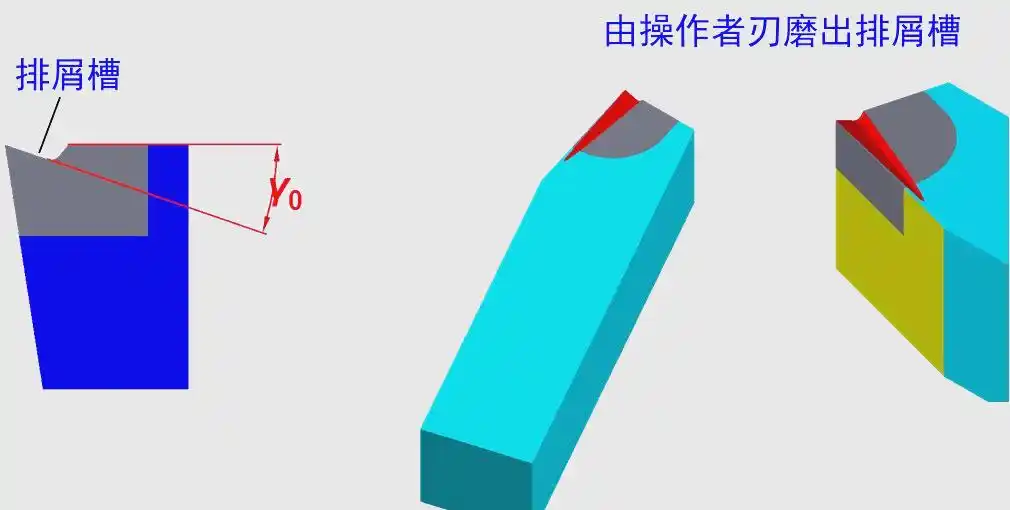
In the process of turning tool manufacture, the rake angle (γ0) is not usually predetermined, but is instead achieved by grinding a chipbreaker groove into the tool. This chipbreaker groove plays a crucial role. Not only does it effectively break up the chips to prevent tangling, but it also controls the direction of chip flow, ensuring the accuracy of the machined surface. At the same time, it reduces cutting resistance, thereby extending the tool’s service life.
2.2 > Principles for selecting the rear angle
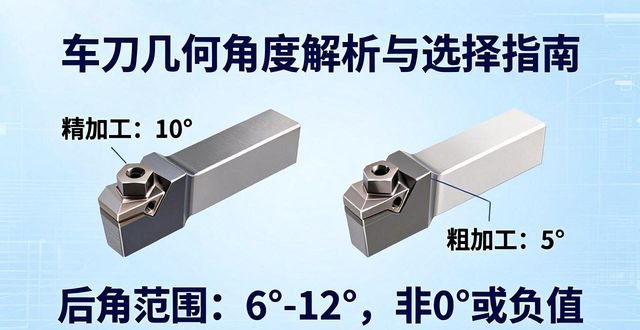
The selection of the rake angle is influenced by machining characteristics and the hardness of the workpiece material. In the finishing process, to ensure the sharpness of the tool and machining accuracy, a larger rake angle should be selected; whereas during roughing, given the need for greater cutting force, a smaller rake angle should be selected. Furthermore, the hardness of the workpiece material is a key factor influencing the selection of the rake angle. When machining materials with high hardness, a smaller rake angle is required to enhance the tool’s durability; conversely, the rake angle should be set to a larger value. It should be noted that the rake angle typically ranges from 6° to 12°, and must not be zero or negative.
2.3 > Principles for selecting the principal azimuth
When selecting the rake angle, it is essential to take into full consideration the rigidity of the turning process system, which comprises the lathe, the fixture and the cutting tool. If the system is sufficiently rigid, a smaller rake angle should be selected. Doing so not only helps to extend the service life of the turning tool but also improves heat dissipation, and may even optimise surface finish. At the same time, the geometry of the workpiece is also a key factor in determining the rake angle. For example, when machining a step, the rake angle should be set to 90°, whereas for workpieces where the cut is made at the centre, a rake angle of 60° is generally selected. In cases requiring particular attention, the range of main rake angles generally falls between 30° and 90°, with 45°, 75° and 90° being the most frequently used angles.
2.4 > Principles for selecting the secondary declination
When selecting the secondary rake angle, the first consideration must be the overall rigidity of the system comprising the turning tool, the workpiece and the fixture. Sufficient rigidity allows for a smaller secondary rake angle to be selected; conversely, if rigidity is insufficient, a larger value must be chosen. In addition, the nature of the machining operation is another determining factor. During finishing operations, the secondary rake angle is generally set within the range of 10° to 15°, whereas for roughing operations, a secondary rake angle of approximately 5° may be selected.
2.5 > Principles for selecting the rake angle
The choice of cutting edge angle is primarily determined by the nature of the machining operation. During the roughing stage, given the significant impact forces exerted by the workpiece on the turning tool, it is recommended to select λS ≤ 0°; whereas during the finishing stage, as the impact forces exerted by the workpiece on the turning tool are smaller, λS ≥ 0° should be selected, with λS = 0° typically being chosen. Generally speaking, the rake angle is usually selected within the range of -10° to 5°.






 Chinese
  Japanese
  English
  German
  Finnish
暂无评论内容