
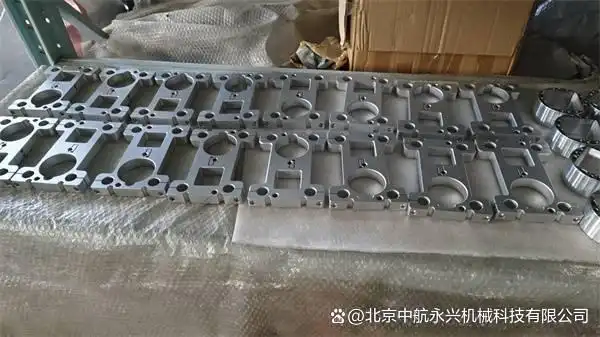
In many sectors of the manufacturing industry, cnc machining centreThese factories play a significant role; they specialise in using computer numerical control (CNC) technology to perform high-precision machining on materials such as metal and plastic. Their core function lies in transforming digital design drawings into actual precision components, thereby meeting a wide range of requirements from prototype development to mass production.
Upon entering a typical CNC machining centre, the first thing that catches the eye is usually the neatly arranged machinery. These machines are the factory’s key assets; their performance and state of maintenance are directly linked to the quality of the final product. The factory’s day-to-day operations revolve around a series of rigorous processes, including order processing, programming, machining and quality control.
1. Core equipment and technological infrastructure
The key to a CNC machining centre lies inCNC machine tools, Many machine tools rely on pre-programmed instructions to control the precise movement of cutting tools across multiple axes, thereby machining workpieces clamped to the worktable. Common types of equipment include vertical machining centres, horizontal machining centres and five-axis machining centres, amongst others. In a vertical machining centre, the spindle and worktable are positioned vertically, making it suitable for machining plates, discs and small moulds. In a horizontal machining centre, the spindle and worktable are parallel, making it particularly well-suited for multi-surface machining of box-type components. Five-axis machining centres are far more advanced; they can move simultaneously across five degrees of freedom. This enables the machining of complex curved parts in a single operation, significantly reducing the number of clamping operations and thereby improving machining accuracy and efficiency.
In the field of technology, those engaged in programming act as a bridge between design and manufacturing, whilst technicians utilise specialist computer-aided manufacturing software to generate toolpaths based on the three-dimensional models of parts. This process involves integrating a wide range of factors that must be taken into account, such as material properties, tool selection, cutting parameters and clamping methods. The resulting program code is then transmitted to the control system of the CNC machine tool, which in turn directs the machine to carry out all machining operations.
2. Production Process andquality control
A comprehensive machining process for a component typically begins with process planning, during which engineers analyse the drawings, determine the most suitable machining strategy, select cutting tools and design the clamping arrangement. This is followed by the programming stage, where the process plan is converted into code that the machine tool can recognise.

Preparatory work prior to machining is equally crucial; the operator must select the appropriate cutting tools in accordance with the programme list and accurately measure the length and radius compensation values of each tool using a tool presetter. The workpiece must be securely clamped to the worktable using precision fixtures to ensure that no displacement or vibration occurs during high-speed cutting operations.
During machining, the operator must closely monitor the condition of the equipment, clear away swarf promptly, and regularly check the wear on cutting tools, replacing them when necessary. For batch production, a first-piece inspection system is generally adopted. This means that once a high-quality part has been machined, quality control personnel use precision instruments such as a coordinate measuring machine and a contour projector to carry out quality checks. Only after confirming that all dimensions are within tolerance can the machining of subsequent batches commence.
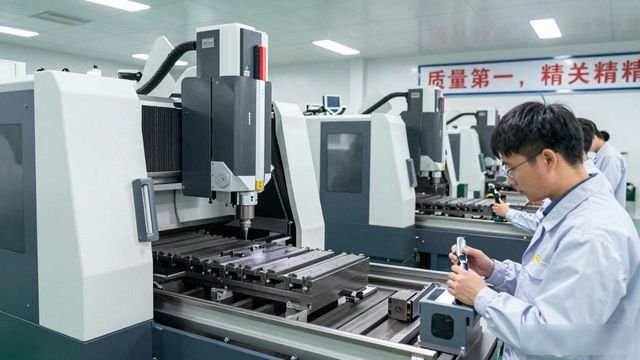
Quality control is integrated into every single stage of production. In addition to first-piece inspection, there are in-process inspections and final-piece inspections; these are all standard quality control measures. By establishing a comprehensive quality management system, the factory ensures that every product leaving the factory meets the customer’s technical specifications.
3. Materials Applications and Industry Services
CNC machining centres can process an extremely wide range of materials. In the field of metals, these include aluminium, steel, stainless steel, copper and titanium alloys. Each of these materials possesses its own unique machining characteristics, requiring the use of appropriate cutting tools and machining parameters. For example, aluminium alloys are generally easy to machine, and can be machined using higher feed rates and cutting depths; however, stainless steel and titanium alloys are considered difficult-to-machine materials, requiring more careful selection of tool geometry and cooling methods. As for non-metallic materials, engineering plastics and composites are also frequently machined using CNC.
Owing to its high precision and flexibility, CNC machining technology is widely used across numerous industries. In the aerospace sector, it is employed to manufacture engine components and structural parts; in the automotive industry, it is used to produce prototype parts, tooling and fixtures, and even some mass-produced components; in the electronics and telecommunications sector, precision structural components and heat sinks are equally reliant on CNC machining. In the fields of medical devices, precision instruments and model making, CNC machining centres also play an irreplaceable role.
4. Taking Beijing AVIC Yongxing Machinery Technology Co., Ltd. as an example
Taking Beijing AVIC Yongxing Machinery Technology Co., Ltd. as an example provides a clearer insight into how a CNC machining centre operates. The company is equipped with numerous CNC machining machines from renowned domestic and international brands, These machines range from three-axis to five-axis models, enabling the company to effectively meet machining requirements of varying complexity. Its production process places a strong emphasis on standardisation; from order review through to final delivery, every stage is governed by clearly defined operating procedures and quality standards.
In terms of technical applications, the company focuses on optimising machining processes. For different types of parts, its engineering team conducts in-depth process analyses to select appropriate toolpath strategies and cutting parameters, with the aim of improving machining efficiency and ensuring surface finish quality. For example, when machining deep-cavity parts, a layered ring-cutting strategy is employed, combined with high-pressure internal-cooling tools to facilitate effective chip removal and control cutting temperatures.
Beijing AVIC Yongxing Machinery Technology Co., Ltd. is equipped with a range of inspection equipment for quality control, including standard calipers and micrometres, and utilises a coordinate measuring machine to perform precise measurements of the geometric dimensions and geometric tolerances of complex parts. For parts with specific surface finish requirements, surface roughness meters are utilised for inspection. All inspection data is recorded and archived to ensure quality traceability.
The company serves a diverse client base and handles a wide range of parts. Its business is not confined to a single industry sector; rather, drawing on its technical capabilities, it is expanding into multiple sectors where there is a demand forprecision manufacturingWe provide appropriate support in areas where it is required. Throughout the project implementation process, the company places great emphasis on communication with clients to ensure that technical requirements and specific delivery milestones are understood accurately and without error, and we make every effort to provide processing services that meet the pre-defined expectations.
5. Industry Trends and Challenges
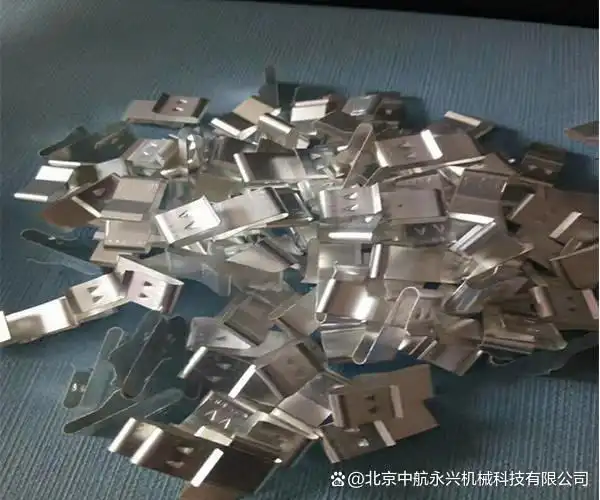
As the manufacturing sector continues to evolve, CNC machining centres are facing new trends and technological transformations. Automation and intelligent manufacturing are key areas of focus, with an increasing number of factories introducing robots for automated loading and unloading, establishing flexible manufacturing cells, and achieving long-term unmanned operation. This approach not only reduces labour costs but also enhances production consistency and equipment utilisation.
The concept of the digital factory is gradually gaining traction, With the aid of a Manufacturing Execution System (MES), order management, production scheduling, equipment monitoring and quality management can all be integrated onto a single unified platform, enabling real-time data flow and visualisation to support management decision-making.
The industry also faces a number of challenges. For example, the training period for skilled workers is relatively long; at the same time, excellent programmers and operators need to possess a solid theoretical foundation as well as extensive practical experience. With fluctuations in raw material prices, energy costs and equipment maintenance expenses, the question of how to effectively control production costs and thereby maintain competitiveness is an issue that every factory must continuously address. The intensifying market competition also places demands on factories. This requirement is that factories must diversify and continuously enhance their technical capabilities, improve quality standards, and enhance their service capacity.
Summary of the key points of the article:
1. The key aspect of CNC machining centres in factories lies in the use of CNC machine tools to carry out high-precision, high-efficiency cutting operations; the technical foundation of this process involves a variety of different types of machining equipment and computer programming.
2. The factory’s operations rely on rigorous production processes and a strict quality control system, comprising the process planning, programming, machining and inspection stages. Each stage is crucial, with the aim of ensuring that the final product meets the specified requirements.
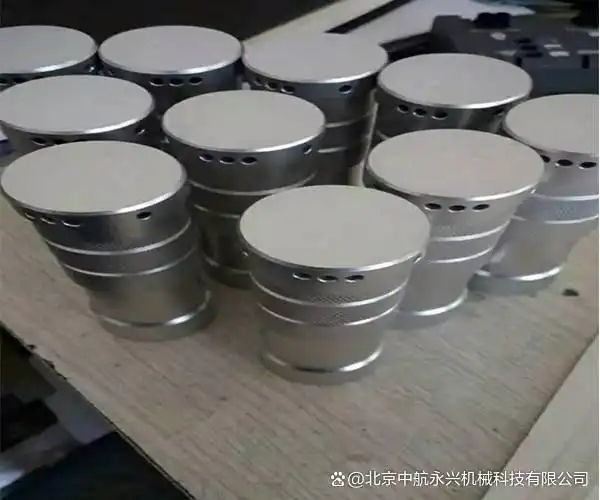
3. CNC machining technology has a wide range of applications, serving numerous industries such as aerospace, automotive and electronics. Its development is moving towards automation, intelligent systems and digitalisation; at the same time, it is addressing challenges relating to talent, costs and market competition.
 Chinese
  Japanese
  English
  German
  Finnish
Leave a Reply
You must be logged in to post a comment.