

In contemporary industrial manufacturing, Welding processAs one of the common techniques used to join metallic materials, in the aerospace sector, shipbuilding and the petrochemical industry, the quality of welding is closely linked to product safety and service life; furthermore, welding procedure qualification isPQR/WPS, is a key component of the Welding Quality Control Centre.
1. The welding procedure qualification process involves specific steps, involving a series of operations, including preparatory work—such as sourcing suitable materials and setting up the relevant equipment—followed by the welding operation itself, during which the parameters must be carefully controlled. Subsequently, the welded components are inspected to verify compliance with specific standards, and finally, a conclusion is reached as to whether the qualification has been successfully passed.
A PQR is used to verify the feasibility of a welding procedure during testing; this forms part of the welding procedure, whereas a WPS standardises the verified procedure so that it can be used to guide actual production.
1. Define the scope of the assessment
Before commencing the assessment, it is necessary to clarify the scope to which the assessment applies. This scope covers the categories of welding materials and their thicknesses, as well as the various welding methods employed—such as manual arc welding and gas shielded arc welding—along with joint types, such as butt joints and fillet joints, and the welding positions, such as flat and vertical. This information will play a decisive role in determining the procedures for preparing test specimens and the requirements for testing.
2. Draw up a preliminary WPS in accordance with the design requirements and relevant standards, such as NB/, etc., to provisionally determine the welding parameters, including current, voltage, welding speed, heat input and interpass temperature. At the same time, suitable welding consumables—such as electrodes, welding wire and shielding gas—as well as welding equipment, must be selected.
3. Welded test specimens
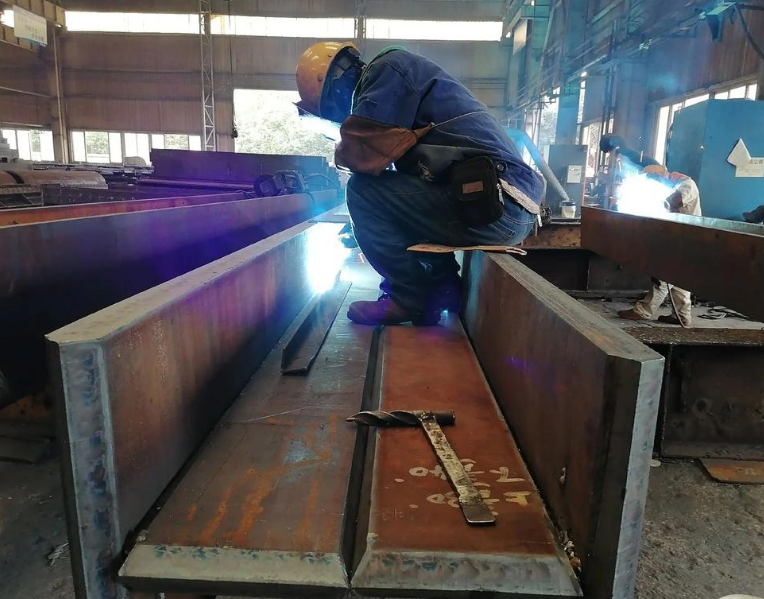
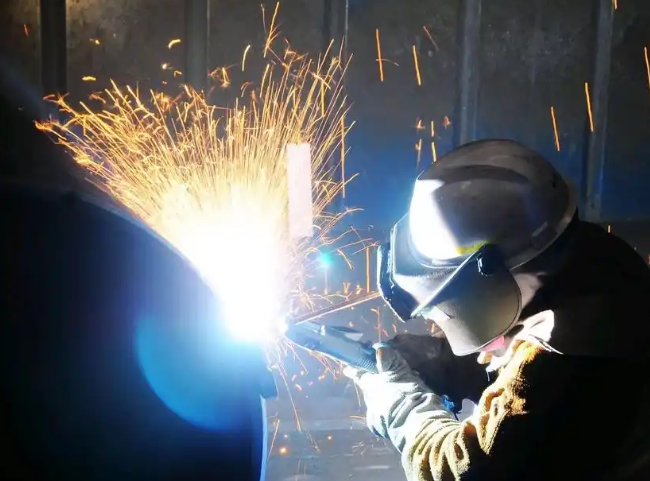
During welding, the test pieces should be welded in accordance with the preliminary WPS, and all key parameters—such as current, voltage and welding speed—must be recorded at all times to ensure the accuracy and traceability of the data.
4. Testing of test specimens
Once the test specimens have been welded, non-destructive tests are carried out on them—such as radiographic testing and ultrasonic testing—as well as destructive tests such as tensile, bending and impact tests. The results of these tests must comply with the requirements specified in the standards; otherwise, the welding parameters used must be adjusted and the assessment carried out again.
5. Prepare the PQR report
The PQR report shall be drawn up based on the results obtained from the test specimens. This report must provide a detailed record of the welding parameters, the test results and the scope of the assessment, and must be signed and approved by a qualified welding engineer or a welding engineer in charge.
6. Drafting and Approval of the WPS
To draw up a formal WPS based on the PQR report, the specific parameters and requirements of the welding process must be clearly defined; the WPS may only be used in actual production once it has been approved.
II. The Logic Behind Parameter Settings
The key to welding procedure qualification lies in the appropriate setting of those critical parameters, which directly affect the quality of the weld and also influence the performance of the joint.
1. Heat input
In the welding process, the heat transferred to the weld is known as heat input. The formula for calculating heat input is as follows: (as requested, state part of the formula first) Heat input (kJ/mm) = …; when it comes to the calculation, a new expression is used, followed by …, which is that value divided by the welding speed. If the heat input is too high, it is highly likely to result in coarse grain size in the weld, which in turn will reduce the mechanical properties of the joint; conversely, if the heat input is too low, it is highly likely to cause lack of fusion or welding defects. Therefore, it is essential to set the heat input range appropriately, taking into account the material thickness, the welding method and the joint configuration.
2. Inter-layer temperature

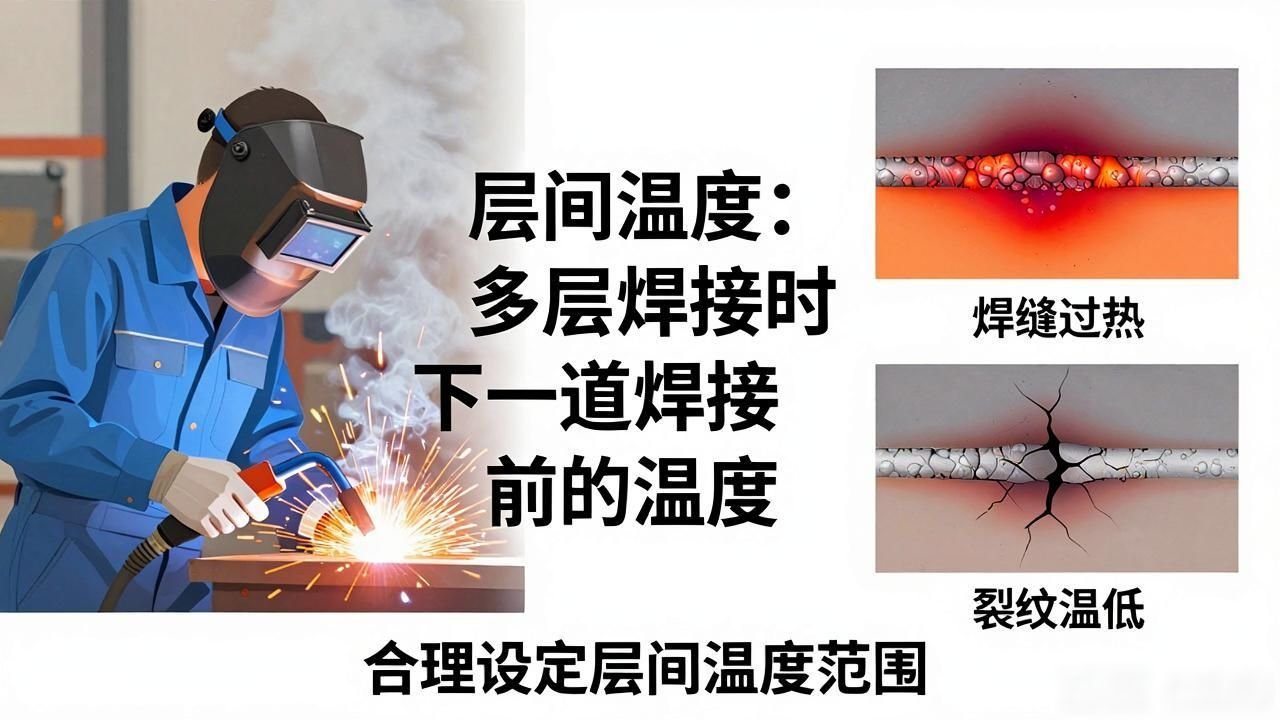
The temperature at which welding of the next pass is to commence, following the completion of the previous pass, is referred to as the interpass temperature. If this temperature becomes too high—that is, if the interpass temperature is excessively high—it may lead to overheating of the weld, which in turn may adversely affect the mechanical properties of the joint. Conversely, if the temperature is too low—that is, if the interpass temperature is too low—the weld may cool too rapidly, ultimately leading to the formation of cracks. Therefore, a suitable interpass temperature range must be established based on the type and thickness of the material.
3. Preheating temperature
Preheating temperatures are used to prevent welding cracks, particularly in materials prone to cold cracking, such as high-carbon steel and alloy steel. The preheating temperature should be determined after taking into account a range of factors, including the material’s carbon equivalent, thickness and the ambient welding temperature.
4. Welding current, voltage and speed
During welding, the current, voltage and speed have a direct impact on the formation of the weld and the quality of the weld. If the current is too high, it may cause the weld to be over-burned; whilst if the current is too low, it may result in lack of fusion. Therefore, the current, voltage and welding speed must be set appropriately in accordance with the welding method and material properties to ensure good weld bead formation.
III. Developing welding procedures in accordance with NB/
NB/ is an important standard concerning the welding procedure qualification of pressure vessels; it provides guidance on the formulation of welding procedures.
1. Choice of materials
Based on the design requirements of the welded joint, select suitable base materials and welding consumables, and ensure that their chemical composition and mechanical properties comply with the relevant standards.
2. Selection of welding methods
The appropriate welding method should be selected based on the type of joint, the welding location and the production conditions; these include manual arc welding (SMAW), gas metal arc welding (GMAW) and submerged arc welding (SAW), amongst others.
3. Setting the welding parameters
In accordance with NB/ , set the welding current parameters, voltage parameters, welding speed parameters, heat input parameters and interpass temperature parameters, amongst others. Refer to the recommended values in the standard and adjust them in light of the actual circumstances.
4. Specimen Preparation and Testing
In accordance with the requirements specified in the standard, test specimens for welding are prepared, followed by non-destructive testing and then destructive testing, in order to ensure that the weld quality meets the requirements set out in the standard.
5. PQR and WPS preparation
Based on the results obtained from testing the test specimens, a PQR report is compiled, and this is used to draw up a WPS, thereby ensuring that the welding process is both repeatable and practicable.
IV. Example of a Standard Process Sheet
Below is an example of how to complete a typical process sheet, along with some points to note:
1. Example of a welding method to be included in a process sheet (example):
Shielded Metal Arc Welding (SMAW)
Base material: Q345B, thickness 12 mm
Welding consumables: E7018, 3.2 mm in diameter
Welding current: 110–130 A
Welding voltage: 22–24 V
Welding speed: 10–12 cm/min
Heat input: 10–15 kJ/mm
Interlayer temperature: ≤150°C
Preheating temperature: 100–150 °C
Shielding gas: None
Test requirements: radiographic testing, bending test
When carrying out welding, all key parameters must be recorded at all times to ensure the accuracy and completeness of the data.
1. Where there are omissions in the test programme, in accordance with the requirements set out in the standard, it must be ensured that all parties fulfil their responsibilities to guarantee that all necessary tests, such as non-destructive testing and mechanical property testing, have been completed.
2. Inappropriate selection of materials: It is essential to ensure that the chemical composition of both the base metal and the welding consumables meets the requirements specified in the design, and that their mechanical properties also comply with these requirements, in order to prevent welding defects caused by incompatibility between the materials.
3. The welding parameters have been set incorrectly; they should be set appropriately in accordance with the actual circumstances and the requirements of the standards, in order to avoid welding quality issues caused by unsuitable parameters.
Welding procedure qualification (PQR – this symbol, as opposed to the WPS symbol with a slash) centres on utilising a comprehensive, scientific process and appropriate, reasonable and standardised parameter settings to verify the feasibility of a welding procedure, and subsequently standardise it for application in actual production. During practical operations, particular attention must be paid to the completion of process sheets and the recording of key parameters, whilst taking every effort to avoid common errors and omissions.


 Chinese
  Japanese
  English
  German
  Finnish
No comments