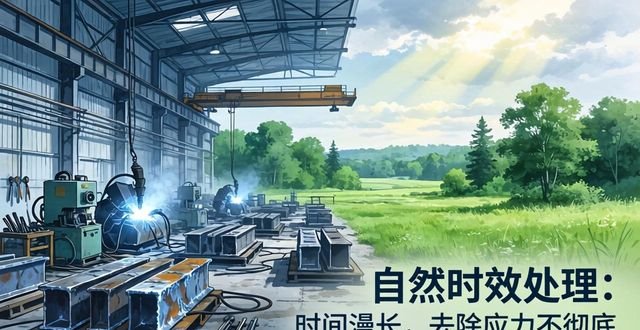


Stress relief treatment after welding::
1, the composition of the material, organisation, heating temperature and holding time, mainly determines the degree of stress removal, which belongs to the overall heat treatment category. For mild steel and some low alloy steel welded components, at 650 degrees holding time of 20 to 40 hours, can basically eliminate all theResidual stressIn addition to this, there is also explosive stress relieving. In addition to this, there is also explosive stress relief as a method.
2, local heat treatment, used for large-scale welding structures, when restricted by the heating furnace or when the requirements are not high when using this method, you can use the flame, infrared, resistance, induction and other heating methods, to maintain uniform heating and have a certain width of the heating, for low alloy high-strength steels, generally in the weld on both sides of 100 to 200mm.
3, there are mechanical stretching, and hydraulic test, and temperature difference stretching, including vibration method, these methods, can only eliminate twenty to fifty per cent of the residual stress, of which, the first two methods in the production is widely used.

After welding to carry out stress relief treatment, which exists in the natural aging treatment, this treatment is a long time, the removal of stress is not complete,; and vibration aging, its efficiency is quite high, the cost is low, but can only eliminate the weld stress of about 70%; in addition to artificial heating aging, the time required for this way is short, but the cost is relatively high, it is able to remove 100% of the weld stress, and at the same time Can also carry out the dehydrogenation process.
Take large fuel annealing furnace, carry out post-welding annealing treatment, the use of multi-point heating, multi-point temperature control, temperature control, with the help of thermocouples to control the heating of automatic control instruments, so that the temperature of all parts of the furnace is uniformly controlled at the annealing temperature, in order to protect the annealing of the workpiece, and at the same time to remove the welding process into the weld H atoms, which eliminates the hydrogen embrittlement of the welded parts.
Residual stresses are generated during hot and cold machining processes, with the higher residual stresses approaching the yield limit. Most of the residual stresses in the components have harmful effects, such as decreasing the actual strength of the component, lowering the fatigue limit, causing stress corrosion and brittle fracture. Moreover, the relaxation of residual stresses leads to warping of the component, which greatly affects the dimensional accuracy of the component. Therefore, it is necessary to reduce the residual stresses in the components.
Common traditional aging methods include: thermal aging, vibration aging, natural aging, static overload aging, and thermal shock aging. The latter two aging methods are used less frequently and are not introduced here.
Natural Normal Stress Ranging, or NSR, leaves the workpiece in the open for a long period of time, generally six months to a year, to release residual stresses through seasonal variations in ambient temperatures and the time effect, and to relax the residual stresses under the overload conditions created by temperature stresses, thereby stabilising dimensional accuracy. However, because the cycle time is too long and covers a large area, it is only suitable for long-term single-variety mass production, and the effect is not ideal, so it is less used at present.
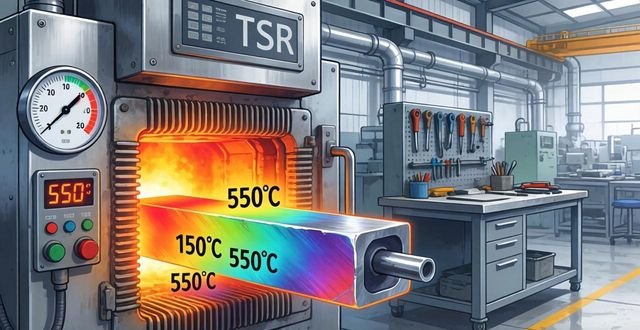
Thermal ageing, also known as TSR, it is necessary to heat the component slowly and uniformly from room temperature or not higher than 150 ℃ to about 550 ℃, and then hold it for 4 to 8 hours, and then strictly control the speed of cooling, until below 150 ℃ to get out of the oven, which is to achieve the purpose of eliminating the residual stresses, and then ensure the machining accuracy as well as preventing cracks from occurring.
Vibration aging, also known as vibration stress relief method, has a nickname (VSR), it is for the castings, forgings, welded components and other workpieces, including the development of treatment, will be placed under the intrinsic frequency, continued for several minutes to tens of minutes vibration disposal, vibration form to the workpiece to impose additional stress, when the additional stress and the residual stress superimposed on each other, to reach or exceed the yield limit of the material, workpiece When the additional stress and the residual stress are superimposed on each other and reach or exceed the yield limit of the material, the workpiece will have micro or macro plastic deformation, which will reduce and thus equalise the residual stress inside the workpiece and stabilise the dimensional accuracy, which is a kind of technological method. This process is characterised by low energy consumption, short time and significant results. In recent years, it has achieved rapid development and been widely used at home and abroad.
Vibratory aging is characterised by very low energy consumption, very short time periods and significant results. Compared with thermal aging, it does not need a huge aging furnace, which can save floor space and expensive equipment investment. Therefore, at present, for the length from a few metres to dozens of metres of bridges, ships, chemical apparatus such as large welding parts, and weight from a few tons to dozens of tonnes of ultra-heavy castings or machining precision requirements of higher level of the workpiece, more often used vibration aging. Its production cycle is short, natural aging needs to be placed after several months of time, thermal aging also needs to be completed after dozens of hours of cycle, but vibration aging usually only need to vibrate for tens of minutes can be completed. It is easy to use. The small size of the vibration equipment is lightweight and portable. Because vibration treatment is not limited by site and the vibration device can be carried to the site, this process is easier to use and more adaptable than thermal aging, saving energy and reducing costs. In the workpiece resonant frequency aging treatment, energy consumption is very small, energy consumption is only thermal aging of 3 to 5%, the cost is only thermal aging of 8 to 10%. In addition, the vibration aging operation is simple, easy to realize the mechanisation automation. It can avoid warping and deformation, oxidation, decarburisation and hardness reduction of metal parts in the process of thermal aging. It is currently the only method that can perform secondary aging.

 Chinese
  Japanese
  English
  German
  Finnish
No comments