
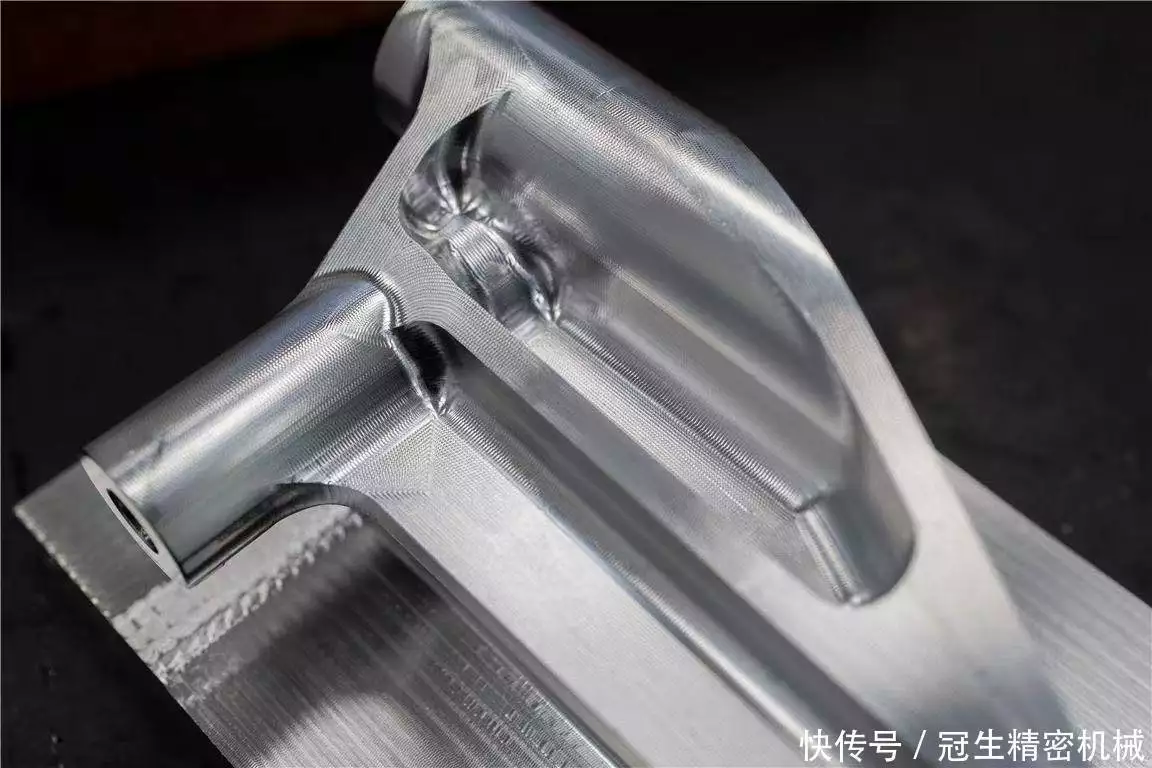
Fujian CNC5-axis machining centre
Within the landscape of modern manufacturing, five-axis machining technology occupies a pivotal position thanks to its unique advantages; as one of the most dynamic regions for manufacturing in China, the development of related industries in Fujian has attracted considerable attention; This article will focus on this technology and, in a popular science style, systematically introduce its core principles, technical characteristics, fields of application and future development trends.
I. Basic Concepts of Five-Axis Machining Technology

A type of computer numerical control (CNC) machine tool known as a five-axis machining centre adds two rotary axes to the three linear axes found on traditional three-axis machines. The combination of these two rotary axes enables the cutting tool to approach the workpiece surface from virtually any direction. This structural design provides greater flexibility during the machining process.
To be more specific, the axes of motion on a five-axis machine tool comprise the three linear axes—X, Y and Z—as well as the A-axis, which typically rotates around the X-axis, and the B-axis, which rotates around the Y-axis (or alternatively, the C-axis, which rotates around the Z-axis). This multi-axis interpolation design is intended to achievecomplex surfaceThe foundation of machining. After a single set-up, the workpiece can be machined on multiple faces through the coordinated operation of multiple axes, which effectively reduces errors caused by repeated positioning.
II. Key Technical Advantages of Five-Axis Machining
1. For parts with complex geometries, such as impellers, turbine blades and precision moulds, five-axis machining offers the capability for single-set machining. It enables multi-surface machining to be completed in a single set-up, thereby avoiding cumulative errors caused by multiple set-ups and significantly improving the overall precision and consistency of the product.
2. The cutting angle is favoured, and five-axis machining achieves this by adjusting the position and orientation of the tool relative to the workpiece, ensuring that the tool remains at this angle at all times. This results in improved cutting conditions, tool life is extended, and higher feed rates can be employed during machining, thereby shortening the production cycle for individual parts—a clear indication of significantly improved machining efficiency.
3. Due to tool interference, three-axis machine tools are unable to use shorter tools to machine certain angled or curved surfaces, or may leave uneven machining marks; this is a common issue affecting surface quality. Five-axis technology, however, allows for the use of shorter, rigid tools by adjusting the tool orientation, thereby achieving a smoother surface finish.
4. Resolving spatial interference issues: When machining deep cavities, recessed areas or regions containing obstacles, five-axis machine tools can flexibly adjust the orientation of the tool axis. This effectively prevents collisions between the tool and the workpiece, as well as preventing collisions between the tool holder and the workpiece, and between the tool and the fixture, thereby expanding the range of machining possibilities.
III. Typical Applications of Five-Axis Machining Technology
1. In the aerospace sector, where components featuring complex surfaces and lightweight structures—such as engine blades, integral blisks and airframe structural components—are widely used, five-axis machining is one of the key technologies for manufacturing these high-precision, high-strength components.
2. Precision mould manufacturing—including moulds for automotive body panels and injection moulds—typically involves complex cavity surfaces. Five-axis machining not only enables precise milling of these surfaces but also allows for the efficient finishing of fine details and texturing of the moulds.
3. Many medical implants and components for high-end scientific instruments feature complex structures and impose extremely stringent requirements in terms of biocompatibility, surface finish and dimensional accuracy. Five-axis machining is capable of meeting the demands of precision machining for these specialised materials.
4. Energy equipment manufacturing: This includes hydro turbine blades and gas turbine components, as well as other core parts found in energy conversion equipment. As these items often have irregular shapes, five-axis machining provides a reliable technical solution for shaping such large, critical components.
5. In the general machinery and consumer goods sectors, product design is becoming increasingly diverse; many consumer electronics casings, high-end models and craft items are now utilising five-axis technology for rapid prototyping and small-batch production.
IV. Technical Components of Four- and Five-Axis Machining Centres
To be a fully-fledged five-axis machining centre, it must be an integrated system combining a wide range of technologies; its main components include:
1. Key components such as the bed, columns and worktable form the physical foundation of the machine tool—that is, its main structure. The structural design and material properties of these components directly determine the machine tool’s rigidity, stability and vibration resistance, which are fundamental to ensuring machining accuracy.
2. The CNC system, often referred to as the “brain” of the machine tool, is responsible for receiving machining programme codes and converting them into instructions that enable the various axes to move in a coordinated manner. A high-performance CNC system possesses the capability to perform complex multi-axis interpolation calculations, enabling precise motion control.
3. A servo drive system comprises a servo motor and a sensor; it operates strictly in accordance with the relevant commands issued by the CNC system—commands relating to position and speed—thereby enabling precise movement of each axis. Furthermore, its dynamic response characteristics influence the machining process, specifically affecting both surface quality and contour accuracy.

Latest newly launched websites featuring top-quality servers: 65535 and Super 65535 – newly launched websites
4. To facilitate continuous machining of complex operations, five-axis machining centres are generally equipped with tool magazines of varying capacities and an automatic tool-changing mechanism capable of automatically selecting and changing the required cutting tools under programme control.
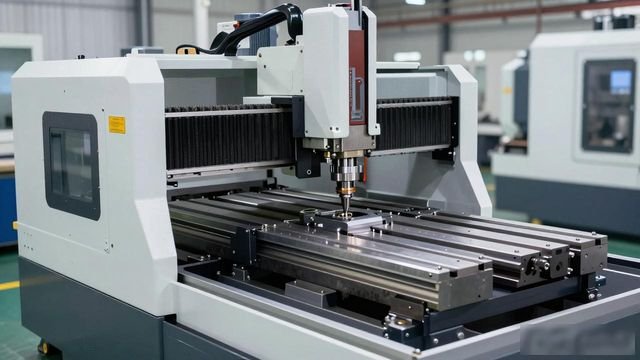
5. The swivel table, which is used for rotation, is a key functional component for achieving two rotational movements; its positioning accuracy, load-bearing capacity and dynamic performance are among the core indicators used to assess the performance of a five-axis machine tool.
V. Key Considerations for Operation and Application
If you wish to fully realise the potential of a five-axis machining centre, you should pay close attention to the following aspects during the application process:
1. Specialist computer-aided manufacturing software is an essential tool; five-axis programming is far more complex than three-axis programming, as it requires consideration of toolpaths, axial tool control, the setting of the rotation centre, and numerous other factors such as potential collision and interference checks.
2. Five-axis machining reduces the number of set-ups required; however, when it comes to workpiece clamping and alignment, the design of the initial clamping solution is of paramount importance. It is essential to design a suitable fixture to ensure the workpiece is stable and to precisely define its position and orientation within the machine tool coordinate system.
3. Cutting tools: A range of cutting-related parameters must be selected. Depending on the specific workpiece material and its geometric characteristics, it is necessary to use the appropriate tool type and correct geometric angles. Furthermore, parameters such as cutting speed and feed rate must also be carefully selected. Setting these parameters correctly is key to ensuring efficiency, precision and cost-effectiveness of the cutting tools.
4. With regard to maintaining accuracy and calibration, the structure of a five-axis machine tool is complex; its geometric accuracy, as well as the positioning accuracy of the rotational axes, requires regular inspection and compensation in order to ensure long-term machining stability.
VI. Outlook on Future Development Trends

‘New Server Network’ – Newly Launched Private Server Sites with Great Servers_Newly Launched Private Server Sites with Unique Servers
As industrial technology continues to evolve, five-axis machining technology is also taking on some clear and distinct directions of development. The integration of intelligence and automation is one of the key trends; machines will incorporate more sensors, enabling real-time monitoring of machining conditions, adaptive parameter adjustments, and seamless integration with production management systems, thereby achieving more efficient production processes. In the pursuit of higher precision and efficiency, new design concepts, more precise manufacturing processes, and more advanced control algorithms will continue to be applied to enhance the dynamic performance and machining limits of the equipment. Furthermore, specialised five-axis solutions tailored to specific industries, such as medical devices and optical components, will see further development, with the aim of meeting their unique process requirements and quality standards.
In summary, the five-axis machining centre is regarded as a pinnacle of CNC machine tool technology; it integrates mechanical engineering, automatic control technology, computer software technology. The exceptional capability it demonstrates when processing complex parts makes it an indispensable piece of equipment in modern high-end manufacturing. Understanding its operating principles and technical characteristics is of great significance for technical personnel and enterprises in related fields to grasp the trajectory of manufacturing technology development.
 Chinese
  Japanese
  English
  German
  Finnish
Leave a Reply
You must be logged in to post a comment.