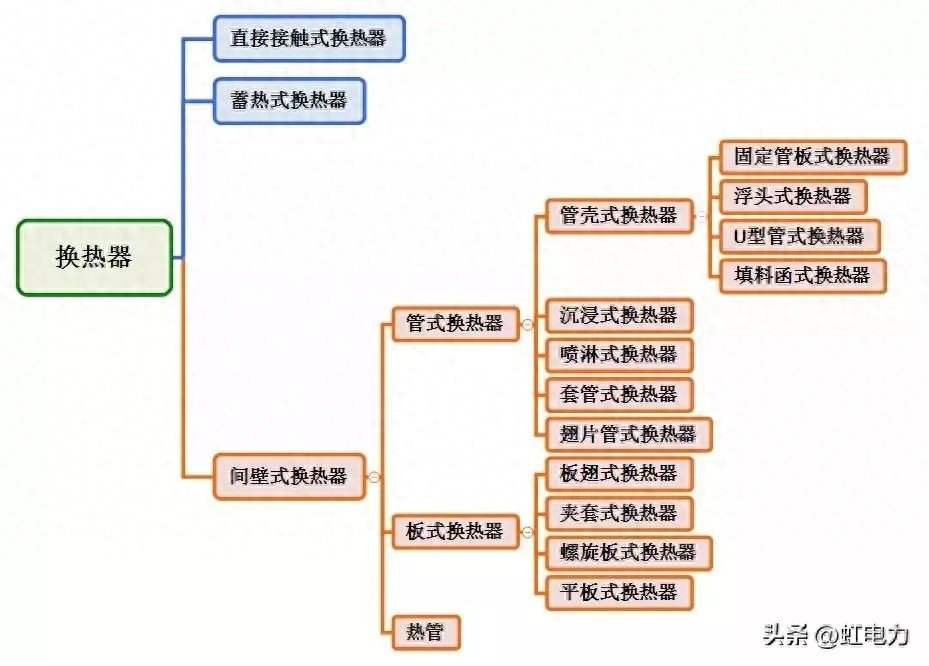


There is a type of energy-saving device known as a heat exchanger, which facilitates the transfer of heat between two or more fluids at different temperatures; for large-scale heating applications, heat exchangers are absolutely indispensable.
Depending on the method of heat transfer, heat exchangers can be divided into three main categories:

There is a type of equipment known as a direct-contact heat exchanger, also referred to as a mixed-type heat exchanger; it is a device designed to enable direct contact between hot and cold fluids in order to facilitate heat transfer. Generally speaking, the two fluids that come into direct contact are a gas and a liquid with a relatively low vapour pressure.
Storage-type heat exchangersWorking Principle, utilises the thermal conductivity of solid materials. To be more specific, the hot medium first heats the solid material to a certain temperature; subsequently, the cold medium absorbs heat from the solid material, and it is through this process that heat transfer is achieved.
One type of heat exchanger is known as a shell-and-tube heat exchanger, which utilises an intermediate medium for heat transfer; the cold and hot media are separated by a solid partition, through which heat is exchanged. In the heating sector, shell-and-tube heat exchangers are the most widely used. Depending on their structure, they can be further categorised into tube-type heat exchangers, plate-type heat exchangers and heat pipe heat exchangers.
I. Shell-and-tube heat exchangers
A device known as a shell-and-tube heat exchanger—also referred to as a tube-bundle heat exchanger—is a type of partition-wall heat exchanger. This type of heat exchanger utilises the walls of a tube bundle enclosed within a shell as the heat transfer surface; its structure is relatively simple, is relatively reliable in operation, and can be manufactured using a variety of structural materials—primarily metallic materials, as discussed here. It is capable of operating under high-temperature and high-pressure conditions and is currently the most widely used type.
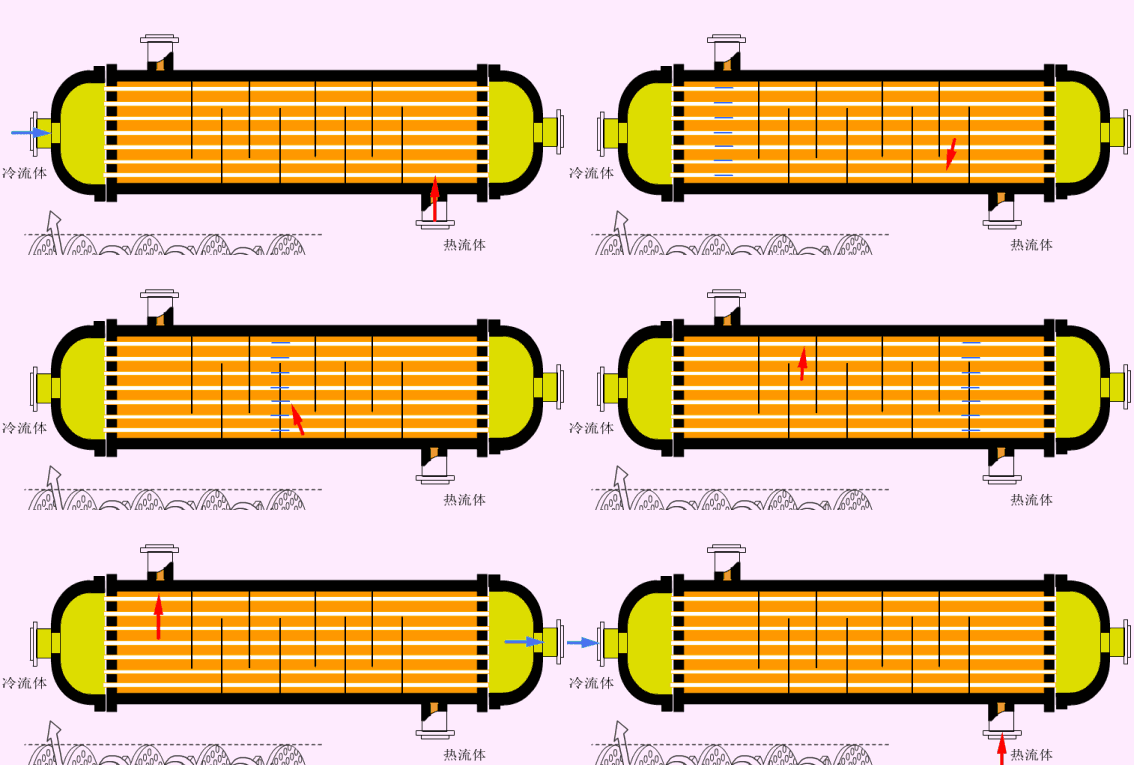
Shell-and-tube heat exchanger
Depending on the compensation measures employed, shell-and-tube heat exchangers can be classified into four types: fixed-tube-sheet heat exchangers, floating-head heat exchangers, U-tube heat exchangers and packing-box heat exchangers.
II. Fixed-tube-sheet heat exchangers
Among shell-and-tube heat exchangers, one type is the fixed-tube-sheet heat exchanger. In this type, the tube sheets at both ends are connected to the shell by welding. It is primarily composed of components such as the shell, tube sheets, tube bundle and end caps.
Fixed-tube-sheet heat exchanger
The advantages of fixed-tube-sheet heat exchangers are:
Simple structure;
For a given shell diameter, it offers the highest number of tubes and the fewest bypasses;
Each heat exchange tube can be replaced, and the tubes are easy to clean internally.
The disadvantages of fixed-tube-sheet heat exchangers are:
The shell section must not be cleaned mechanically;
If the temperature difference between the heat exchange tubes and the shell is significantly high—exceeding 50 °C—thermal stress will arise. The solution to this problem is to install an expansion joint on the shell; consequently, the shell-side pressure cannot be too high, as it is limited by the strength of the expansion joint.
This is only suitable for situations where the fluid is clean and not prone to scaling, and where the temperature difference between the two fluid streams is small; or for applications where the temperature difference is significant but the shell-side pressure is not particularly high.
III. Floating-head heat exchangers
A type of shell-and-tube heat exchanger known as a floating-head heat exchanger, in which one end of the tube sheet is not connected to the shell and is able to float freely in the axial direction; this end is also referred to as the floating head. This floating head consists of a floating tube sheet, a hook ring and a floating head end cap; it features a detachable connection, allowing the tube bundle to be withdrawn from the shell.
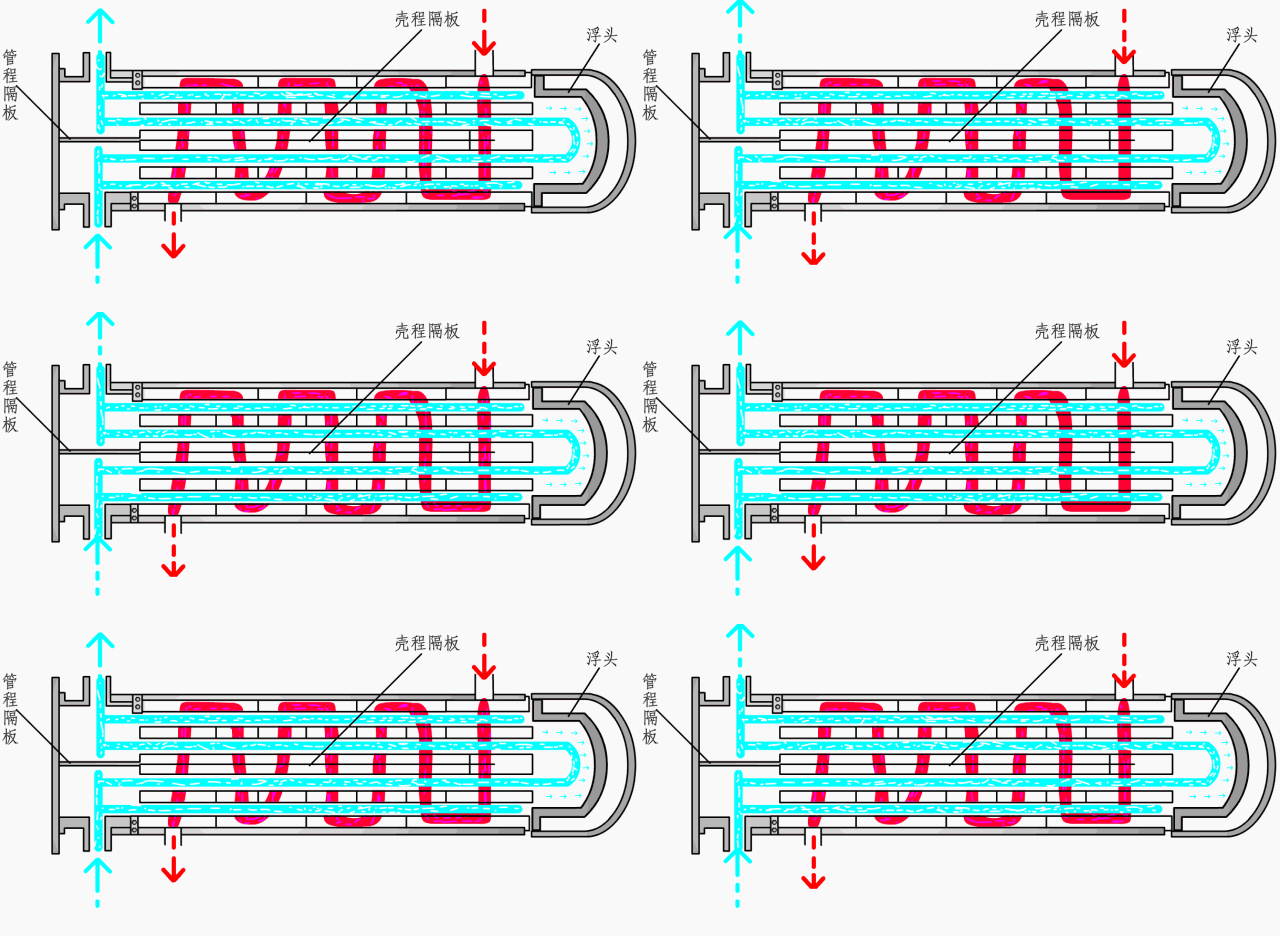
Floating-head heat exchanger
The advantages of floating-head heat exchangers are:
If there is a temperature difference between the heat exchange tubes and the shell—that is, when the shell or the heat exchange tubes expand—no thermal stress will be generated.
The tube bundle can be withdrawn from the shell, facilitating cleaning inside the tubes and between them.
The disadvantages of floating-head heat exchangers are:
The structure is relatively complex, requires a large amount of materials, and is costly;
If the seal between the float cover and the floating tube sheet is not tight, internal leakage will occur, resulting in the two media mixing together.
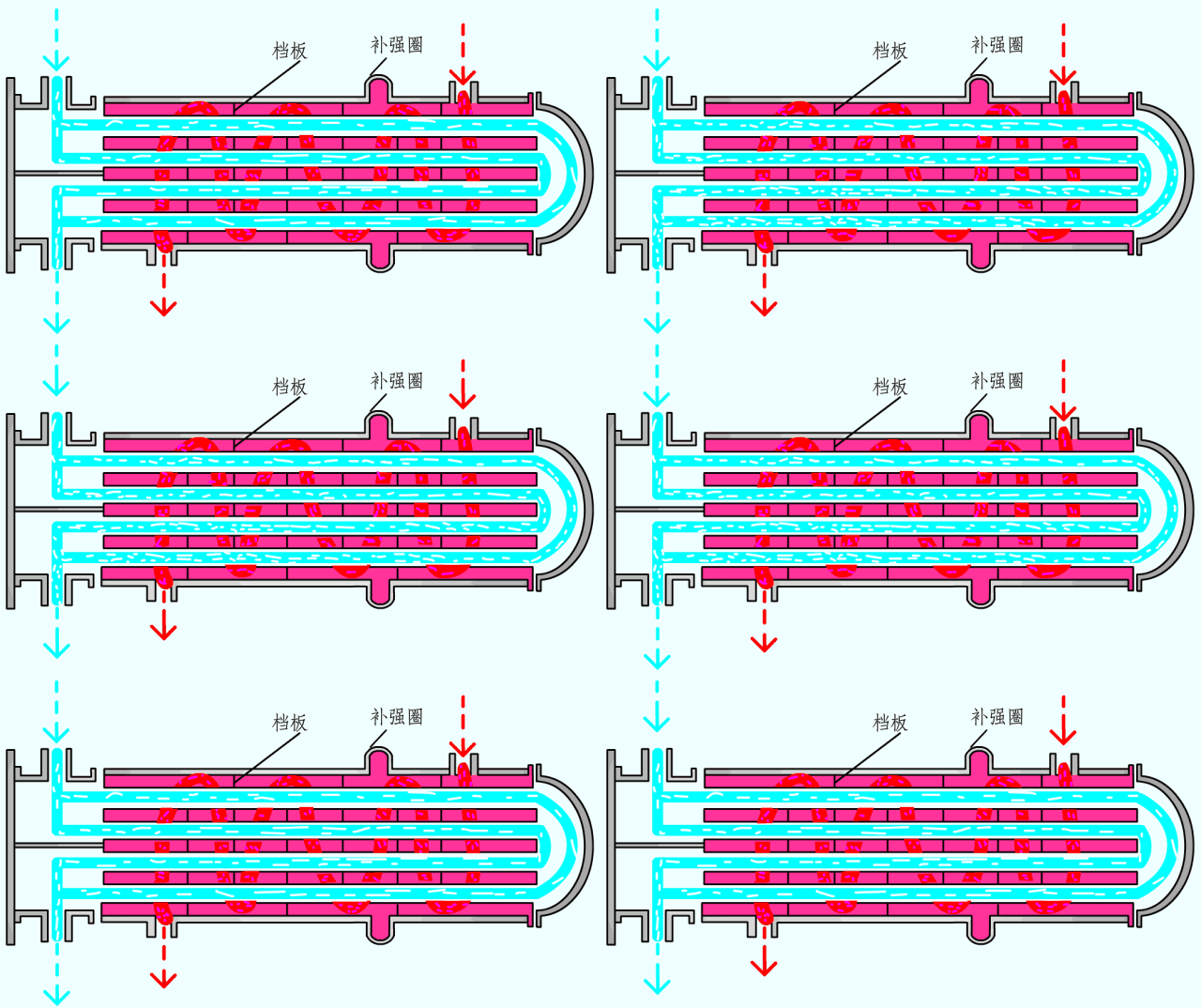
IV. U-tube heat exchanger
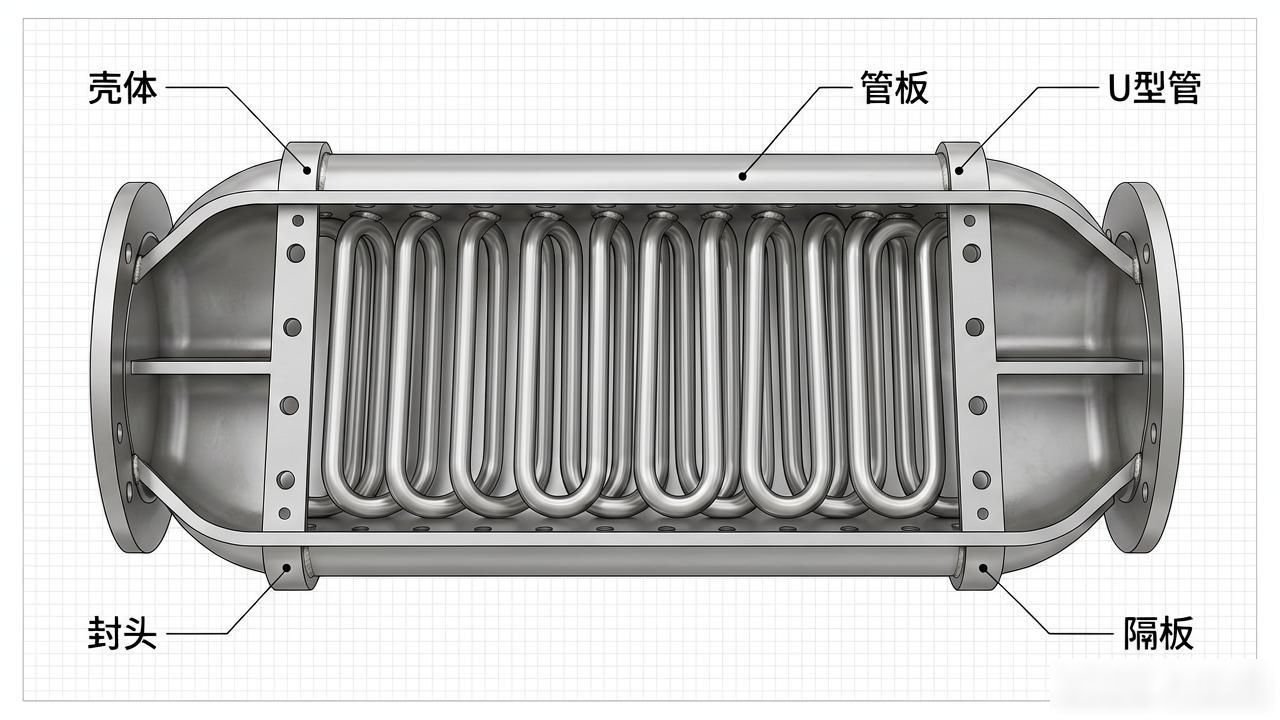
A U-tube heat exchanger, comprising components such as tube sheets, the shell and the tube bundle, is a type of shell-and-tube heat exchanger; Each tube is bent into a U-shape, with the inlet and outlet fitted to the same tube sheet on opposite sides; the end caps are divided into two chambers by baffles. As a result, each tube is able to expand and contract freely, and this movement is independent of the other tubes and the shell.
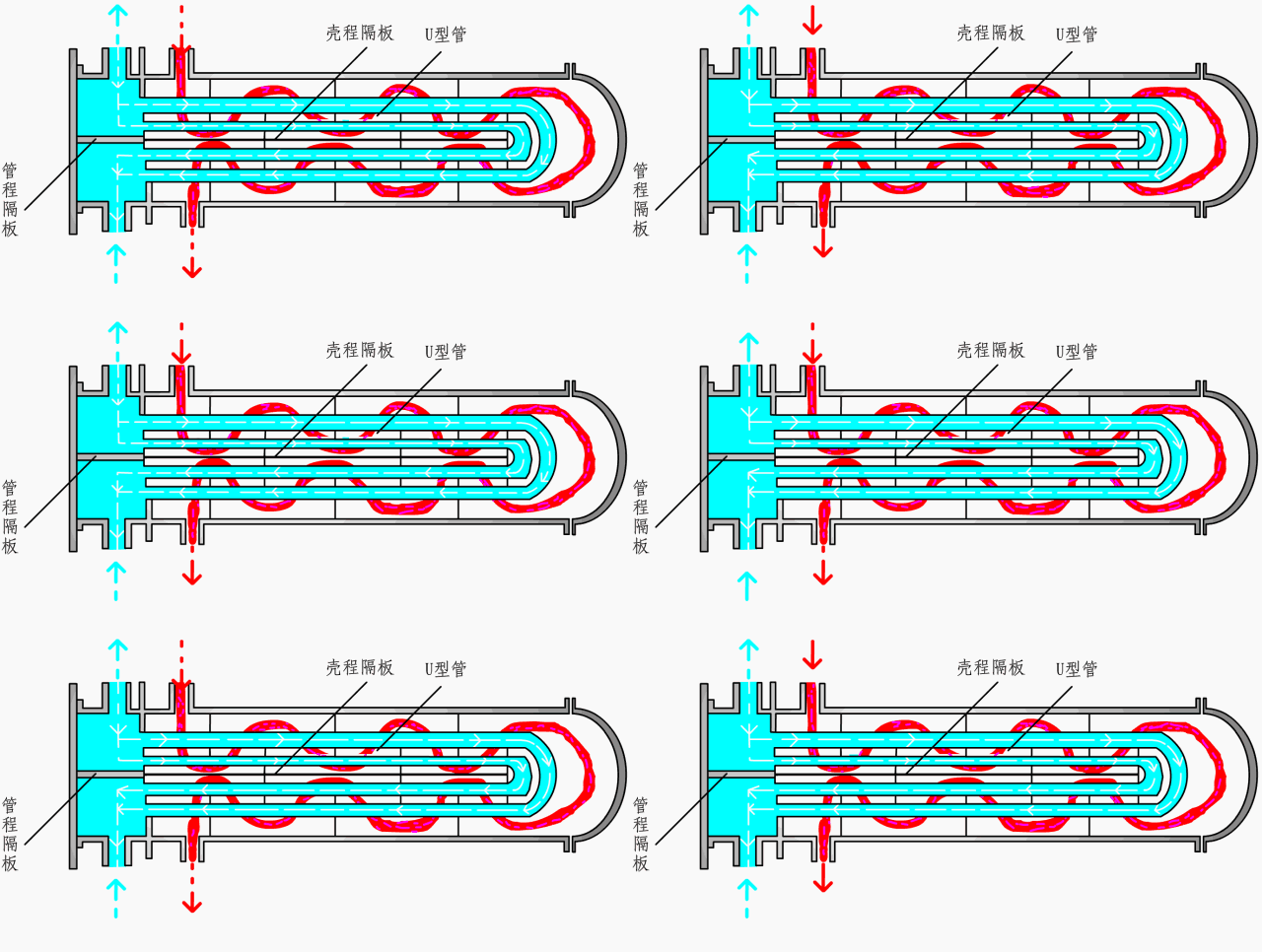
U-tube heat exchanger
The advantages of U-tube heat exchangers are:
The tube bundle can float freely, without the need to take thermal stress into account, and can therefore be used in applications involving large temperature differentials;
It has only one tube sheet, with few flanges, few potential leak points and a simple structure;
U-tube heat exchangers are reliable in operation and cost-effective.
The disadvantages of U-tube heat exchangers are:
As the tubes must have a certain radius of curvature, it is rather difficult to clean the interior of the tubes, and the utilisation rate of the tube sheet is also relatively low.
If the distance between the innermost tubes is too great, short-circuiting is likely to occur in the shell side. If the flow velocity inside the tubes is too high, this will cause severe erosion of the U-bend section, thereby affecting its service life.
If the inner tube is damaged, it cannot be replaced, resulting in a high scrap rate.
V. Spray-type heat exchangers
A spray-type heat exchanger is a type of tubular heat exchanger in which rows of heat exchange tubes are fixed to a steel frame; the hot fluid flows through the tubes, whilst cooling water is sprayed evenly from a spray system above, which is why it is also known as a spray cooler. A highly turbulent liquid film forms on the outer surface of the tubes in a spray-type heat exchanger, resulting in a significantly higher external heat transfer coefficient compared to an immersion-type heat exchanger. Furthermore, as spray-type heat exchangers are usually situated in well-ventilated areas, the evaporation of the cooling water also removes some of the heat, which helps to lower the temperature of the cooling water and increase the heat transfer driving force. Compared with immersion-type heat exchangers, spray-type heat exchangers offer significantly improved heat transfer performance.
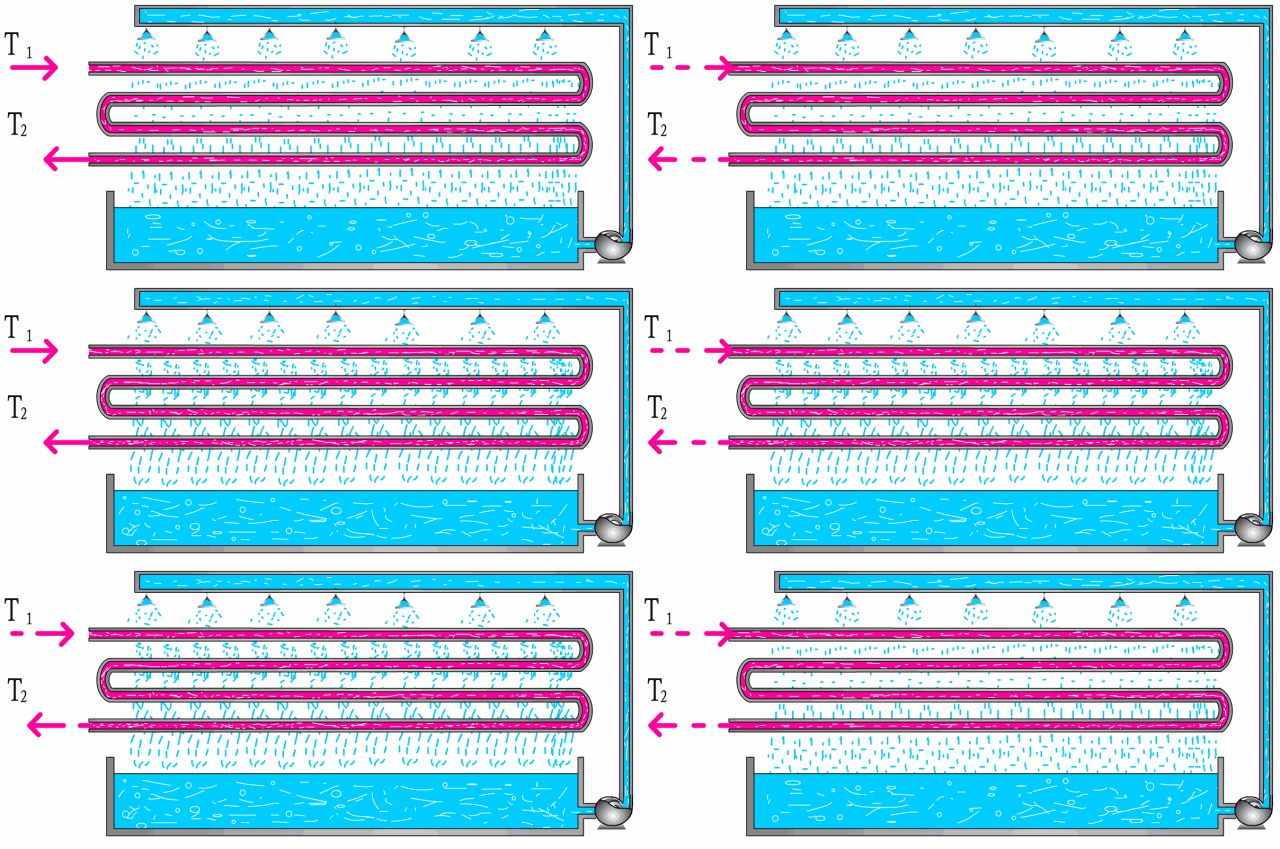
Spray-type heat exchanger
The advantages of spray-type heat exchangers are:
Simple in design and inexpensive to build;
This serves to lower the temperature of the cooling water and increase the heat transfer driving force;
Can withstand high pressure;
Easy to maintain and clean, with low water quality requirements.
The disadvantages of spray-type heat exchangers are:
Uneven cooling water spray can affect heat transfer efficiency;
It must be installed outdoors.
VI. Shell-and-tube heat exchangers
A shell-and-tube heat exchanger is a type of tubular heat exchanger. It consists of a concentric tube assembly formed by connecting two standard tubes of different sizes; the outer section is known as the shell side, whilst the inner section is known as the tube side. Two different media can achieve heat transfer within the shell side and tube side by flowing in opposite directions (or in the same direction). Shell-and-tube heat exchangers are generally composed of a shell (comprising an inner and outer shell), U-bends and packing glands.
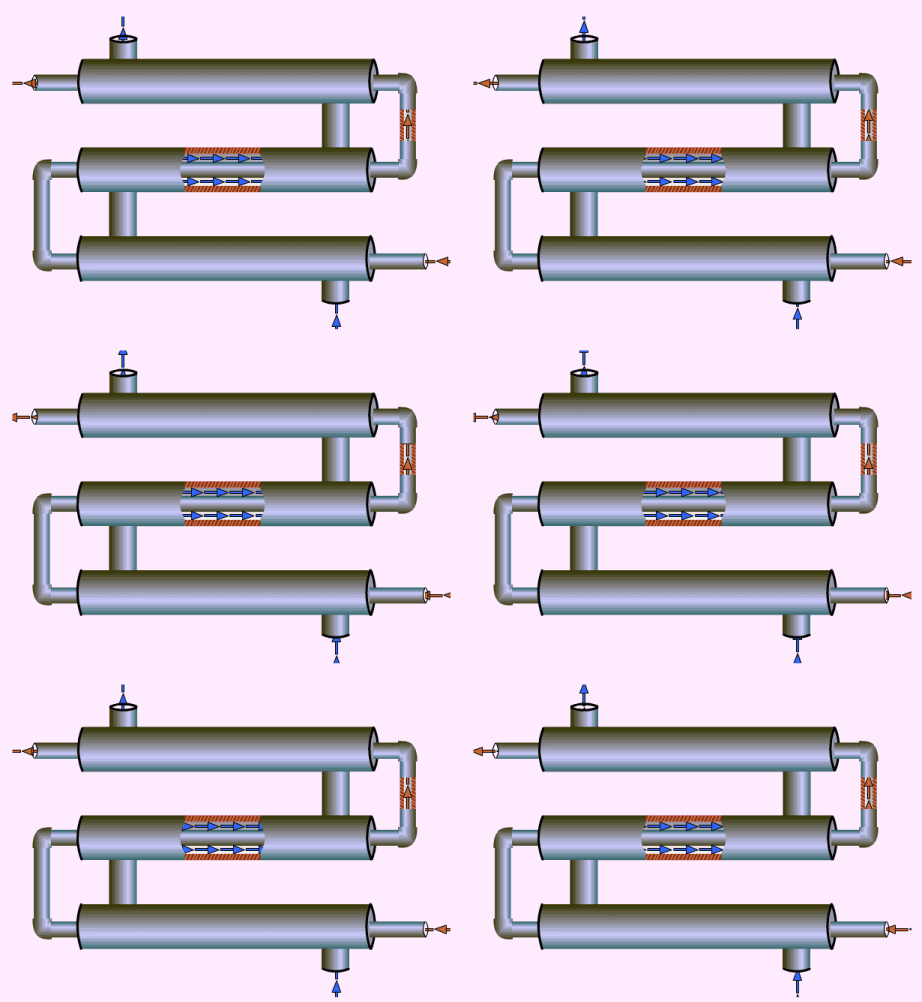
Tubular heat exchanger
The advantages of shell-and-tube heat exchangers are:
Simple in design and capable of withstanding high pressure;
The heat transfer area can be increased or decreased as required, making it convenient to use.
The disadvantages of shell-and-tube heat exchangers are:
Pipes with many joints are prone to leaks;
It occupies a large area, and the amount of metal consumed per unit of heat transfer surface area is high.
VII. Jacket-type heat exchangers
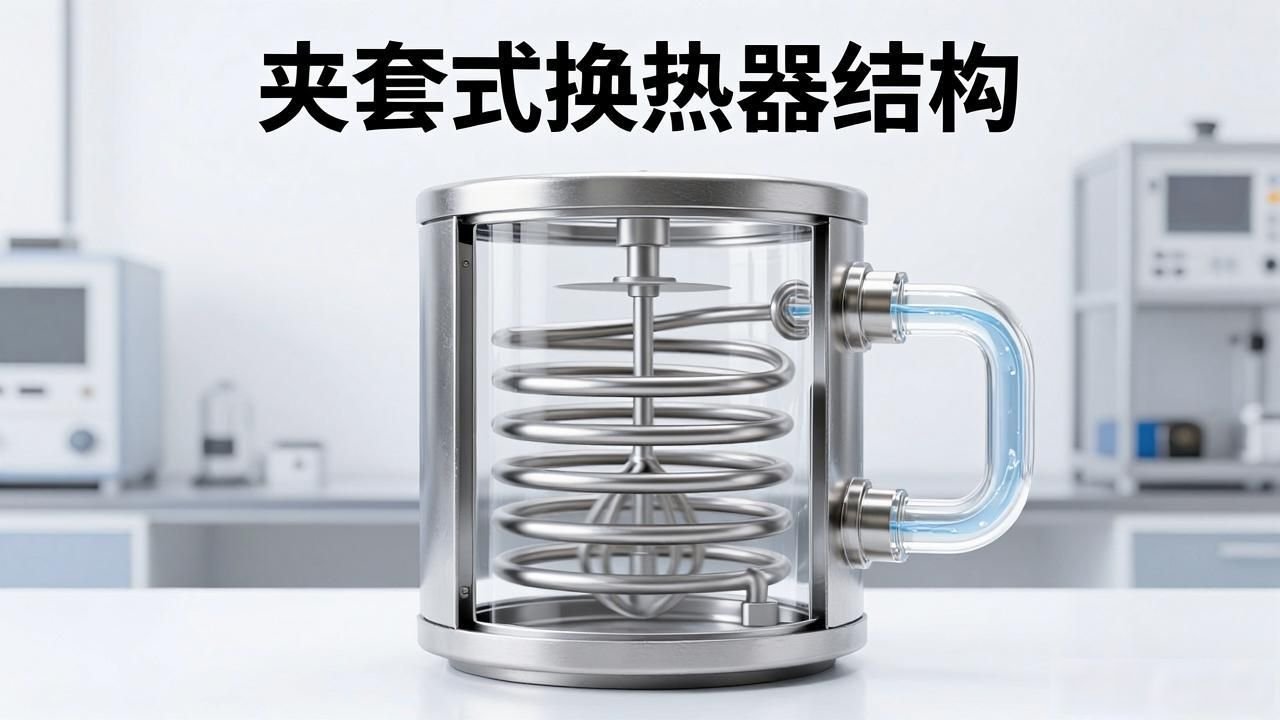
A jacketed heat exchanger is a type of plate heat exchanger; it is manufactured by fitting a jacket to the outer wall of a vessel and has a relatively simple structure; however, its heating surface is limited by the vessel wall, and its heat transfer coefficient is not particularly high. To improve the heat transfer coefficient whilst ensuring uniform heating of the liquid inside the vessel, an agitator can be installed within the vessel. When cooling water or a heating medium without phase change is circulated through the jacket, spiral baffles or other measures to increase turbulence can be incorporated into the jacket to enhance the heat transfer coefficient on the jacket side. To compensate for the limitations of the heat transfer surface, coiled tubes may also be installed inside the vessel. Jacketed heat exchangers are widely used for heating and cooling in reaction processes.
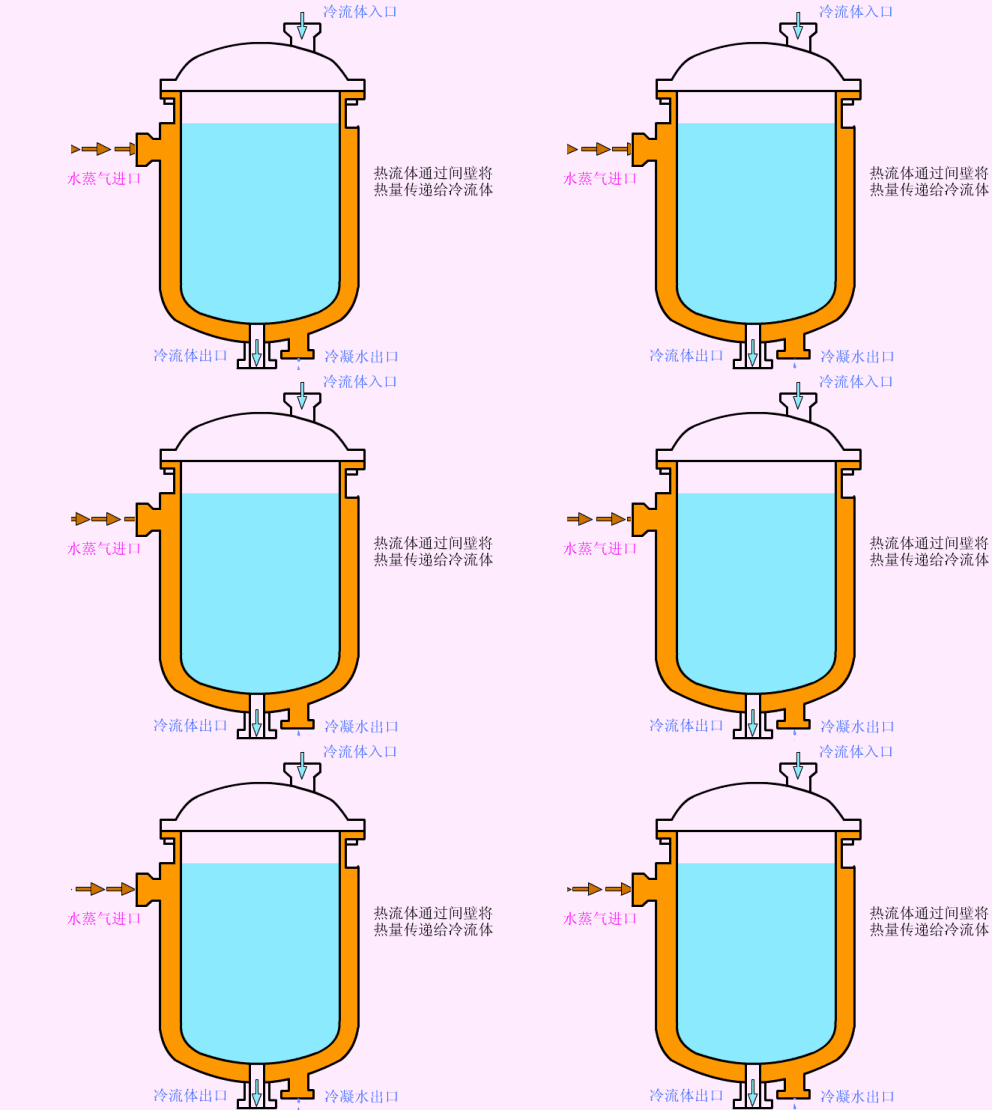
Jacketed heat exchanger
The advantages of shell-and-tube heat exchangers are:
Simple structure;
Easy to work with.
The disadvantages of shell-and-tube heat exchangers are:
The heat transfer area is small, and heat transfer efficiency is low.
VIII. Spiral Plate Heat Exchangers
The spiral plate heat exchanger is a type of plate heat exchanger; it is formed by rolling two parallel metal plates, creating two concentric spiral channels inside. A partition is positioned at the centre of the heat exchanger, which separates the spiral channels. Spacer columns are welded between the two plates to maintain the spacing between the channels.
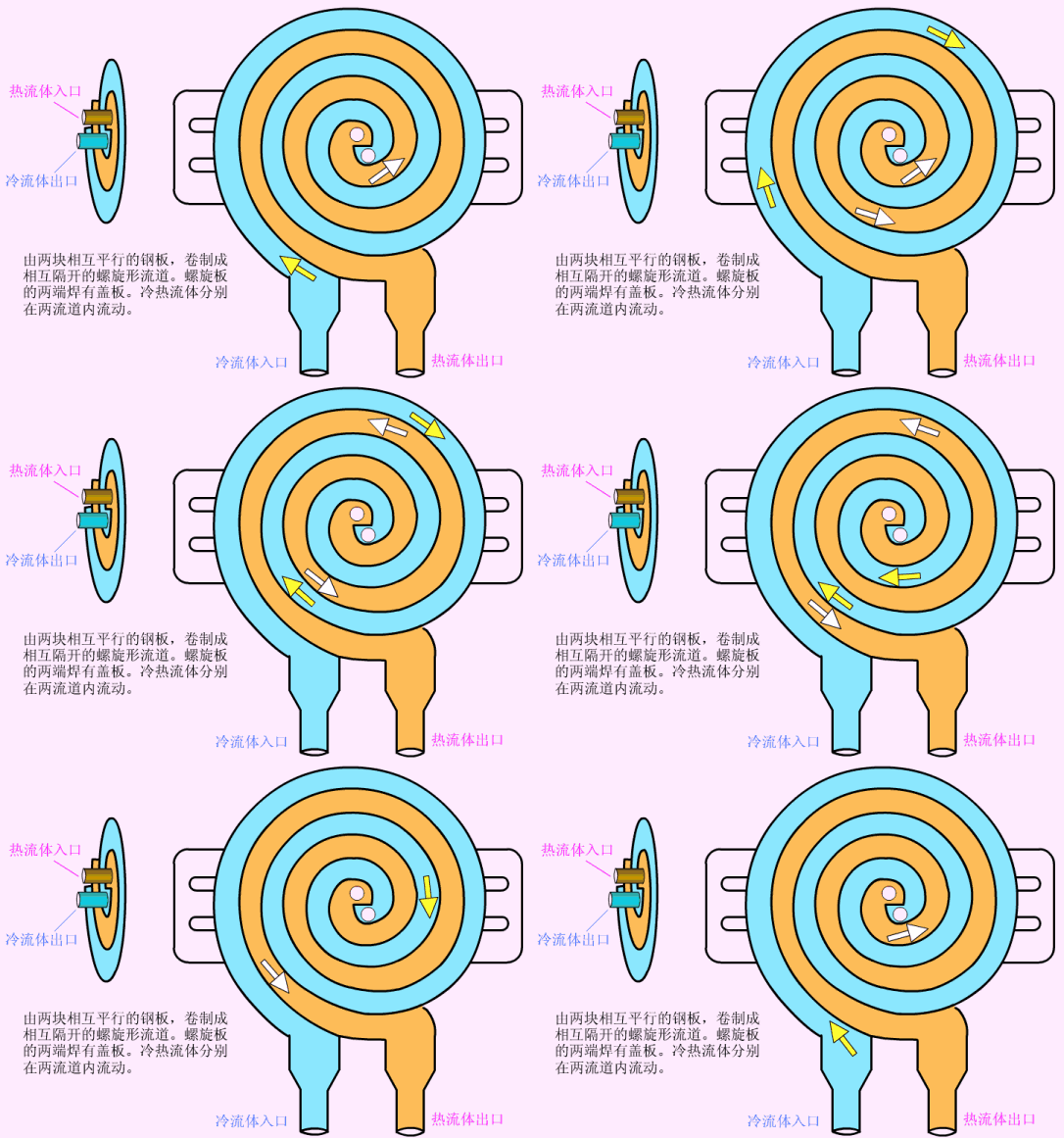
Spiral plate heat exchanger
The advantages of spiral plate heat exchangers are:
High heat transfer coefficient;
Resistant to limescale build-up and blockages;
can utilise heat sources with lower temperatures;
Compact design.
The disadvantages of spiral plate heat exchangers are:
The operating pressure and temperature should not be too high;
Difficult to service
IX. Heat Pipe Heat Exchangers
A heat pipe consists of a sealed metal tube from which non-condensable gases have been evacuated; the tube is filled with a certain volume of a working fluid. The working fluid absorbs heat at the hot end, causing it to boil and vapourise; the resulting vapour flows to the cold end, where it condenses and releases latent heat, The condensed liquid returns to the hot end, where it boils and vaporises once more. This cycle repeats continuously, ensuring that heat is constantly transferred from the hot end to the cold end.
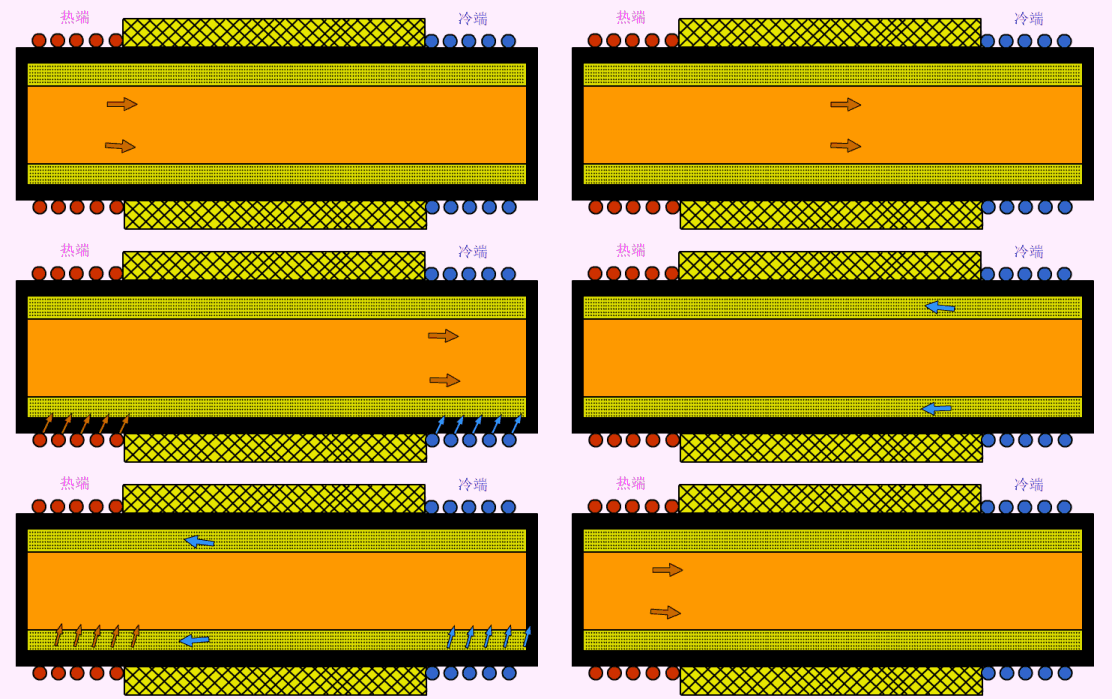
Heat pipe heat exchanger
The advantages of heat pipe heat exchangers are:
Simple in design, with a long service life and reliable operation;
It possesses extremely high thermal conductivity and good isothermal properties;
The heat transfer area on both the hot and cold sides can be adjusted as required; heat transfer over long distances is possible; and the temperature can be controlled.
The drawbacks are:
It has poor antioxidant properties and is not very heat-resistant.
Precautions for the use of heat exchangers:
The pipework must be kept clean before work begins, and must remain clean once the work is complete; it is essential to flush the pipework to prevent blockages in the heat exchanger. In addition, care must be taken to clean the strainers and filters to ensure that the entire heat exchange process can be carried out smoothly.
Strict quality control must be exercised over the softened water; prior to commencing the treatment of the heating medium, the water quality within the system and in the softening tank must be checked, and the water may only be fed into the system once it has been confirmed that it meets the required standards.
When testing a newly installed system, it is not possible to immediately switch between it and the heat exchanger; instead, the new system must be allowed to operate for a specified period. Only after the operational testing has been completed can the heat exchanger be integrated into the system. The purpose of this procedure is to prevent impurities in the pipework from damaging the internal components of the heat exchanger.


 Chinese
  Japanese
  English
  German
  Finnish
No comments