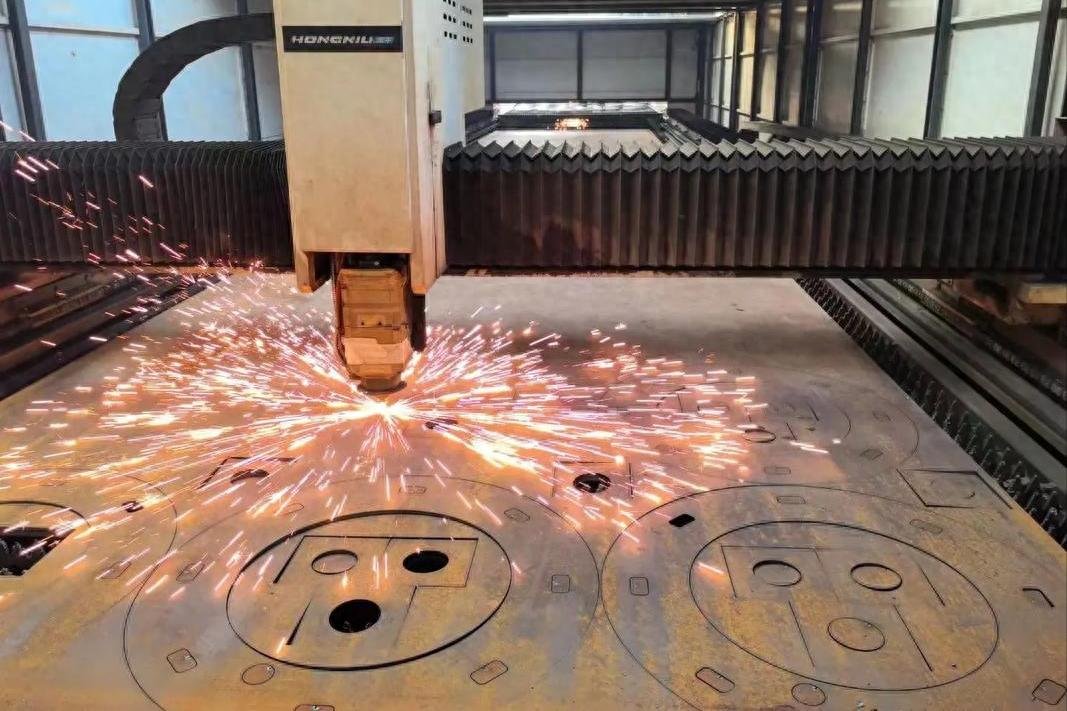


Within the scope of metal manufacturing, Sheet metal workingTheir location is of critical importance; they hold a pivotal position, and their role should not be underestimated. From relatively precise, small and delicate electronic enclosures right through to large-scale, massive ship components, sheet metal parts are ubiquitous. However, for a long time, traditional sheet metal fabrication methods have consistently faced insurmountable bottlenecks. Shearing machines are limited to straight-line cutting operations; punch presses are constrained by the limitations of their dies; whilst flame and plasma cutting result in wide kerfs and severe thermal deformation. This has meant that many who are dedicated to pursuinghighly accurate...Companies with tight lead times are at their wits’ end over this and find it extremely troubling.
At present, laser cuttingAgainst the backdrop of the widespread and comprehensive adoption of this technology, its ability to focus a powerful beam of light is reshaping the fundamental principles of sheet metal working, making it possible to produce complex parts in a single operation.
Flexible manufacturing: saying goodbye to “dependence on moulds” once and for all”
In traditional sheet metal fabrication, the punching process requires a large number of custom-designed dies, which not only entails significant costs but also further extends the production lead time. Faced with modern order requirements characterised by a wide variety of products, small batch sizes and customisation, traditional processes are proving inadequate.
What makes laser cutting so revolutionary is its exceptionally high degree of flexibility; it requires absolutely no mould-making. All that is needed is to input the design using computer programming, and the laser beam can then “draw” any shape, however complex, with precision onto the steel plate, just like a paintbrush.
This non-contact machining method not only eliminates the complex and time-consuming process of mould development, thereby enabling rapid product iteration, but also makes flexible response a reality, whilst significantly reducing a company’s overall production costs.
Ultimate precision: overcoming the challenges of “thermal deformation and wide kerfs”
When machining thick plates and high-strength steel, traditional flame or plasma cutting often results in a large heat-affected zone, a relatively wide cut, and a significant amount of slag, leading to severe deformation of the workpiece and requiring a great deal of manpower for subsequent grinding and straightening.
Laser cutting, which capitalises on its high energy density and the advantages of non-contact processing, has perfectly resolved this issue; it produces an extremely narrow cut, with a heat-affected zone so small as to be virtually negligible, resulting in virtually zero deformation of the workpiece after cutting.
When cutting medium- and thin-gauge sheets, laser cutting ensures a perpendicular cut surface and an exceptionally smooth, flat finish, allowing the material to proceed directly to subsequent processes such as welding without the need for secondary finishing; When cutting ultra-thick plates, laser cutting likewise ensures a perpendicular cut surface, resulting in a flawlessly smooth and flat finish. With no need for secondary finishing, the material can proceed directly to subsequent processes such as welding, thereby effectively bridging the gap between “rough cutting” and “precision manufacturing”.

Multi-dimensional coordination enables complex, irregularly shaped parts to be “moulded in a single operation”
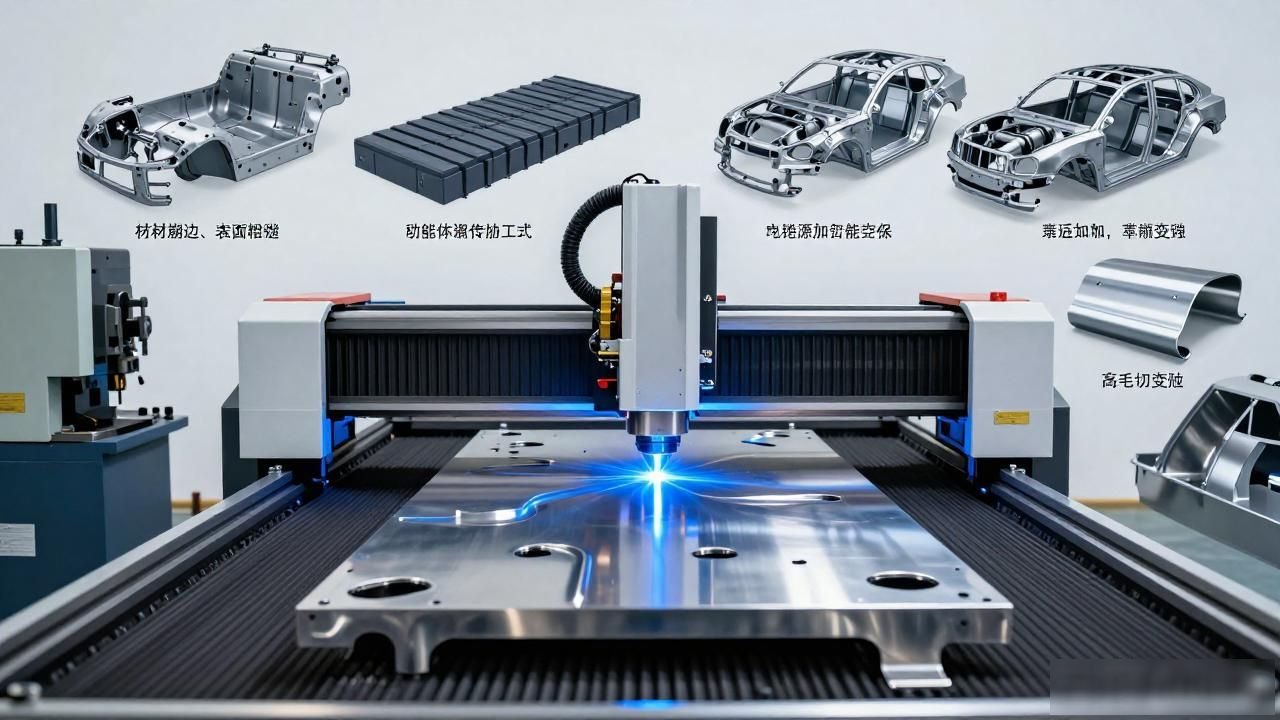
With the rise of industries such as new energy vehicles and high-end equipment, there has been a sharp increase in demand for components featuring complex curved surfaces, irregularly shaped holes and weld grooves. Traditional mechanical cutting or stamping methods are prone to causing chipping or delamination of the material, and the processes involved are complex.
The advent of modern 3D five-axis laser cutting technology offers the ultimate solution for machining complex components. Thanks to its high-precision five-axis synchronised swivelling head and intelligent follow-up system, the laser head can move flexibly to adapt to all kinds of irregularly shaped workpieces, enabling simultaneous operations to be completed in a single clamping, enabling the execution of diverse processes—such as trimming, drilling and bevel cutting—and the successful completion of the task.
This process represents the ultimate in efficiency; not only does it completely eliminate the need for secondary machining, but it also significantly shortens the overall production cycle, making the manufacture of complex parts as smooth as flowing water.
Empowered by Intelligence: Stepping into a New Era of Efficient Smart Manufacturing
Beyond the purely physical aspect of cutting, laser processing is undergoing deep integration with artificial intelligence, whilst also becoming deeply intertwined with big data. First, material utilisation is enhanced through automated nesting and layout; next, “one-click cutting” is achieved via a built-in, extensive process database; and finally, defects are automatically identified using a vision inspection system. Thanks to this intelligent support, laser cutting has completely moved away from its former reliance on manual expertise.
Bidding farewell to the long-standing challenges of “wide kerfs and significant distortion”—obstacles that were previously difficult to overcome—and ushering in a whole new experience of “high precision and zero distortion” in smart manufacturing, laser cutting is far more than a mere change of tools; it is clearly a far-reaching transformation in the field of sheet metal processing. With a single beam of light, it transforms complex metalworking into a simple, efficient and error-free process, leading the entire manufacturing sector towards a more seamless and intelligent future.



 Chinese
  Japanese
  English
  German
  Finnish
No comments