


In metalworking, the vibration of a boring mill is a key physical factor in the final surface quality of the workpiece. This vibration is not a single event, but is the result of a dynamic interaction between the machine structure, the cutting process, and the workpiece material. Understanding how vibration is generated is a quality step towards controlling it and improving machining accuracy.

Zhongjie Drilling and Boring Machine
Zhongjie is an old and strong enterprise, specialising in drilling and boring, and casting machine tools.
Open Baidu APP
Scan the code to download now
Call Now
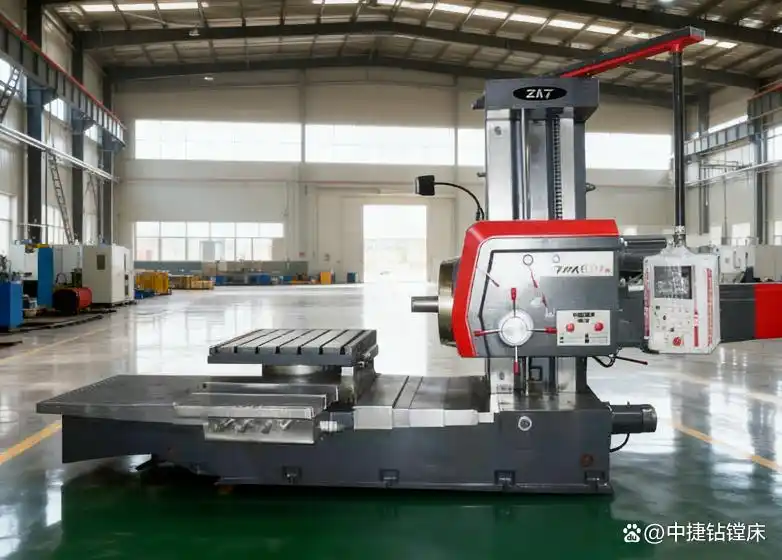
There exist two main categories of vibration origins, one of which is forced vibration and the other isself-excited vibrationForced vibration is triggered by external periodic interference, such as the unbalance of the spindle rotating parts, or due to the mesh error of the transmission gears, or caused by the transmission of external equipment, this vibration has the characteristics associated with the frequency of the source of the interference, self-excited vibration, which is often called “vibration”, which is a little more complex, it is It originates from the unstable conditions of the cutting process itself. Once the tool comes into contact with the workpiece, the cutting force generated will cause the structure to deform, and this deformation will in turn change the cutting force, thus forming a closed feedback loop. If the damping of the system is not sufficient to dissipate the energy generated during this process, the smallest perturbations will be amplified, resulting in severe vibrations and ultimately in visible vibration lines on the surface of the workpiece.
Unlike the use of purely reinforced beds to resist vibration, modernvibration controlThe strategy is more focused on “management” and “elimination”. One way of doing this is to optimise cutting parameters to prevent resonance by avoiding the inherent frequency region of the machine structure or process system. This is similar to setting up rules of the road for different paces on a bridge, in order to avoid the risk of resonance that can be caused by marching in unison. Another more targeted technique is the use of passive or active dampers. Passive dampers, like precision-mounted “shock absorbers”, dissipate vibration energy with the help of visco-elastic materials or masses, while active dampers, which are smarter, monitor vibrations in real time by means of sensors that drive the actuator to generate a force of opposite phase and equal size, actively cancelling out the vibrations, in a similar way to high-end noise-cancelling headphones, but for use in more demanding industrial applications. The principle is similar to that of high-end noise cancelling headphones, but applied to more demanding industrial environments.
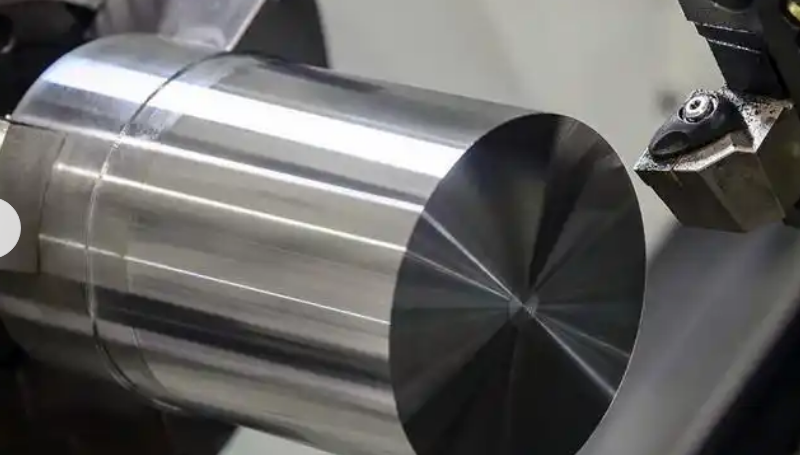
When the vibration is effectively suppressed, it is not a problem for thesurface qualityThe direct impact of this is evident. Surface quality is not a fuzzy concept, but is specifically defined in terms of roughness, corrugation and surface texture integrity. Unregulated vibration can cause the tool path to deviate from the desired trajectory, creating a rough surface with alternating peaks and valleys on a microscopic scale, which may be accompanied by tearing or material build-up. In contrast, under steady cutting conditions, the tool is able to precisely remove material in a predetermined path, creating a uniform, smooth surface texture. The difference is similar to the difference between rowing a boat on a calm lake and on choppy water.
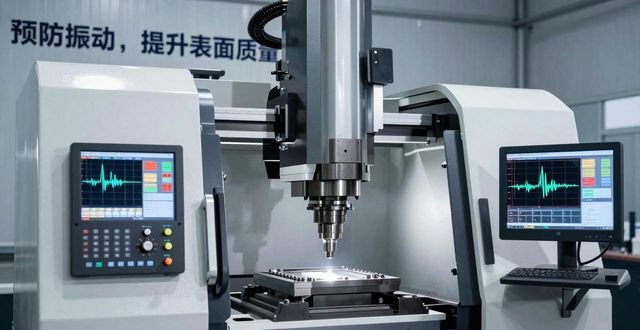
Comparing vibration control on boring mills to a broader range of manufacturing technologies is unique in its emphasis on “prevention” and “on-line management”. Controlling vibration at the source is a much more fundamental and efficient strategy than relying on secondary processes such as subsequent grinding and polishing to improve surface finish. It directly improves the quality of the first machining, reduces rework and material waste, and in the modern manufacturing industry, which pursues high efficiency and precision, this kind of front-loaded control thinking shows its unique value. Understanding vibration and intervening effectively is the core engineering link between the dynamic performance of the machine and the final quality of the workpiece.



 Chinese
  Japanese
  English
  German
  Finnish
No comments