
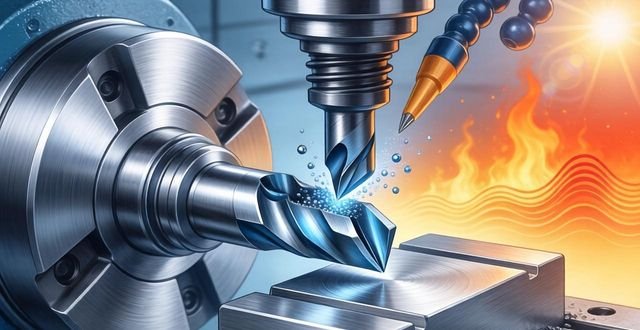
titaniumWhen milling parts, as with other difficult-to-machine materials, a small increase in cutting speed results in faster wear of the cutting edge of the tool.
The difference lies in the fact that titanium alloys have the characteristics of high strength and high viscosity, so in the cutting process, it is easier to generate and accumulate heat in the cutting area, coupled with its poor thermal conductivity, there is a risk of combustion if the milling operation is done in a large amount of excision. This is the milling of titanium alloy parts, absolutely can not go to the high cutting speed of the reason.
However, it is not impossible to increase the speed of machining titanium parts. When cutting speeds are kept constant, parts can be machined faster by increasing the metal removal rate. This can be achieved not by using more powerful or higher-end machines, but by equipping the type of tools that can fully utilise the cutting capabilities of existing machines, and that can also compensate for some of the machine's shortcomings, such as poor rigidity.
There is a famous tool manufacturer, it focuses on titanium alloy milling process test research, this company has a technical consultant, milling product manager Mr Brian, he has received a lot of inquiries about titanium alloy milling technology users, this article highlights its rich experience in titanium alloy milling.
Titanium alloy milling why will cause people to pay special attention to it, there are at least two reasons, one, titanium alloy is mainly used in high-grade parts, it is not only used in the manufacture of aircraft fuselage and engine parts, but also used in the manufacture of medical equipment in a number of parts, especially for some of the United States in the process of growth in the United States manufacturing enterprises, they have to move towards high-grade products, and will often encounter technical difficulties in the milling of titanium alloy parts. Milling of titanium alloy parts is often a technical problem.
Another reason is that not every shop is able to achieve high feed rates, so in titanium milling, when the material is not easy to machine, or when cutting speeds are not fast enough during the process, the question of how to achieve high machining efficiency has become an urgent issue, which has attracted a great deal of attention from manufacturers.
Use of high toughness tools
The first important issue in achieving efficient milling of titanium alloys would be the right choice of cutting tool material, said Mr. Kennedy. Carbide cutting tools can be a correct choice, and machine shops are often accustomed to using carbide as the best cutting tool material, especially in almost all difficult machining, carbide is usually chosen. However, for titanium machining, the new generation of high-speed steel is a good alternative to carbide.
It is reasonable to assume that a carbide tool with good wear resistance can perform high cutting speeds at a reasonable machining cost. However, this so-called reasonable machining cost is supported by the prerequisite that the tool must have “high toughness”, or the ability to resist impact and fracture. Unfortunately, however, the brittleness of cemented carbide used in general is much greater than that of high-speed steel.
This is of extreme importance when milling titanium alloys. Generally speaking, the main cause of carbide tool failure is not the wear of the cutting edge, but the broken body. Secondly, the rise of cutting heat in the process of milling titanium alloys also results in the inability of cemented carbide tools to exert the superiority of high cutting speed processing. Due to processing at high cutting speeds, to fill a large amount of coolant, in this kind of a hot and cold alternating role, the tool and the workpiece will produce a strong thermal shock between the cutting edge of the carbide tool cutting edge of the brittle will be quickly triggered by the crushing. The above two technical difficulties must be solved by the high toughness inherent in the tool itself. Ordinary cemented carbide tools are far from being able to handle, cutting tests have confirmed that the use of high toughness tools, such as high-speed steel tools milling titanium alloy workpiece, do not have to worry about the impact of cutting in the cutting and cutting edge rupture, especially in the smaller rigid machine tool processing, high toughness high-speed steel tools will be through the increase in the depth of cut rather than increase the speed of cutting to achieve a high rate of metal cutting processing.
Beyond this, there is a wide range of high toughness HSS cutting tool materials available to the user today. Most workshops are not always aware of this. They also do not know that the HSS tools sold in the market can be subjected to some different treatment procedures, such as carrying out the smelting of HSS with the addition of certain elemental components (such as the addition of cobalt content), the implementation of heat treatment (multi-stage quenching and tempering), or the HSS material through the manufacture of its manufacturing process to be strictly controlled, made of powder metallurgical HSS with a homogeneous metallurgical organisation, and so on. Therefore, high cobalt high speed steel, powder metallurgy high speed steel are used for efficient milling of titanium alloy ideal tool material.
Control of high cutting temperatures
Sometimes it is necessary to select a carbide tool to cut titanium parts using a small radial approach, which can achieve amazing high speed cutting results see section 10% and 100%. In these cutting operations, it is critical that the tool not only deals with wear resistance in general, but also in particular at high cutting temperatures, which requires the use of coated carbide tools for machining.
Highly rigid machining is possible with HSK quick-change holders and thermal expansion and contraction holders, which reduce vibration during machining, resulting in a significant increase in metal removal rates.

According to the gentleman, Titanium Aluminium Nitride, also known as TiAlN coated carbide tools, are generally the best choice when machining titanium alloys. Among the many basic categories of tool coatings, TiAlN is effective in maintaining the overall mechanical properties of the tool, as well as maintaining the tool's high-temperature cutting performance at elevated temperatures. In fact, higher cutting temperatures provide some protection to the coating. Aluminium molecules are released from the coating by the machining energy during the cutting process, forming a protective layer of aluminium oxide on the tool surface. This layer of aluminium oxide reduces the heat transfer between the tool and the workpiece as well as the diffusion of chemical elements. Aluminium molecules can be continuously added to this newly formed protective coating, allowing the chemical reactions that drive the formation of the alumina layer to continue, as described in the section "New Aluminium Rich Coatings".
However, TiAlN coatings are not suitable for use where vibration is strong, in which case titanium nitride, also known as TiCN, is used, which prevents the coating from flaking off due to vibration. “When you're using interchangeable inserts and you're cutting hard on a machine with low stiffness, it's probably best to try TiCN,” says Mr. .
More cutting edges attend cutting
Even if the cutting speed is kept constant during cutting, the feed per tooth of the milling cutter remains the same, and the depth of cut remains the same, it is sometimes possible to increase productivity. Here, the solution is to get more cutting edges involved in the cutting process.
For example, in the case of helical milling cutters, it is important to select cutters with as small a pitch as possible, such as helical corn end mills. Using this type of tool allows the HSS cutter to have more cutting edges. Because HSS cutters provide more cutting edges than carbide cutters, the former are used more often.
There is a large helix angle end mill, which is the tool shown in the illustration, each cutting edge has a different axis forward angle from the next cutting edge, so that the change can better suppress vibration, and can greatly improve productivity.
Taking a different direction than milling is another way to get more cutting edges involved in the cut. With “insert milling roughing” (sometimes called drill-in roughing), a set of milling cutters is used, as if drilling a hole along the Z-axis, and the end and side teeth of the cutter, together with the compiled machining programme, carry out lap machining. Therefore, the productivity is high and the chip removal is also convenient.
This method can only be used for roughing, as there is always some scalloped metal left to be machined between each lap. However, since there are many cutting edges involved in insert milling roughing, the feed rate per minute can be greatly increased when the feed per tooth of the tool is kept constant. In addition, the Z-axis feed of insert milling roughing has the advantage of providing high rigidity of the machine tool, given that a wide variety of connections along the spindle (e.g., toolholder interfaces) will inevitably flex along the X- or Y-axis and compress in the Z-axis, resulting in high rigidity of the machine tool along the Z-axis. This means that the feed per tooth of the tool can be increased.
“Roughing with insertion milling is the ideal solution for efficient machining of high-strength metals,” he said. It is proposed to use this machining method during the milling of titanium alloys." The following is a summary of the results of the machining process.
Measures to eliminate vibration
Tool deflection occurs when cutting, and it is important to study the causes of this deflection and how it can be eliminated. This is because it leads to an extremely important technical problem, namely vibration. Vibration in the milling process of titanium alloys is unfavourable from two points of view. On the one hand, when cutting forces are generated and increased, they cause vibration and increase it. On the other hand, the spindle speed does not seem to be related to vibration, so there is no way to find an “ideal” speed that can adjust to vibration.
In fact, productivity in most titanium milling operations is determined by vibration. Numerous cutting tests have confirmed that in titanium milling, the maximum metal removal rate is achieved not at the maximum power output of the machine, but at the onset of extreme vibration. This is the reason why it is important to establish, and is possible to establish, a programme to control vibration in time. The following technical issues need to be addressed in order to improve the productivity of titanium milling operations, advises Mr. Krakowski:
Stiffness-related issues such as the connection between the tool and the holder, and the connection between the holder and the spindle, have to be made as rigid as possible. For tool holders, thermal expansion and contraction types give the best solution, and for spindles, HSK quick-change tool holders give the best stiffness compared to normal taper interfaces.
Designing the tool with an eccentric back angle, or a bit structure with a “rib”, provides good damping, which in turn dampens the vibrations generated during cutting. When a tool deflects, the back face of the tool with an eccentric back angle will come into contact with the workpiece and will rub against it. Not all materials rub well against the workpiece, and aluminium alloys have a tendency to stick. For titanium milling, the “prongs” sharpened on the cutting edge of the tool will also act as a good shock absorber.
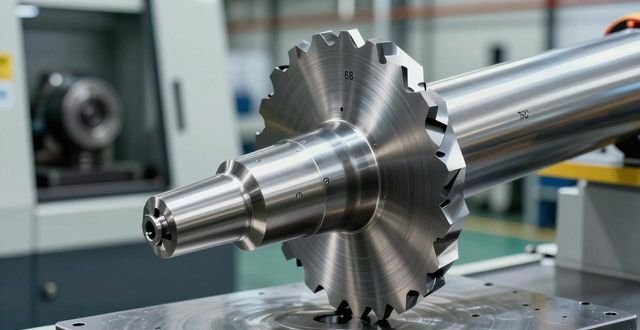
The space between the cutting edges of the chip removal groove to be transformed, for the design of such a tool structure and anti-vibration initiatives, many workshops may not yet be so familiar with. When the tool is rotating at high speed, the cutting edges will hit the workpiece according to a certain rule, thus generating vibration. If the milling cutter chip removal slot space is designed as an irregular arrangement, after cutting test verification, will play a very good vibration damping effect. For example, when the distance between the first cutting edge and the second cutting edge of the milling cutter is 72 °, then the distance between the second cutting edge and the third cutting edge should be 68 °, the distance between the third cutting edge and the fourth cutting edge is 75 °, showing an uneven distribution. Another anti-vibration measure, patented and designed by the company, is to design the cutting edges of the milling cutter into unequal axial forward angles, so that a good vibration damping effect can also be achieved.
New aluminium-rich coatings
“The ”Al“ molecule, which is the most reactive in TiAlN coatings, has a great influence on the cutting performance of the coated tool, forming a protective film of aluminium oxide on the surface of the tool, an effect which is made more effective by the increased content of the ”Al" molecule in the coating. This effect is made even more effective by the increased content of "Al" molecules in the coating.
Thanks, of course, to the continuously improved vapour-phase deposition process used to produce the coatings, the “Al” molecule content of the TiAlN is continuously increased, so that the new TiAlN coatings are produced with an excellent increase in the red-hardness of the coating (the tool) without compromising on toughness. The company developed this new aluminium-rich TiAlN-coated tool in the first half of this year.
10% vs. 100%
Nowadays, there are some workshops relatively advanced in technology, these workshops have been able to use carbide-coated tools to cut titanium alloy parts, and the cutting is a small radial approach, the main purpose is to solve the titanium alloy machining during the high cutting temperature of this technical problem. The cutting principle is that, in the process of cutting with the small radial entry method, the radial depth of cut should be chosen to be much smaller than the radius of the tool for radial entry. The reason for choosing a very small depth of cut is that this can greatly increase the cutting speed, greatly reducing the cutting time of each cutting edge, that is, reducing the processing time of the cutting edge, while extending the non-cutting time, that is, increasing the cooling time of the cutting edge, thus controlling the cutting temperature very well.
According to the company's Mr Brian, the use of small radial cuts to cut titanium alloy parts allows excellent control of cutting temperatures and high machining speeds to be achieved. The small radial depth of cut does not result in high metal removal rates, but it is a method that can be used in the factory to improve machining accuracy.
Cutting tests carried out by Mr. This test confirms that when milling titanium alloy parts with small radial cuts, the machining will be carried out according to the following rules:
If the radial depth of cut is less than twenty-five per cent of the diameter, then it is possible to increase the cutting speed by fifty per cent, or sfm, which usually exceeds the rated speed when used for heavy cutting.
When the radial depth of cut is less than 101 TP3T of the diameter, 1001 TP3T can be 1001 TP3T of the improved cutting
Baoji Chenyuan Metal Materials Co., Ltd, focusing on the forging process, after more than 10 years, is committed to creating titanium rods, titanium powder titanium rods through 3D printing, and different from the forging, the texture of the titanium target, as well as titanium plate, titanium wire, etc., titanium and titanium alloys of this type of material.
Tel:
Website:
 Chinese
  Japanese
  English
  German
  Finnish
Leave a Reply
You must be logged in to post a comment.