

Rapid advances in aerospace technology, significant progress in microelectronics, and rapid development in the biomedical sector have led to an ever-increasing demand for precision and ultra-precision micro-scale components with intricate structures. These components range in size from the micrometre to the millimetre scale, including micro-laser gyroscopes, microsatellite components, and micro-medical devices for diagnosis and treatment.
The use of micro-machining technology—involving miniature machine tools and micro-grinding tools (operating at sub-millimetre scales)—enables the machining of complex, micro-sized components from a variety of materials, thereby addressing the shortcomings of the limitations of technologies such as semiconductor manufacturing processes, photolithography, LIGA and 3D printing, which are constrained by the types of materials they can process, tend to produce relatively simple structures (two-dimensional or quasi-three-dimensional) and yield less than ideal surface quality; on the other hand, compared to the use of conventional ultra-precision machine tools for machining micro-components, this technology features smaller equipment footprints and lower energy consumption, aligning with energy-efficient and environmentally friendly production models, and has therefore attracted widespread attention both domestically and internationally.
This provides a comprehensive overview of the theory, processes, tools and equipment involved in micro-grinding.
The key points are as follows: the scope of the concept of micro-grinding, with a clear explanation of the relevant theoretical framework; conventional and composite micro-grinding processes; a comparison of the preparation techniques and performance of different types of grinding tools; and the design and accuracy testing of a benchtop micro-machine tool. The content balances theory with practical application, providing a comprehensive overview of core technologies. This approach helps overcome technical bottlenecks and aligns withprecision manufacturingGiven the diverse requirements of the field, this is a high-quality monograph well worth acquiring; it is an indispensable reference for researchers, engineers, academics and relevant enterprises in their work.
First, the paper outlines the background to the demand for micro-manufacturing technology and the crucial role played by micro-machining, before clarifying the concepts and scope of micro-grinding technology.
Secondly, the fundamental parameters of the micro-grinding process are identified, the relevant theoretical framework is established through derivation, and the simulation process for micro-grinding is analysed.

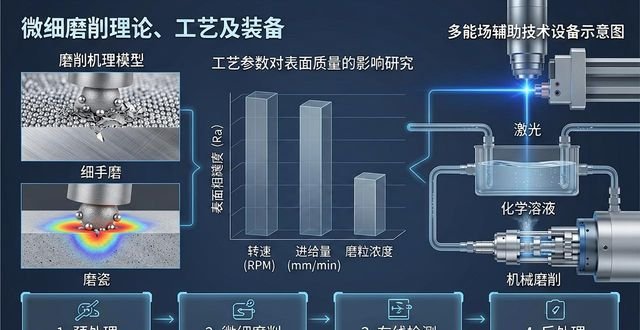
Thirdly, the mechanisms of micro-grinding material removal for different materials are discussed, clarifying the impact of micro-grinding process parameters on machining quality and efficiency. The paper focuses on the process principles, characteristics and applications of multi-field-assisted micro-grinding technologies, including chemical, UV, laser, purely mechanical and mechanochemical methods, and also outlines specific measures for quality control during machining.
Fourthly, the book provides a detailed overview of existing methods for the manufacture of micro-grinding tools, including electroplating, cold spraying, CVD, PCD (polycrystalline diamond) and electroless plating, elucidates the wear mechanisms of micro-grinding tools, and clarifies their performance characteristics.
Fifthly, this paper focuses on introducing the overall structural layout of micro-machine tools, elucidating the design principles behind key components such as the micro-spindle unit, feed system, CNC system and monitoring system, and conducting a comparative analysis of the performance of existing micro-machine tools both domestically and internationally.
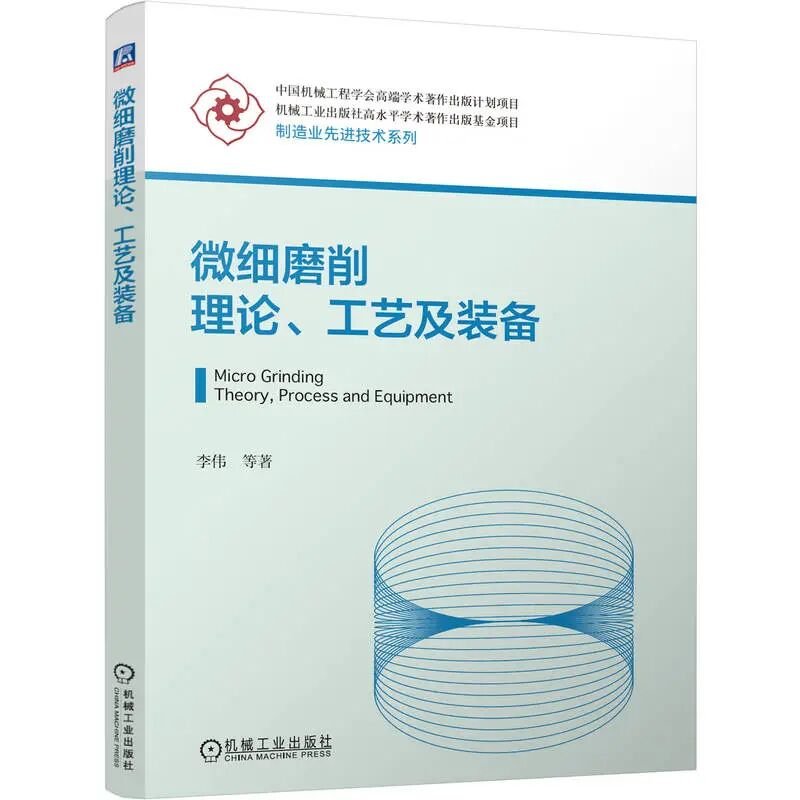
The book is divided into five chapters:
Chapter 1 defines the concept and scope of micro-grinding;
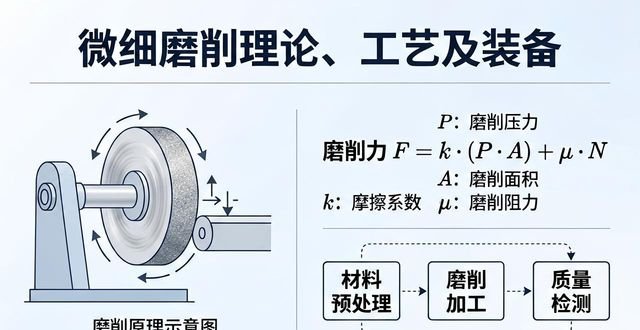
Chapter 2 sets out the theory relating to micro-grinding;
Chapter 3 presents conventional micro-grinding processes, as well as composite micro-grinding technologies based on electrochemistry, lasers, ultrasonic vibration and mechanochemistry.
Chapter 4 compares the manufacturing techniques and performance of various types of fine grinding tools, including electroplated tools, cold-sprayed tools, CVD (chemical vapour deposition) tools, PCD (polycrystalline diamond) tools and electrochemical deposition tools.
Chapter 5 covers topics such as the design and accuracy testing of desktop micro-machines.
This book serves as a reference for researchers working in the fields of microfabrication, precision and ultra-precision manufacturing, as well as for engineering and technical personnel. It is not only suitable for postgraduate students in mechanical engineering, but also for those in intelligent manufacturing; furthermore, it is suitable for senior undergraduates, including those in mechanical engineering and those in intelligent manufacturing.





 Chinese
  Japanese
  English
  German
  Finnish
暂无评论内容