
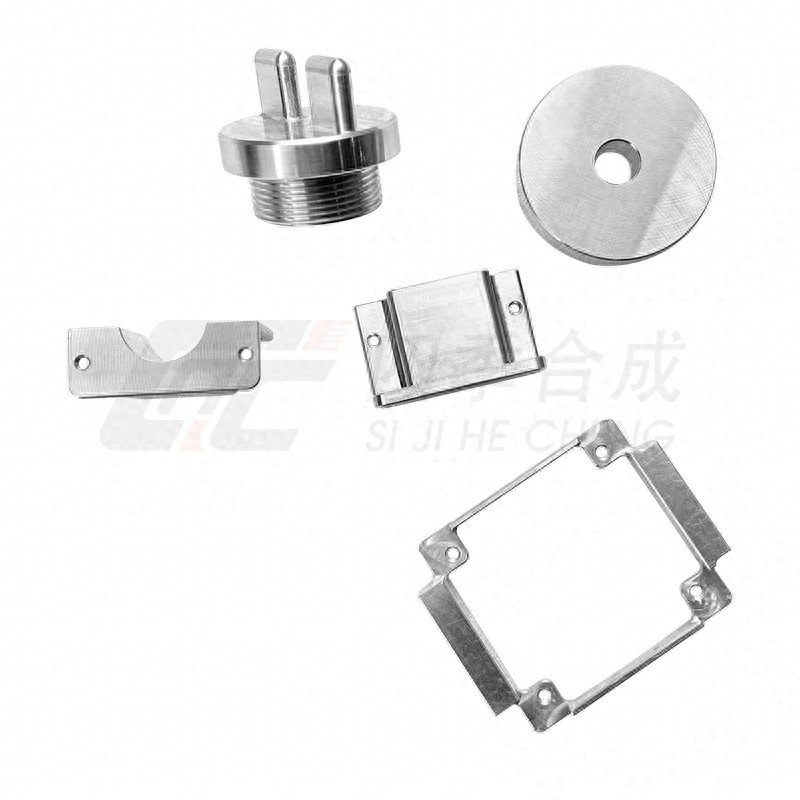
in modern timesprecision manufacturingwithin the scope.CNC aluminium machiningby means ofaluminium alloyWith the lightweight characteristics, high thermal conductivity, easy cutting characteristics, corrosion resistance advantages, and become the core processing technology in the aerospace field, automotive manufacturing field, electronic communications field, medical equipment field, automation equipment and other industries. Compared with the traditional manual processing and ordinary machine tool processing, CNC numerical control machining with the help of computer programs to accurately control the tool trajectory, control cutting speed, control the amount of feed and other core parameters, to achieve the aluminium parts from the blank to the finished product of high-precision molding, to achieve high-efficiency molding, and to achieve the batch molding. It can not only meet the processing requirements of conventional structural parts, but also adapt to the strict tolerance requirements of complex curved surfaces, thin-walled parts, and high-precision shaped parts. It is one of the most widely used processes in metal precision machining and has the highest degree of technological maturity.

I. Basic Definition and Core Advantages of CNC Aluminium Machining
CNC aluminium machining, known as Computer Numerical Control (CNC) aluminium machining, is to take aluminium alloy profiles as raw materials, with the help of CNC machining centre numerical control equipments, to automatically complete the milling and other cutting processes through preset programs, also to take aluminium alloy rods as raw materials, with the help of CNC lathe numerical control equipments, to automatically complete the turning and other cutting processes through preset programs, and aluminium alloy plates as raw materials, with the help of drilling and tapping centre numerical control equipments, to automatically complete the boring and other cutting processes through preset programs, and then take aluminium alloy forgings as raw materials, with the help of relevant numerical control equipments, to automatically complete the boring and other cutting processes through preset programs. equipment, through the preset procedures to automatically complete the drilling and other cutting processes, and then to aluminium alloy forgings as raw materials, with the help of the relevant CNC equipment, through the preset procedures to automatically complete the boring and other cutting processes, and ultimately, with the help of the processing method to obtain the aluminium parts to meet the requirements of the drawings of the dimensional tolerances and other requirements, this way to be through the pre-set G-code, M-code program, automatically complete the milling, turning, drilling, tapping, boring, grooving, Chamfering, and a series of cutting processes.
Aluminium alloy has its own material characteristics, resulting in CNC aluminium machining with three core technical advantages of the situation, these advantages are:
1、Aluminium alloy has low hardness, good ductility, cutting resistance is much smaller than steel, can be adapted to high speed machining mode with high speed and fast feed, its cutting speed can be up to 3 to 4 times of that of steel, which can greatly shorten the machining cycle and have high machining efficiency.
2, precision, controllability is very prominent, with high-precision CNC equipment and optimised process, the tolerance of conventional dimensions can be controlled within the range of plus or minus zero point one millimetre, the surface roughness can reach Ra zero point four to zero point eight microns, so as to meet the needs of the assembly of precision parts.
3, can be applied to a wide range of common aluminium alloy grades such as 6061-T6, 7075-T6, 5052, 2024, etc., which can be CNC machined to achieve different properties of the customized production of parts, while taking into account the structural strength, lightweight and corrosion resistance.
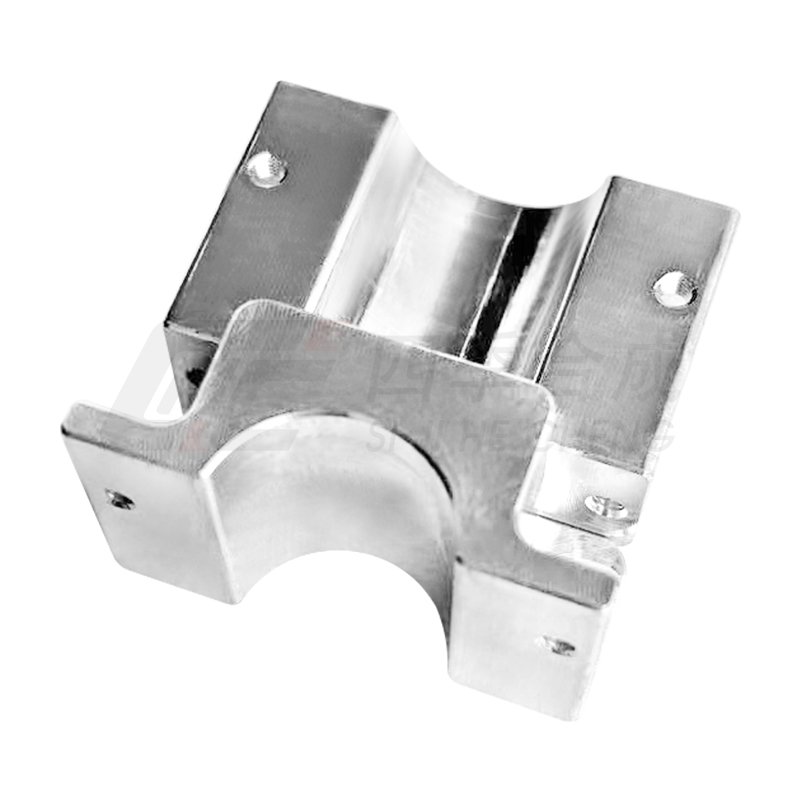
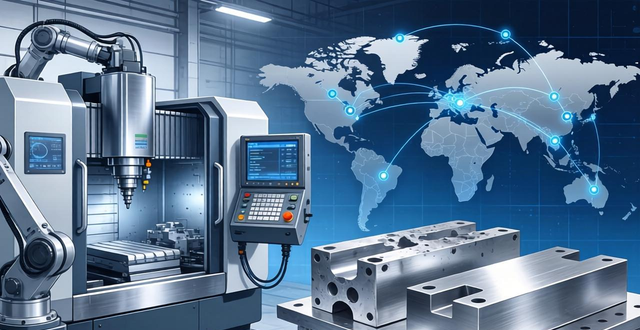
Second, the core process of CNC aluminium machining
1、Pre-preparation: drawing analysis and programming modelling
This belongs to the core of the front processing, technical staff should first 2D engineering drawings or 3D models provided by the customer to be disassembled, to clarify the size of the parts, clear tolerance levels, know the surface requirements, determine the machining benchmarks and special process requirements, to distinguish between roughing, semi-finishing, finishing margins.
2、Blank preparation and clamping fixed
According to the size of the parts, cut out suitable aluminium alloy blanks, clean up and remove the oxide skin generated on the surface, as well as the incidental burrs, to ensure that the blanks have a flatness. Clamping link is the key to control the deformation of aluminium parts, for conventional parts, the use of vise, pressure plate for clamping; and for thin-walled parts, shaped parts, you need to use a vacuum fixture, soft jaws, special tooling fixtures, which reduces the stress generated by the clamping, to avoid in the cutting process, the emergence of warping, bending, deformation of the situation.
3、Roughing:Rapid removal of excess margins
The main purpose of roughing is to efficiently remove most of the excess material from the blank, and to be able to quickly shape the general contour of the part without the need to pursue high precision, but with a focus on ensuring machining efficiency.
4、Semi-finishing and finishing: the core link of precision moulding
Semi-finish machining is mainly to correct the dimensional errors left after rough machining, but also to further optimise the shape of the contour, and leave 0.1 - 0.3mm of finishing allowance. Finishing is the key to achieving the final size and surface quality of the part, which requires the use of “high speed, small depth of cut, slow feed”, a high-speed light cutting strategy, the use of diamond-coated or sharp tungsten carbide cutting tools, and precise control of cutting parameters to ensure that the dimensional tolerances and shape and positional tolerances can meet the standards.
5、Post-processing and quality testing
Aluminium parts after processing, to do the operation of deburring, but also to complete the process of chamfering, followed by cleaning, the purpose is to remove cutting fluid residues, while removing aluminium chips; according to the demand for anodic oxidation can be carried out, but also to do sandblasting, but also for drawing operations, or the implementation of various types of hard oxidation and other surface treatments, in order to improve abrasion resistance, corrosion resistance, and to enhance the appearance of the texture.
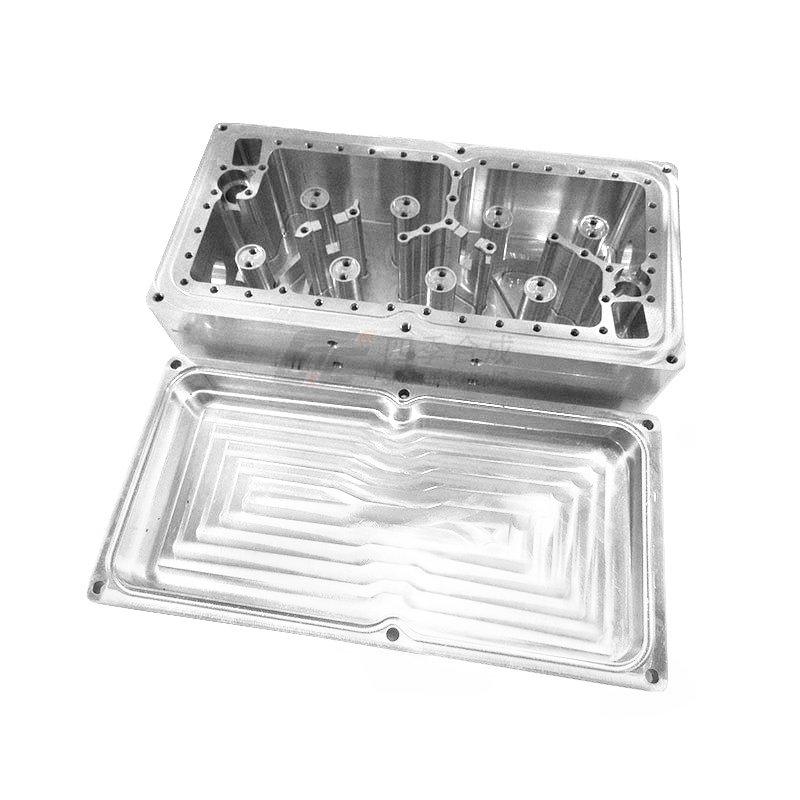
III. CNC aluminium machiningIndustry ApplicationsTrends in technology development
Due to the continuous upgrading of the precision manufacturing industry, the application scenario of CNC aluminium machining is continuously broadening, in the aerospace field, it is used for aircraft brackets, structural components and cabin parts, aiming at the pursuit of lightweight and high strength, in the automotive field, it is used for engine parts, new energy vehicle battery shells and chassis structural components, taking into account both weight reduction and safety, in the field of electronic communications, it is used for mobile phone In the field of electronic communication, it is used in mobile phone middle frame, heat sink and communication equipment shell, which requires high precision and beautiful appearance. In the field of medical equipment, it is used in surgical instrument parts and instrument shell, which focuses on environmental protection, no burr and high precision.
From a technical point of view, CNC aluminium machining is developing in the direction of high speed, continuing to move in the direction of high precision, moving in the direction of intelligence, and making steady progress in the direction of automation, five-axis linkage machining centres are gradually popularized to achieve the effect of one-time molding of complex shaped parts, automated production lines and robotic loading and unloading with each other, to improve the efficiency of batch production, and on-line inspection technology can be applied to achieve the goal of real-time precision control of the machining process to further reduce the tolerance range. On-line inspection technology can be applied to achieve the goal of real-time precision control of the machining process, further reducing the tolerance range.
CNC for aluminium machining is a comprehensive precision technology that combines material properties, CNC programming, process optimisation and quality control, each of which has a direct impact on the quality of the finished product. Along with the continuous iteration of technology in the industry, the machining of aluminium parts on top of CNC aluminium applications will play an even more critical role in the field of precision manufacturing, so as to meet the needs of more high-end manufacturing scenarios.
 Chinese
  Japanese
  English
  German
  Finnish
Leave a Reply
You must be logged in to post a comment.